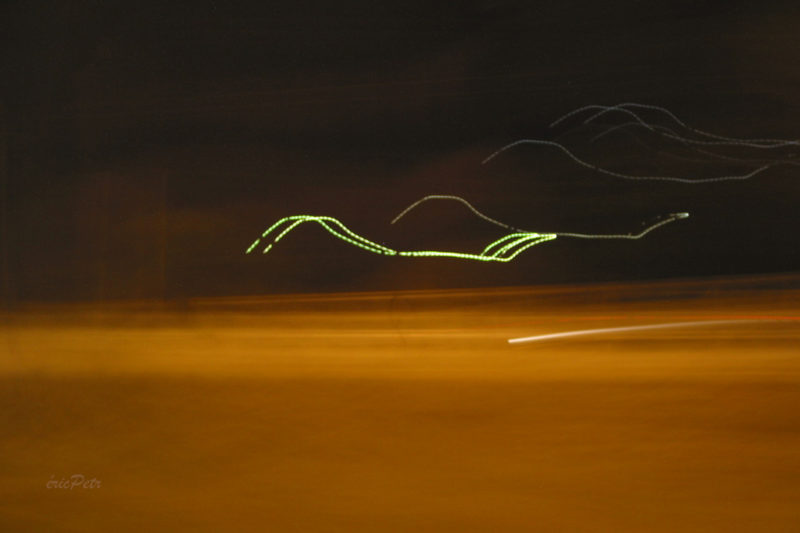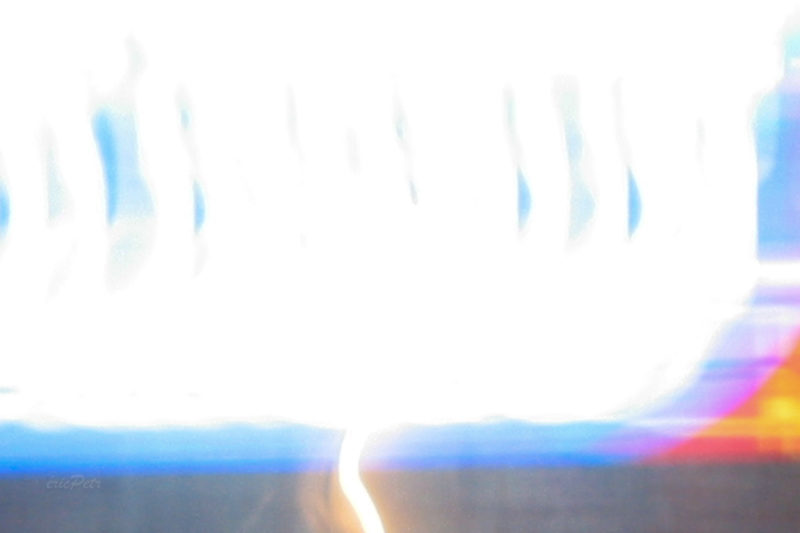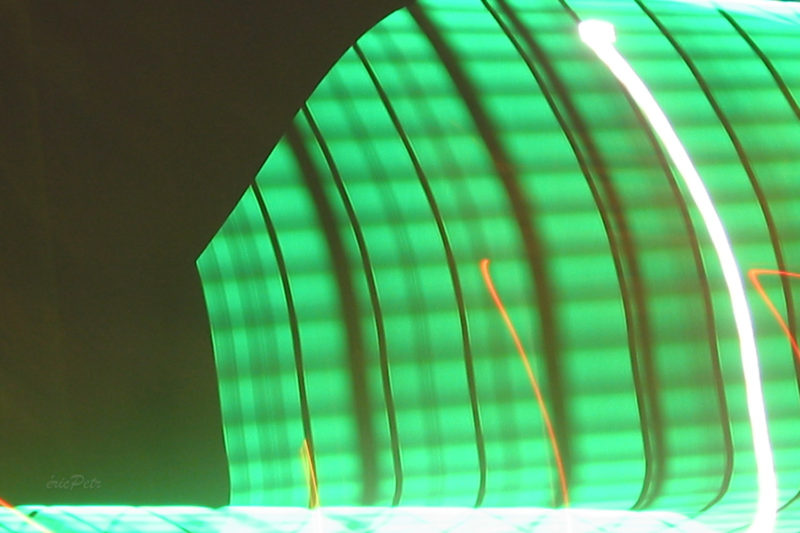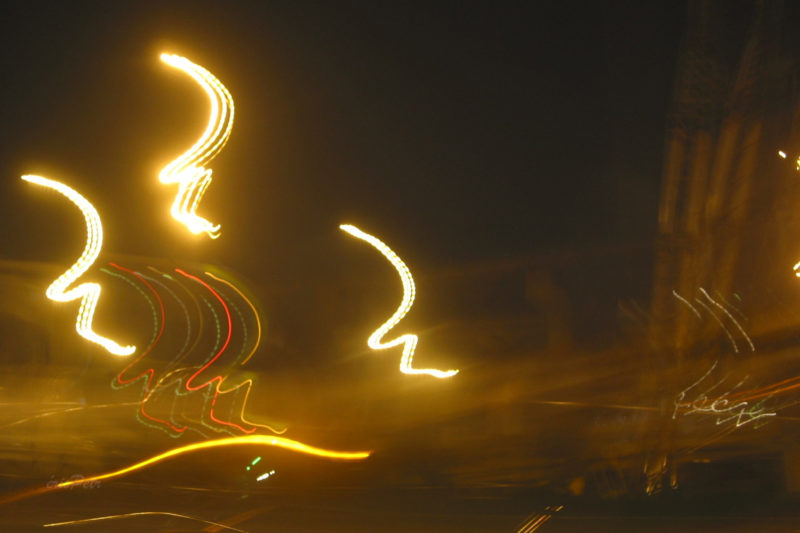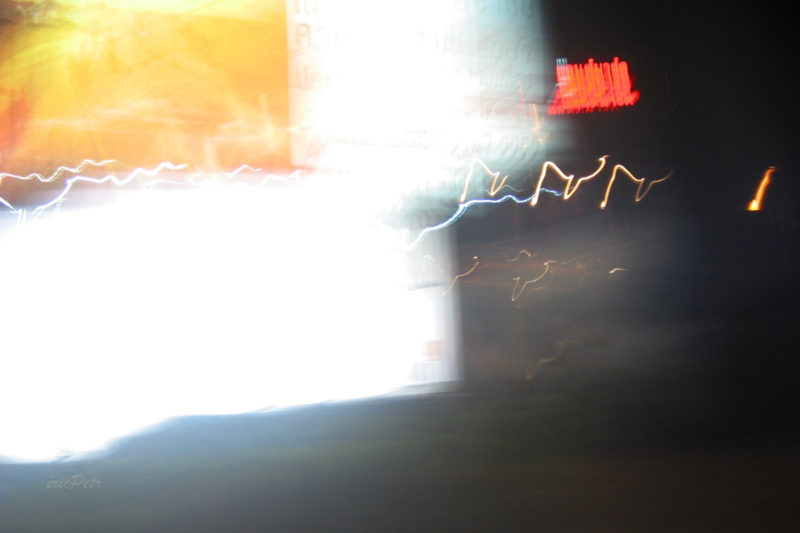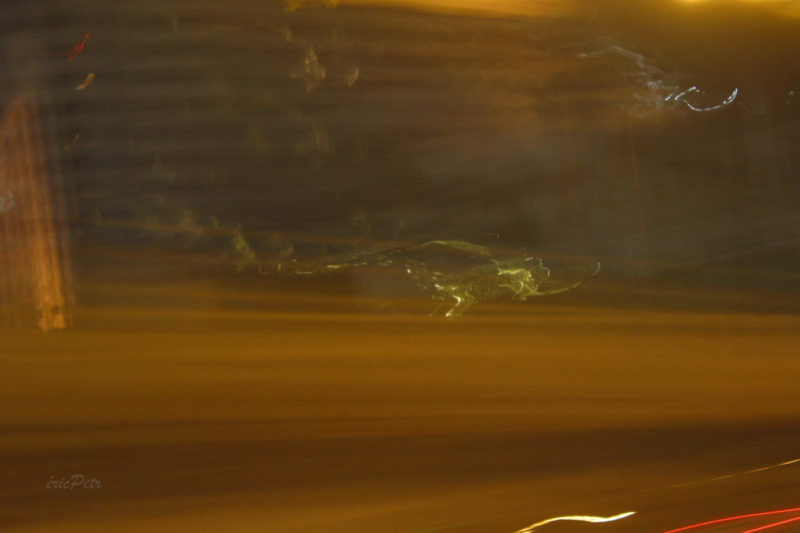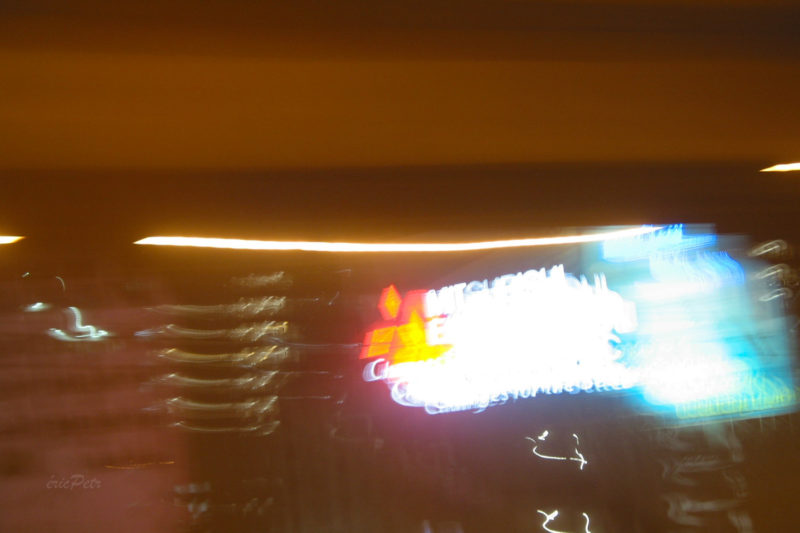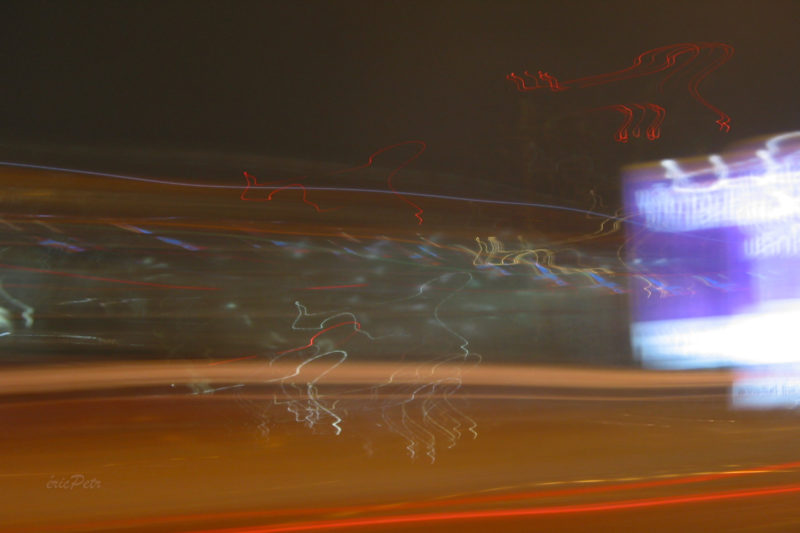
WHEN FILM PHOTOGRAPHS ITSELF: INVESTIGATING A PHANTOM ANALOGUE IMAGE

A ghost image on film: reflection, light piping, or an optical phenomenon?

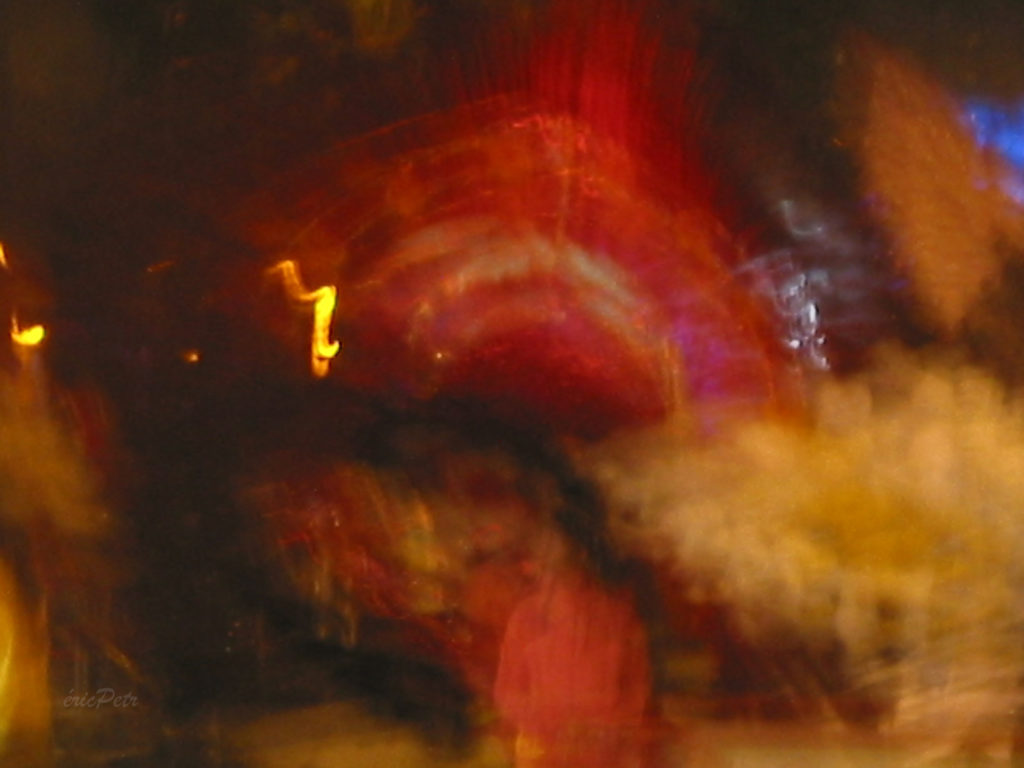
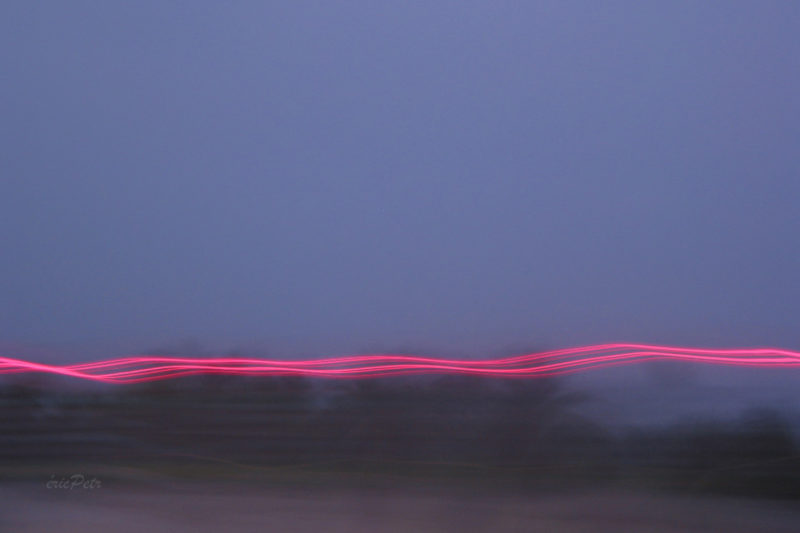
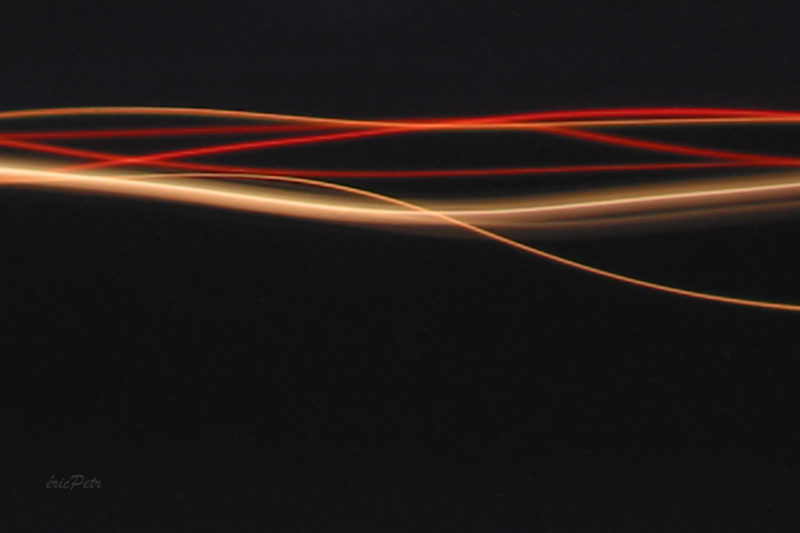
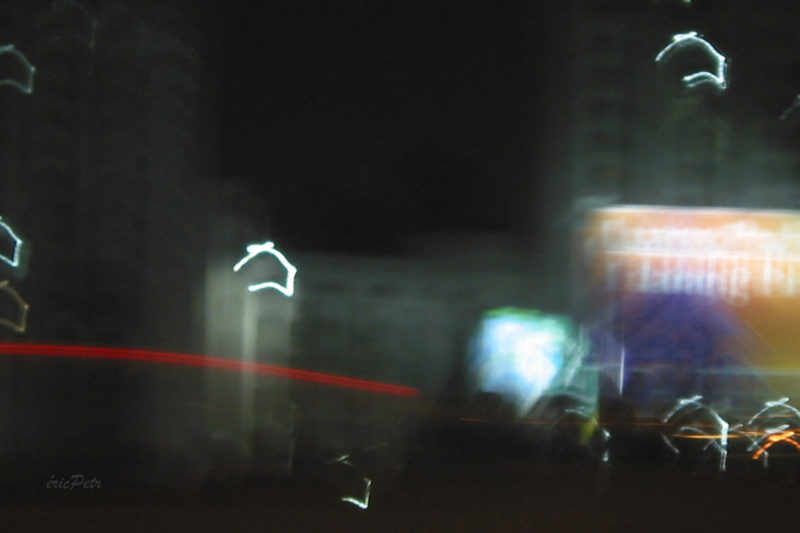
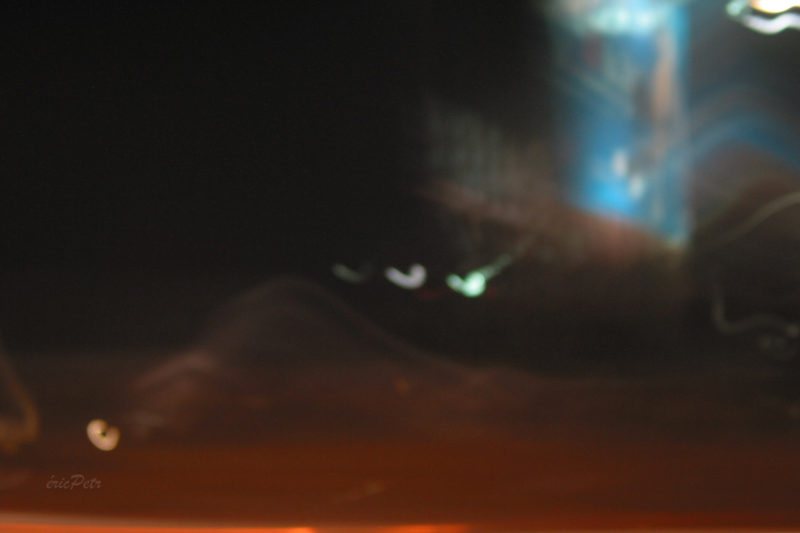
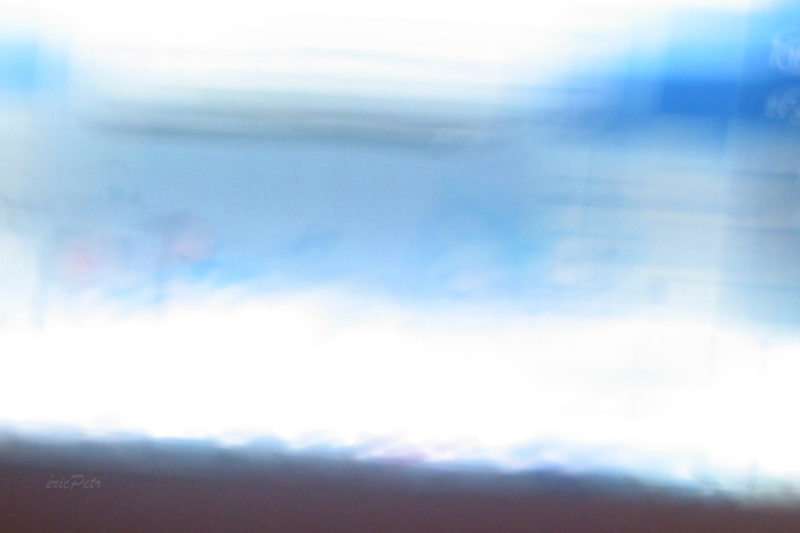
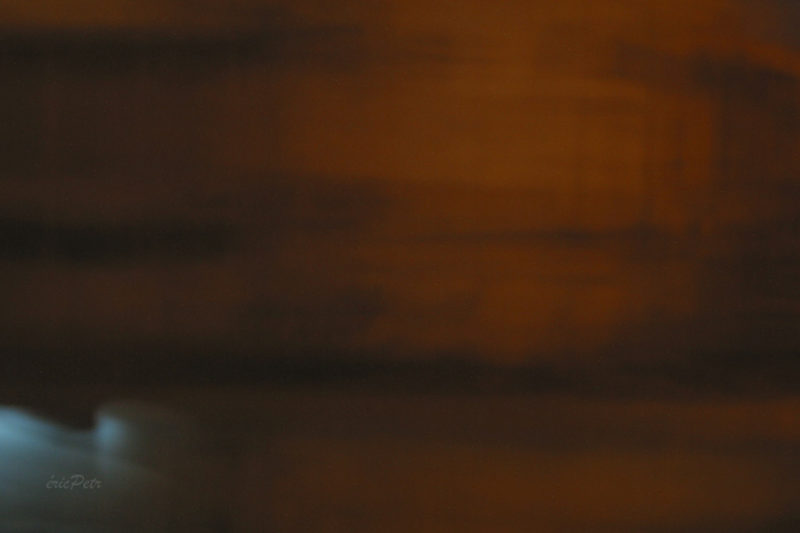
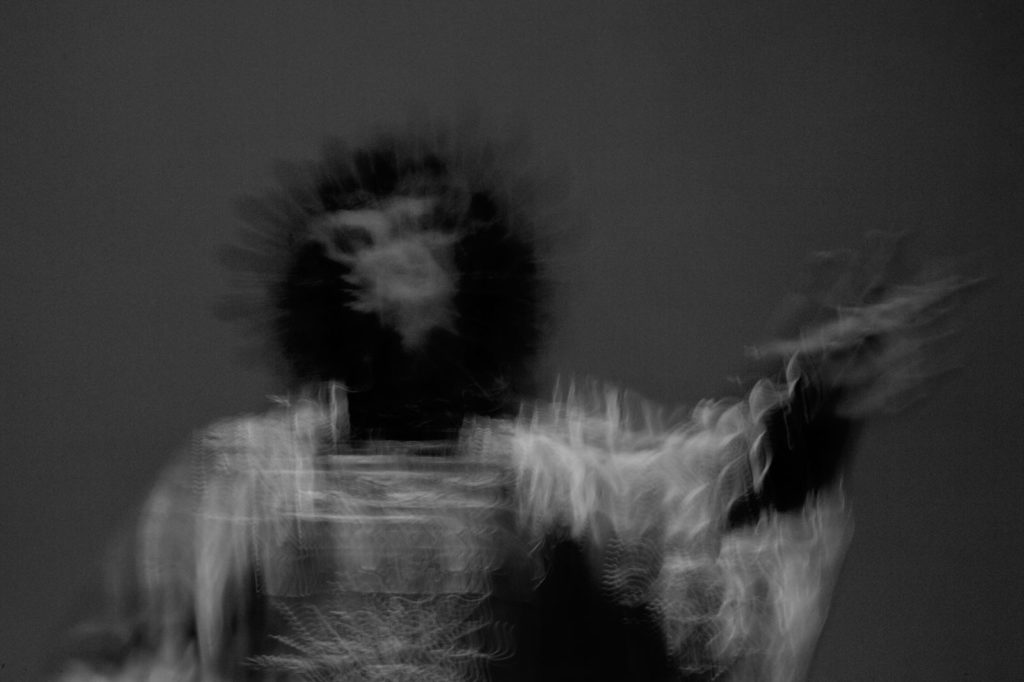
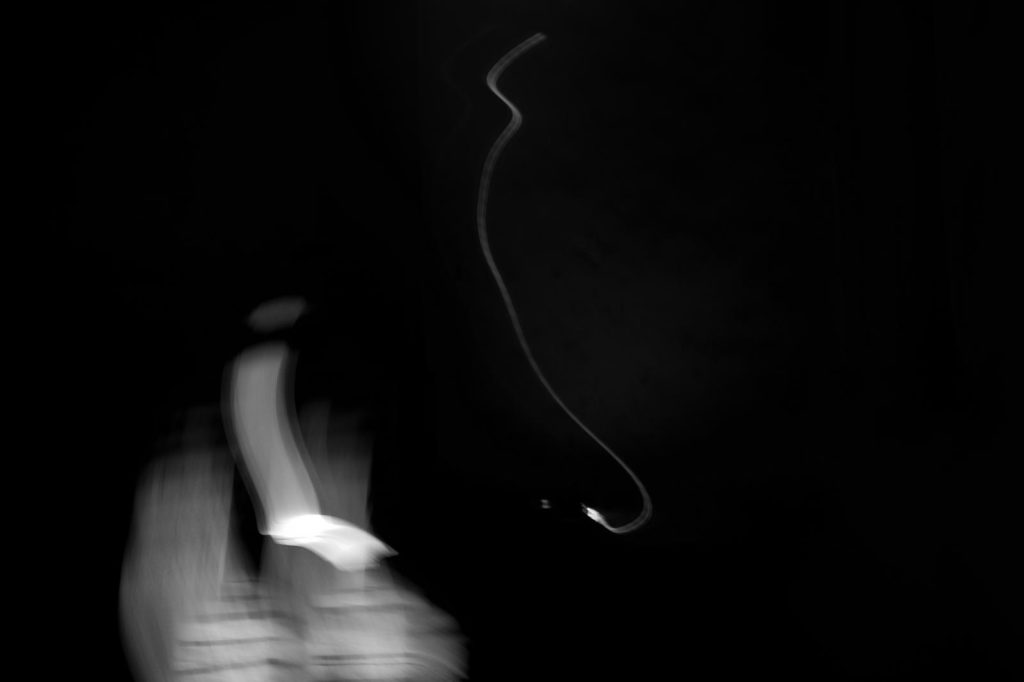
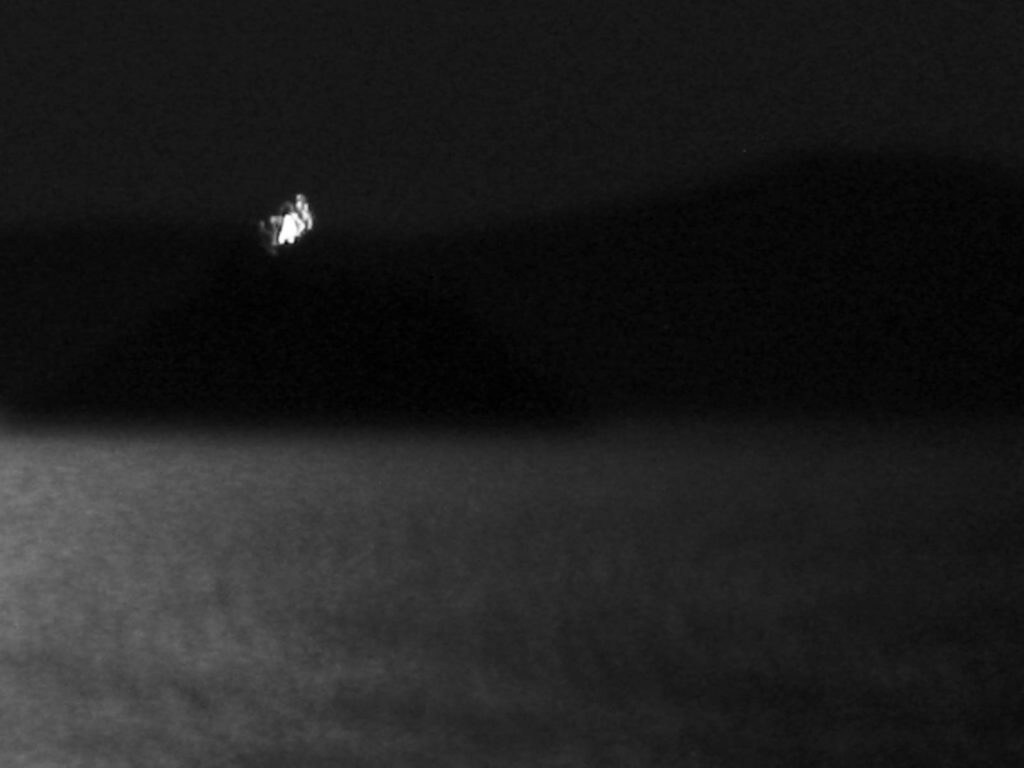
These film photographs were taken very recently using film as part of my research on in situ kinetic photography [In Situ Kinetic Photography]. You can explore the various posts on my blog that address this topic, but I’ll summarize here what this technique entails. It involves the photographic exploration of a location or scene, captured in a single exposure lasting several tens of seconds, or even a few short minutes. It’s a sort of mini-film recorded in a single frame.

I really like this Kodak Color Plus 200 film, which produces warm colors and has a slightly retro feel. It doesn’t have a striking dynamic range, but it has a soft, slightly old-fashioned quality with shimmering colors.

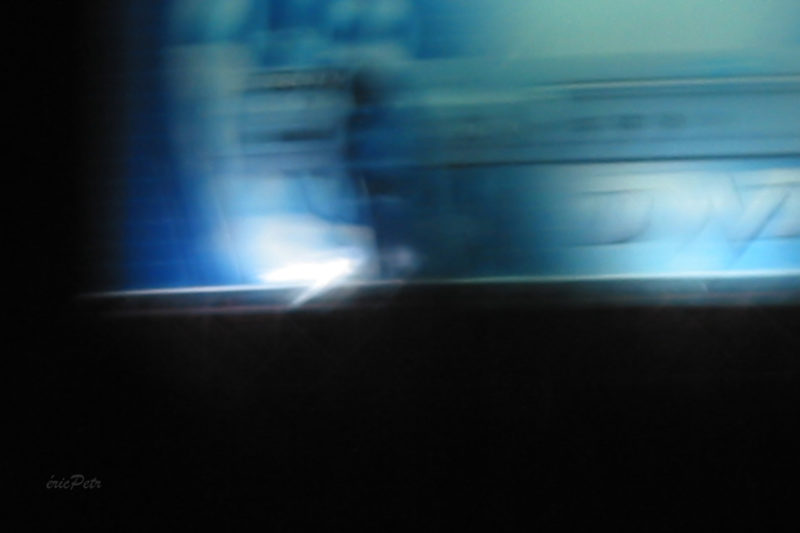
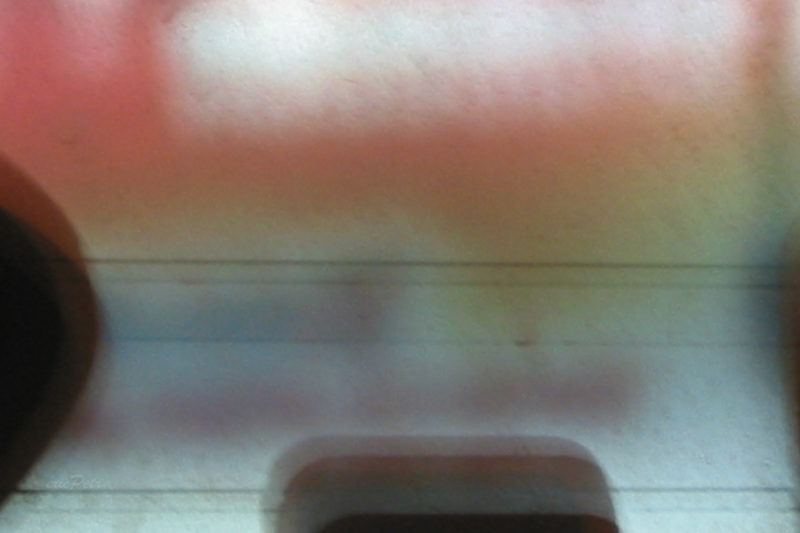
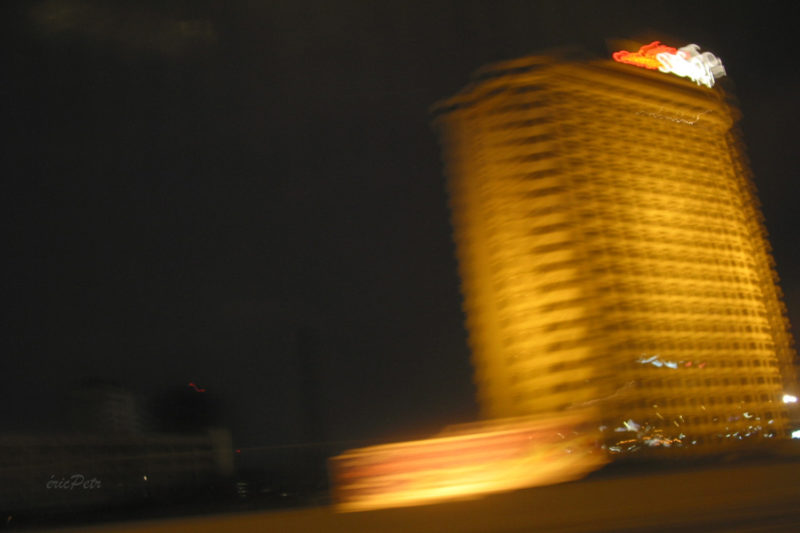
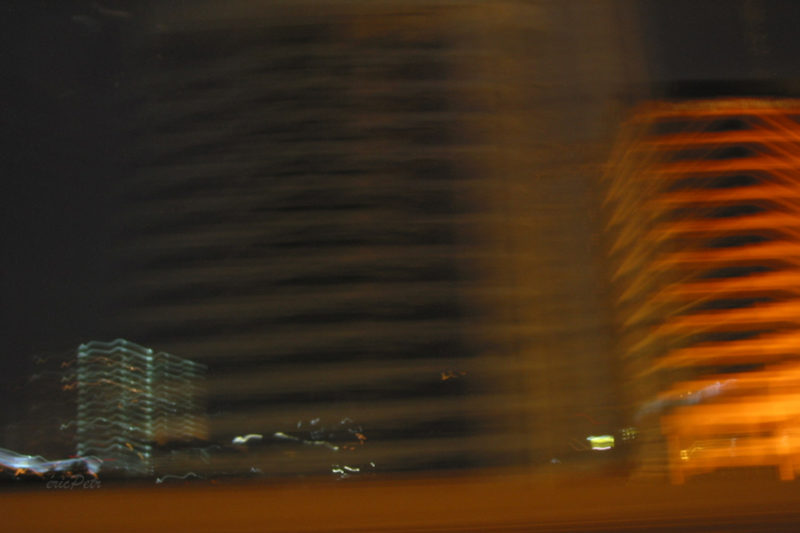
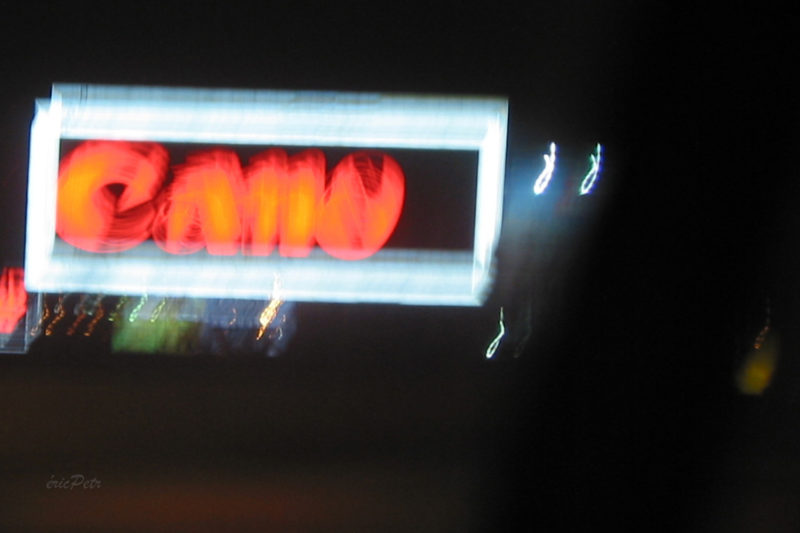
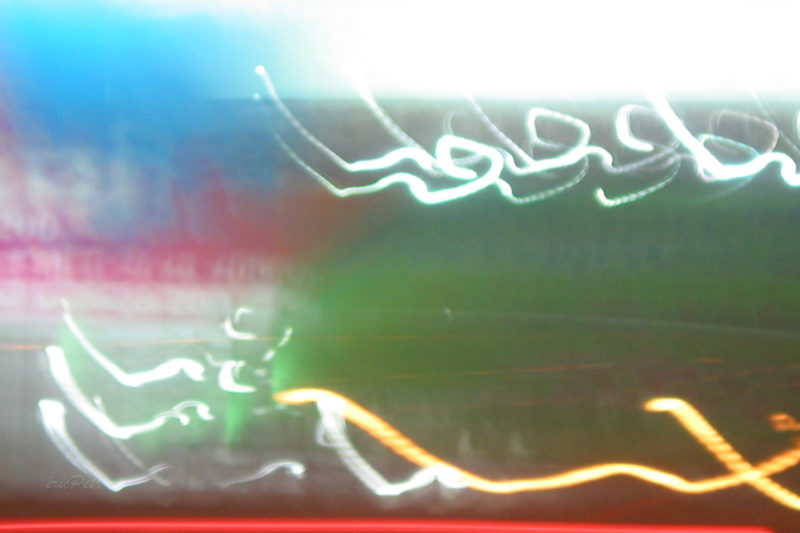
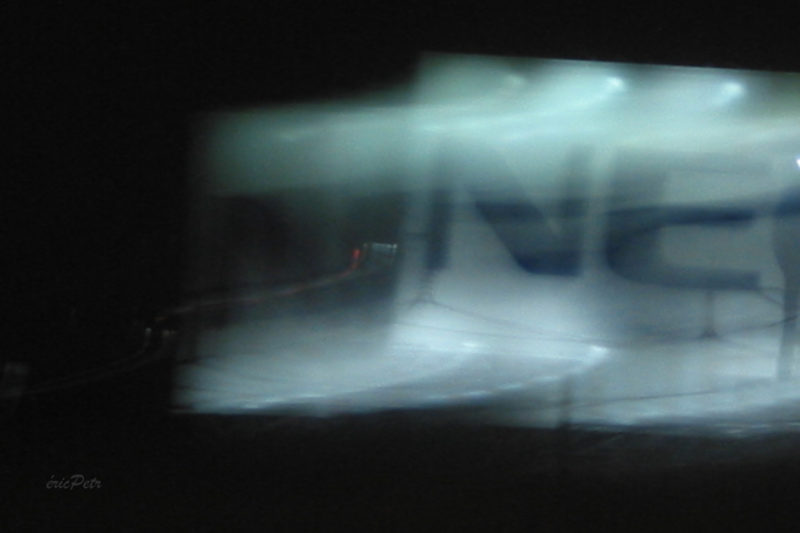
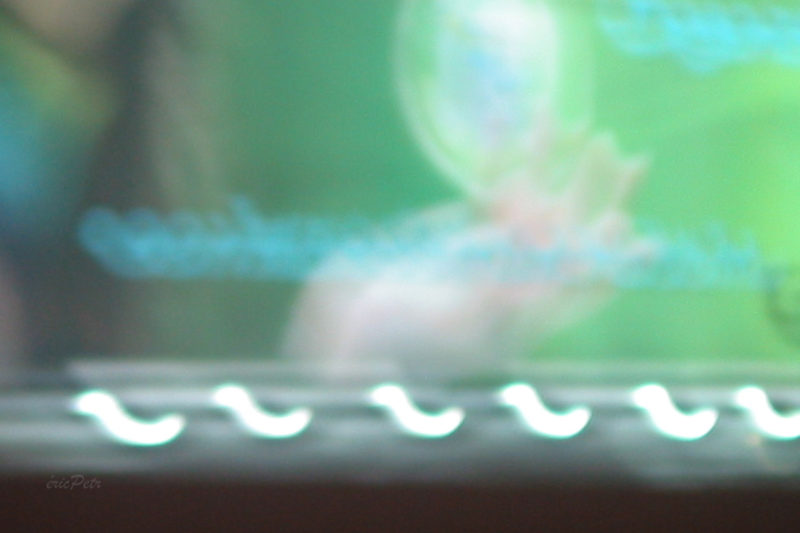
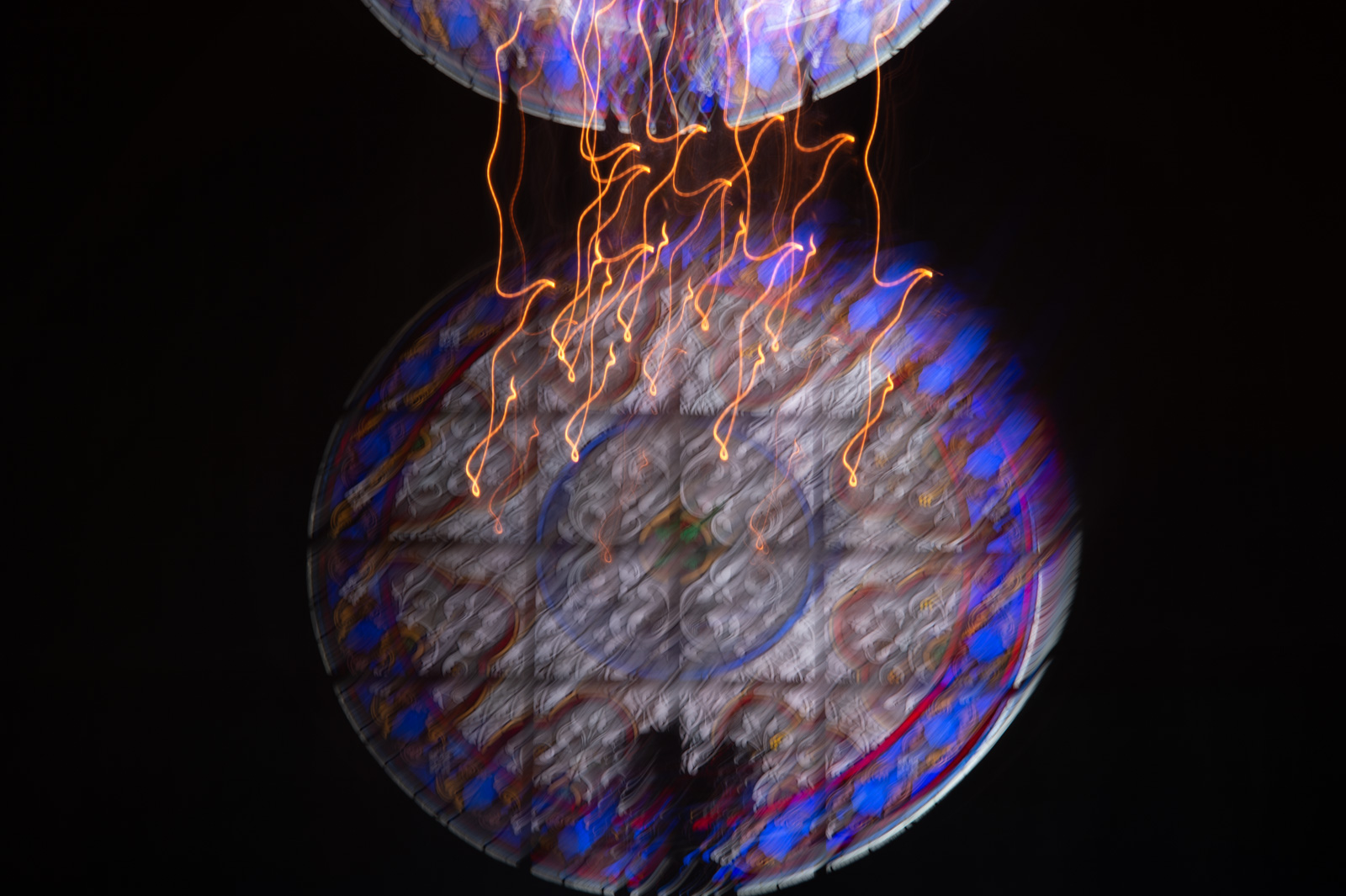
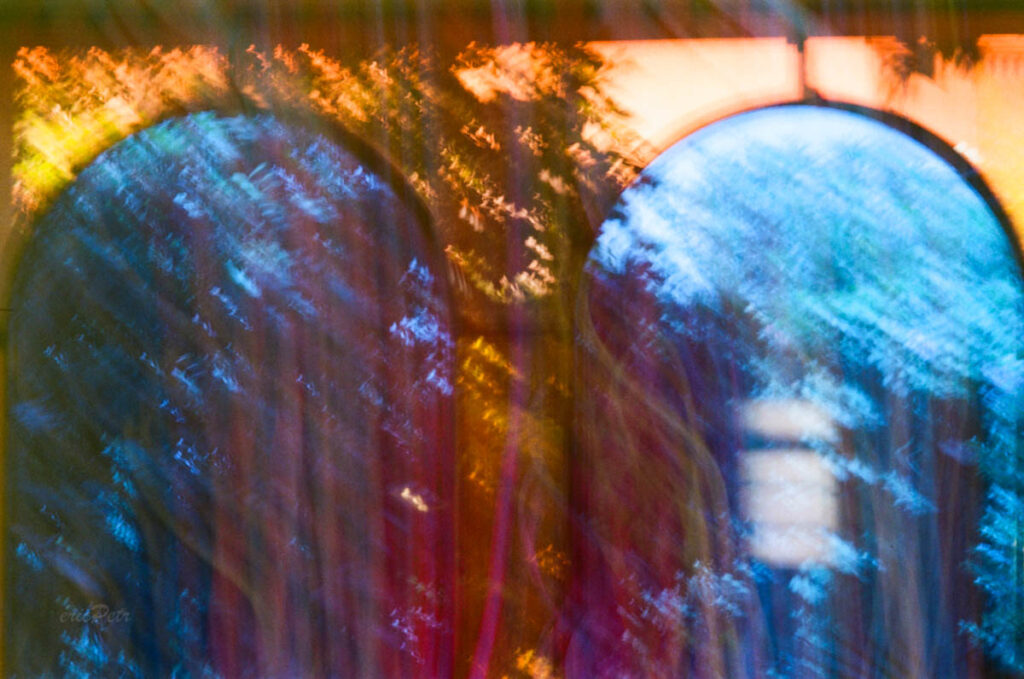
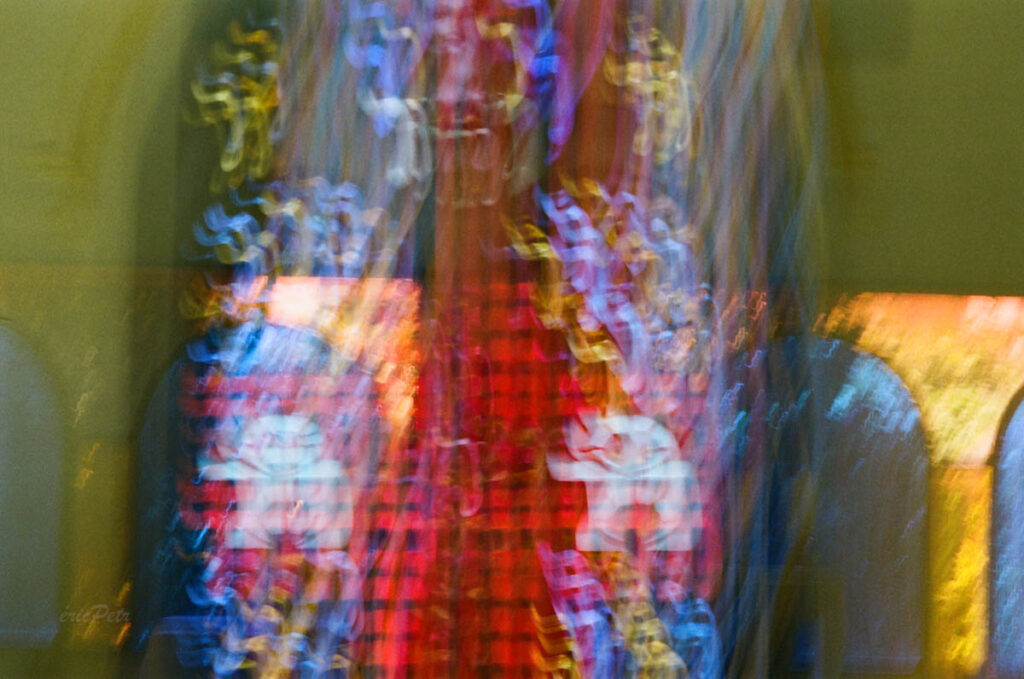
In any case, the reason I’m writing this article and presenting these four film photographs—which are part of a larger series—is that one of them depicts a phenomenon that is uncommon in photography, known as a “ghost image,” or “ghosting” in English.
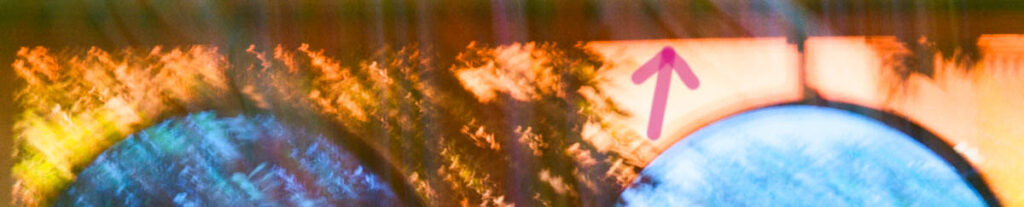
What you see here is not a scanning or image-processing artifact, but a phenomenon physically imprinted on the negative itself. In any case, this is an unusual phenomenon in my own practice of film photography, and one that I am encountering experimentally for the very first time.

As you will see, the perforated part of the 35 mm film is superimposed on the image and appears at a slight angle.

In order to conduct a proper analysis, I need to specify the shooting conditions and the type of equipment used.

  1. As for the equipment, it’s a Nikon F3T in excellent condition, which was mounted for the occasion with a five-element, non-AI Nippon Kogaku Nikkor-Q 135 mm f/2.8 lens from 1965.
  2. The back of the camera is completely waterproof, and its seals are practically brand-new. Its hinges are perfectly aligned and do not let in any light. Its waterproofing is regularly checked and is flawless.
  3. This is a roll of Kodak Color Plus 200 ISO film that I recently purchased and have been storing in a special container designed to preserve film until it is used.
  4. This photo was taken with an exposure time of about one minute—maybe just a tiny bit longer.
  5. I always put the viewfinder cap on when I’m taking pictures, which prevents any stray light from creating a halo effect while the shutter is open.
  6. The film rewound properly, and the cover was never accidentally opened while the film was in the camera. The film was immediately placed in its black box after being removed from the camera.
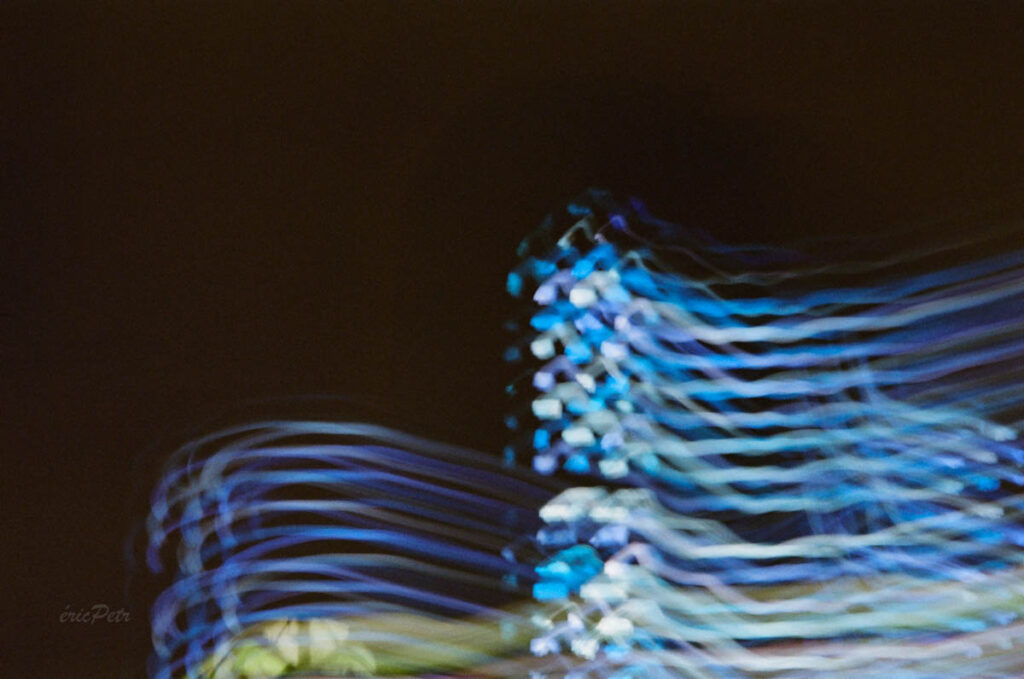
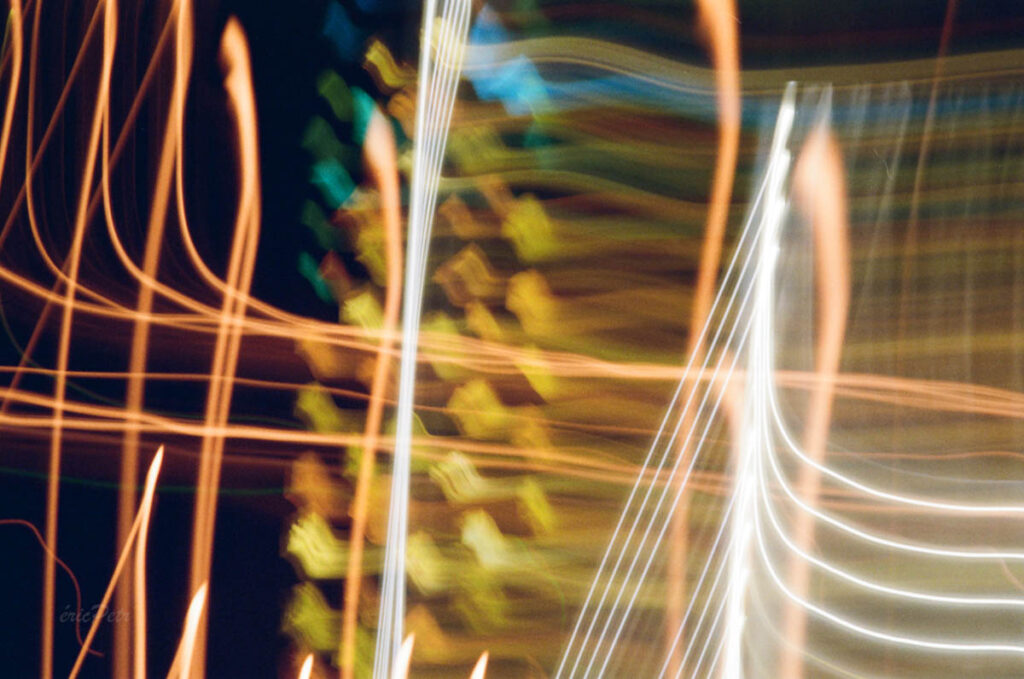
  7. Here you can see the photographs that come before or after the one in question. You will notice that none of them show any kind of light haze or artifact.

Given the context described above, the hypothesis that a possible light source is leaking through the rear film loading hatch is highly unlikely.

In fact, if light were to leak through the camera’s body, this stray light could have illuminated the film from behind and formed a severely degraded image of a structure located in the immediate vicinity of the film’s light-sensitive area, such as a bright edge, a window mask, a metal edge, or an adjacent perforated area.

And if that were the case, the perforations visible in the photograph in question could have indirectly contributed to the formation of thisghost image.
I am therefore inclined to believe that the film base itself (that is, not the light-sensitive emulsion, but its transparent plastic structure consisting of multiple thin layers) acts as a component of the optical and image-recording system.

As a reminder, a film consists of several layers, namely:

・The emulsion surface;
・The interfaces between layers;
・The transparent plastic substrate;
・The protective layers
・The anti-halo layer.

Of course, I can’t say for certain exactly which mechanism is responsible for this strange superposition, but two physical hypotheses come to mind.

First Hypothesis

The first hypothesis is thought to be related to a phenomenon known as “light piping.”

When an intense light source strikes the film at an oblique angle, the light could penetrate through the transparent edge of the film and then propagate through the film base.

The perforations in the film could, in fact, serve as an entry point for light to travel through the film’s structure to the emulsion layer, where it would partially reveal the geometry of the film’s edges.

We could think of the path that light travels in this way:

[scene] ~ [lens] ~ [film structure] ~ [film emulsion] ~ [image]

Second hypothesis

The second hypothesis—more speculative but particularly interesting—would be that of an internal reflection involving the film itself.

When exposed to an intense beam of light arriving at a certain angle, this non-sensitive, transparent portion of the film located near the perforations could have been illuminated from the side. A fraction of this light might then have been transmitted through the various layers of the film, reflected toward the surface of the rear lens element, and finally partially reflected back toward the light-sensitive surface of the film, thereby creating this superimposition with the photographed image.

It is also highly likely that this long exposure time allowed the light to travel all that way and be captured in the photograph.

The hypothetical route could then be illustrated as follows:

[scene] ~ [lens] ~ [film frame / film structure] ~ [rear optical surface] ~ [film emulsion] ~ [image]

Under this assumption, film would no longer be merely the passive medium onto which the image is recorded; rather, through its properties of transmission and reflection, it would itself contribute to the creation of the final photograph.

Of course, this is merely a hypothesis on my part that would need to be supported by specific experiments—given the complexity of the interactions between the various organs—in order to be able to state with certainty the exact mechanism behind this phantom image. 
So, for now, this image remains an optical mystery whose exact origin I cannot determine with certainty.

The extremely unusual conditions under which it was taken (namely, an exposure of about one minute, the presence of intense light sources, and the use of an old lens with an optical design different from contemporary ones), may have allowed a phenomenon that is usually imperceptible to gradually imprint itself on the emulsion.

The first hypothesis—that light propagates internally within the film base—could explain the presence of the perforated structure. 

The second, more speculative approach envisions a series of interactions between the film plane and the rear optical surfaces of the lens, momentarily transforming the photographic medium itself into an active element of the optical system.

What fascinates me about this experiment is precisely this possibility: that the medium intended to receive the image might, during the exposure time, have itself contributed to the composition of the image.

Photography would then no longer be simply a luminous trace of an outdoor scene; we already know this. But the camera, the lens, the type of film, and even the very materiality of the film would have unwittingly become participants in the image.

A photographic accident—that’s for sure! 

But it also reveals a transient phenomenon that highlights the idea that the medium of photography can photograph itself 😉

Food for thought…!
INTERVIEW AT GALERIE PATRICK REYGADE

A Conversation About Photography, Light, and Japan

In May 2026, Galerie Patrick Reygade in Marseille hosted an exhibition conceived around two bodies of photographic work, two spaces and, ultimately, two approaches that respond to one another.

On the ground floor was presented 「ラッセラー、ラッセラー!」Rassera, Rassera!, a photographic narrative created in 2023. In the gallery’s basement, a retrospective offered an opportunity to discover a body of work specifically devoted to light, its movements, and the transformations it brings about in our perception of reality, like a print or a calligraphic work.

On the occasion of this exhibition, Nathalie Petitjean Ozog, Artistic Director of Galerie Patrick Reygade, invited me to take part in an interview about my photographic practice.

This conversation deliberately goes beyond the subject of the works on display. It provides an opportunity to explore my deep relationship with photography, considered not simply as a tool for representing the world, but as a medium through which to offer another vision of it.

What interests me in an image is not so much reproducing what the eye sees, but rather attempting to reveal a more inner dimension. Framing, movement, light and abstraction allow photography to become a form of graphic writing. My desire is for it to be capable of translating ineffable sensations: an energy, a vibration, a feeling, an emotion, something like a breath. In fact, more simply, something that moves behind the appearance of the things we see and allows the image to be inscribed within other temporalities.

The interview also brings to light a connection with my practice of aikido and my knowledge of Japan. Without seeking to establish a systematic or theoretical relationship between these different fields, certain correspondences emerge naturally: the relationship to movement, to distance from things, to a highly centered sense of temporality, to energy, to emptiness, to the circulation of forces and spaces, as well as this attentiveness to what is not visible.

This interview offers a rare opportunity to put words to these connections and to evoke what sometimes lies behind the construction of my images.

I invite you to discover this conversation with Nathalie Petitjean Ozog, recorded at Galerie Patrick Reygade in Marseille on the occasion of the May 2026 exhibition.

URBEX, PLACES AND ENERGIES

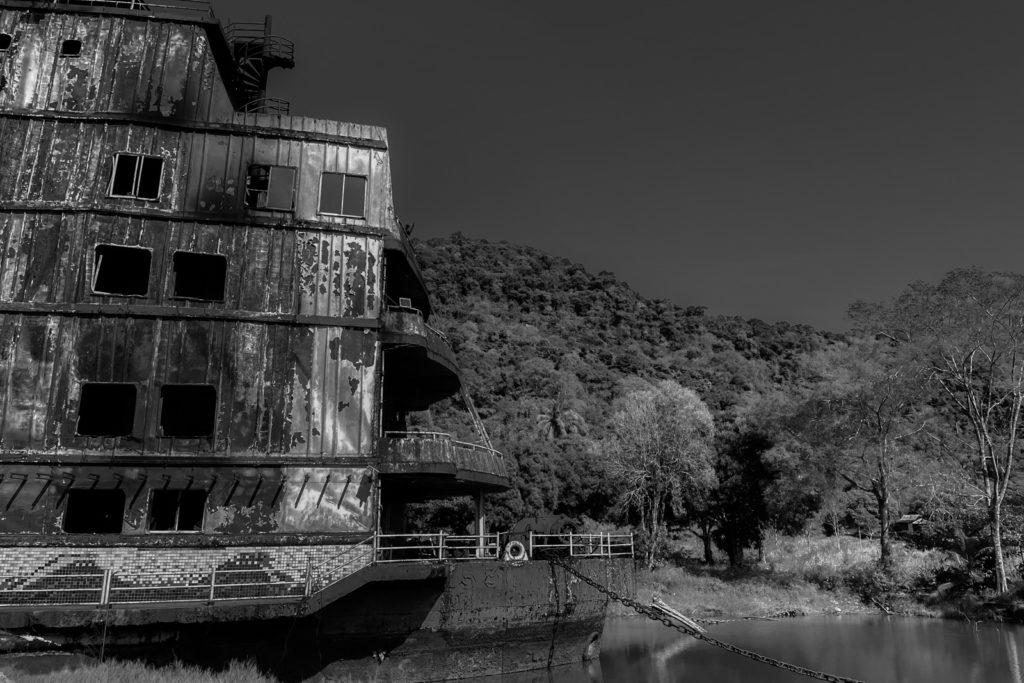
Koh Chang Island ghost boat © Éric Petr, photograph in January 2025

I’m not a photographer specializing in URBEX (Urban Exploration), but I can be drawn to certain sites where I feel an extraordinary energy, which in this case compels me to record it and visually extract its trace, memory or presence.
I’m going to present two photographic narratives, one of which was taken at the bottom of the island of Koh Chang in Thailand, and the other on Hashima, an island off Nagasaki in Japan.

Koh Chang, Elephant Island and its Ghost Boat

This is a site invested by a local billionaire to create a highly original hotel complex, but built on a site that is sacred to the Thais.

In Thailand, many places are considered sacred: ancient cemeteries, sites of worship… Yet some have been redeveloped for real estate projects, such as Bangkok’s Suvarnabhumi airport. However, the most prestigious Buddhist monks and priests generally take care to purify these places before any construction takes place.

In a way, it’s a request for permission from the deities to avoid offense.

Of course, if you don’t believe this nonsense, I recommend you stop reading immediately, or you’ll be wasting your precious time.

But the site I’m talking about wasn’t purified by the monks. So it became cursed, and a spell was cast.

We went there, however, and although we prayed at the Buddha altar on site, my wife, who was the investigator of this unusual epic, had an accident the very next day, and was deprived of the use of both her arms from the start of our stay. Rest assured, it was only for 6 weeks.

But the story doesn’t end there.
We were accompanied by a couple of friends, and they too were injured a few days later: one in the knee, the other in the back.

Many would say it’s just a coincidence. Personally, I don’t believe in chance or bad luck. Life is much more complex than that.

Whatever the case, this place is imbued with a very special vibration that everyone can feel. And even if you’re standing by the beach, under the coconut palms, a strange, almost indescribable energy grips you and makes you dizzy.

To read the rest of the story and see the photographs, click here ….

NIPPON JAPON & ÉTIQUETTE | BLOG

nipponjaponetiquette.com/bateau-fantome-koh-chang-grand-lagoona


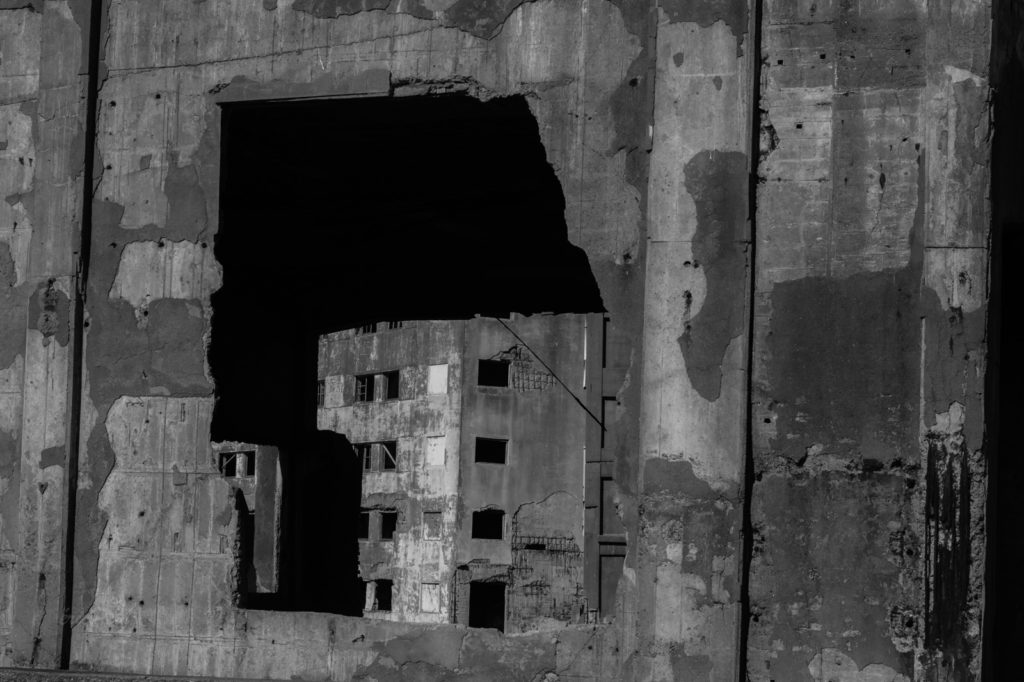
Gunkanjima, the ghost island © Éric Petr, photograph in octobre 2023

Gunkanjima: The Warship and the Ghost Island of Hashima

Hashima is an island near Nagasaki, more commonly known as Gunkanjima, because of the shape it evokes: that of a warship.
“Gunkan” means “warship”, and “Shima” or “Jima” refers to an island.

The island was a mining site from the end of the 19th century until the 1970s.

As mining operations expanded, more and more workers settled on the island—first the miners themselves, then their families, and later various professionals essential to maintaining the site. By the 1950s, Hashima had become a densely populated city, reaching an astonishing 85,000 inhabitants per square kilometer!

Now abandoned for almost 50 years, exposed to the dreaded weather of the East China Sea and frequent, merciless typhoons, the island has allowed itself to be overrun by nature.

Recently classified as a UNESCO World Heritage Site, the mining town is no longer accessible for security reasons, but visits are still possible in small groups in certain authorized parts of the island.

To read the rest of the story about Hashima Island and see the photographs, click here ….

NIPPON JAPON & ÉTIQUETTE | BLOG

nipponjaponetiquette.com/hashima-gunkanjima-ile-fantome-nagasaki

THE MOVING IMAGE OR PHOTOGRAPHY AND AIKIDŌ

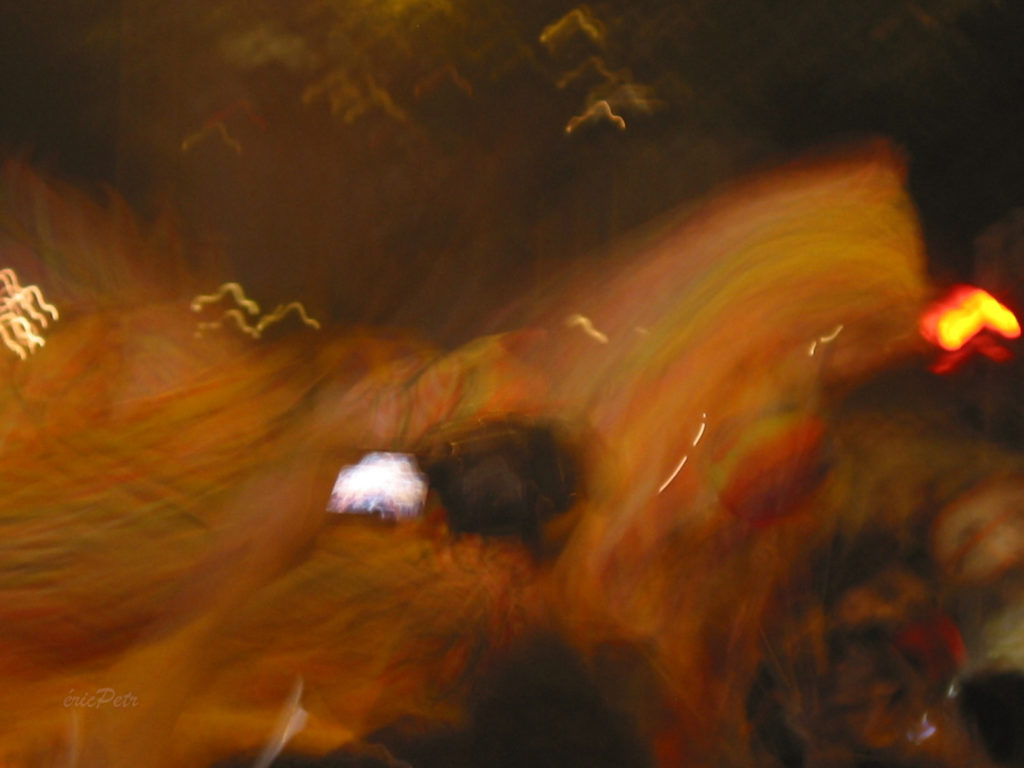
Hong Kong by night, February 2005 © Éric Petr

My path, in my reflection on the moving image

I was a passionate film photographer from 1983 to 1993. I developed my films and printed my photographs in a photo lab I borrowed from the Paris Airport.
Then I suddenly stopped photography. At that precise moment in its history, I undoubtedly felt that an earthquake had occurred, and that I no longer had a place in it. The digital world was emerging.

And so went the years without taking a single photograph and without touching a camera in the decade that followed.
When I look at my photo albums, I see a gaping hole of a decade’s worth of unprinted memories, some of which have disappeared into the depths of my subconscious.
The first lesson I learned from this deprivation of images is that photography, drawing and travel journals, beyond their beauty, are first and foremost an indispensable and necessary tool for memory.

But I had to step back from my obsessive and sickly relationship with the camera, and the ten years I’d been away from it made me aware of this, and gave me the distance I needed to reflect freely and without constraint on the power of the image, its role, its power, and above all, the way in which the photographic image could touch on the immaterial, the metaphysical, and express unspeakable emotions of the spiritual or invisible order.

And so it was that this decade of gestation, which was accompanied by an intense practice of uncompromising Aikidō, changed my view of the world, or rather, brought to it an acuity that until then had met with some difficulty in expressing itself clearly within me.

It’s also undeniable that Aikidō, in its pure practice, traditional approach, intensive training and regular meditation, provides access to a wider field of spiritual knowledge and our relationship with the universe.
This is how Aikidō has helped me so much and continues to bring me this depth in the conception of my photography.

I would like to express my gratitude to Armand Mamy-Rahaga and Michel Kovaleff who, through their practice of a fair and uncompromising martial art, have helped me to find a path in my reflection, and to resume my photographic work with the strength that Aiki gives us.

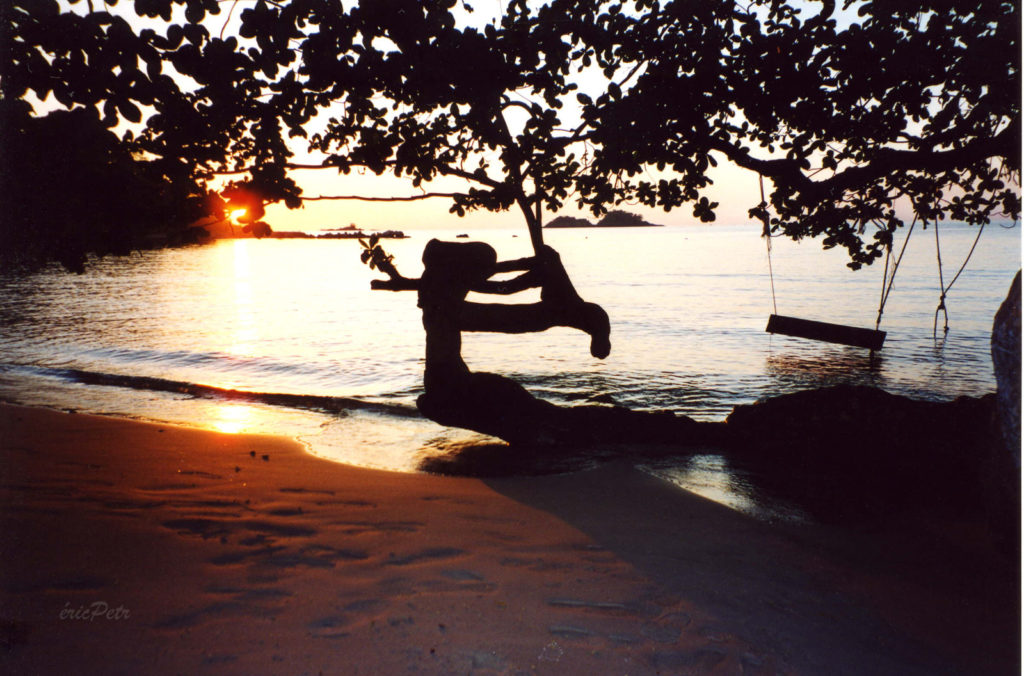
Koh Chang 2002 © Éric Petr
Twelfth exposure of a first-ever photo film made after a ten-year hiatus from photography.

So in December 2002, after a ten-year hiatus, I took up photography again, where I had left off in 1993, but with a more structured coherence than my work of the 80s had produced.

It was a chance encounter with a 12-exposure disposable Pocket Instamatic Kodak, initiated by a trip from Thailand to Cambodia. 
Twelve great moments of emotion!
Just twelve photos taken during a trip to the ends of the earth is like holding your breath until the end.
On this trip, I learned to take my time, to search my subconscious for the triggering breath of the photographic click, the pleasure of the release.
I realized that photography is, above all, about listening to our universe.

The first photographic works I produced from 2003 onwards (Tōkyō under the rain_2oo3, Bangkok_2oo4, TrAveRséE2nUiT_2oo4, Windows_2oo5, and others), constitute the foundations and underpinnings of a knowledge acquired during this decade of interruption in photographic practice.

The three images I’m presenting today from 2005 are highly representative of my style. My photography not only uses light as the primary constituent of the work, but is also distinguished by its ability to capture the subtlest details of a scene or place, transforming visible objects and magnifying their secret perception. Through this gaze, each image becomes a kind of visual poem, where the invisible takes shape, and the viewer is invited to discover a world all his or her own, while remaining connected to the universal human experience.

These images from my Hong Kong by night series, taken in February 2005, attempt to reproduce the ineffable atmosphere of Asian cities, bringing with them what will become my signature as a photographer, that aspect of dense, poetic luminous matter, that dreamlike atmosphere and that feeling of timelessness.
Although these images were taken twenty years ago, their power makes us forget the poor quality of the digital camera used at the time, which remains a feat.

Hong Kong by night, February 2005 © Éric Petr

My photographic work will continue uninterrupted within the framework of this reflection on light, movement, space and time.
I have named this photographic process to define it: “in situ kinetic photography” or “photographie cinétique in situ”.

This work continues today with my Variations de Lumière but also, and always, with 光 (Hikari), Métamorphoses or my Spirituelles Odyssées which gave rise to the publication of a numbered and signed book in 2016, by Corridor Éléphant, Éditeur de photographies contemporaines.

This work on light and movement, which I began to disseminate on social networks in 2010, remained largely unknown to photographers and the general public. My numerous publications gave way, little by little, to a photographic trend that other photographers, in turn, took up and developed on their own, then named in the years 2015 “Intentional Camera Movement”.

I’m happy to be one of the very first investigators of this photographic movement, and to name but a few who preceded me, Kōtarō Tanaka (1905-1995), Ernst Haas (1921-1986), and also my contemporary Alexey Titarenko (b. 1962), who for his part worked specifically on crowds in motion.

I personally see myself as a photographer who has concentrated all my work and efforts over the course of my life on this principal reflection of the moving image, creating a totally unique style.

Hong Kong by night, February 2005 © Éric Petr

FROM “ICM” TO “IN SITU KINETIC PHOTOGRAPHY”

Bangkok 2oo4 © Éric Petr [Intentional Camera Movement]

“in situ kinetic photography”
first principle of a manifesto

I started practicing photography in 1983, and for ten years I had this idea of developing a research and aesthetic based on light, and the impact that light can have on our mind, our thoughts, and our perception of the universe.

I resumed this work in 2003, after taking a break from photography between 1993 and 2003.
Nevertheless, my reflection on the image nourished this period of inactivity, which subsequently proved very rich and constructive for my photographic work.

Ten years later, in 2003, after thinking long and hard about the image, its role and its power, I continued my photographic work on light, as plastic or matter, with a fresh eye.

“Bangkok 2oo4” and other works from the same period show a body of work that drew inspiration from this time of reflection, introspection and maturation.

In this new era of digital imaging, this style of photography was not yet precisely named, but a decade later it was, under the name ICM (Intentional Camera Movement).

光 0x1853AC © Éric Petr, 2020 [in situ kinetic photography]

In the 20th century, some photographers devoted part of their work to this technical aspect of motion photography, such as, to name but a few, Kōtarō Tanaka (1905-1995), Ernst Haas (1921-1986), and Alexey Titarenko (b. 1962), who worked specifically on moving crowds.

In the early 2000s, my work on the moving image, with the idea of painting with light on my film or sensor, is very contemporary in approach, and remains on the bangs.

My work, which is based on the principle of intentional movement, has now evolved to bring a broader field to the ICM, which I call “in situ kinetic photography”.
“In situ kinetic photography” brings a wider field to the “intentional camera movement” and takes into account different axes and planes, in situ, for the same exposure that oscillates from a few seconds to a few minutes.

“In situ kinetic photography” is similar to the ultrasound of a place that is produced like a micro-film, but which is recorded on a single image. It is therefore neither multiple exposures nor post-processing work. Its photography is part of the field of abstraction, or subjective abstraction. Its writing is done with light and photons constitute its alphabet. Its language is cosmic, its style dreamlike and its aesthetic plastic. This photography is similar to painting in the sense that it is constructed on site by composing the elements that are added to the image.

The brush or pencil is the light ray that contains the matter and energy of electromagnetic waves, while the canvas or paper is the film or the camera sensor. Unlike the painter or the calligrapher, it is not the brush that moves, but the support, that is to say the camera.
It is also, in this sense, that the intention of “in situ kinetic photography” is in no way that of “light painting”, even if we can observe certain common points.

For this photograph, composed in situ, elements very dispersed on the site are carefully chosen to compose a photographic painting. After an analysis of the times allowing the addition of the elements to be photographed, the photographer will have to determine precisely the speed of the shutter, the aperture of the focal length, and the sensitivity of the film, according to any filters added.

For “in situ kinetic photography”, the intention is no longer movement, as in “intentional camera movement”, but that of constructing an abstract image with a plastic density that will suggest the superposition of quantum states of a geographical point that light crosses during its infinite odyssey.

Éric Petr | 0xB09FE203
The fight of the Amazons | Metamorphoses 0xB09FE203 © Éric Petr, 2019 [in situ kinetic photography]
Éric Petr | 0x480DF803
光 0x480DF803 © Éric Petr, 2014 [in situ kinetic photography]
Éric Petr | 0x7077 Variations of Light opus 0 (Nikon F3) Le Lavandou 1980's
Variations of Light opus 0, Le Lavandou 1980’s © Éric Petr | Nikon F3, film Kodak
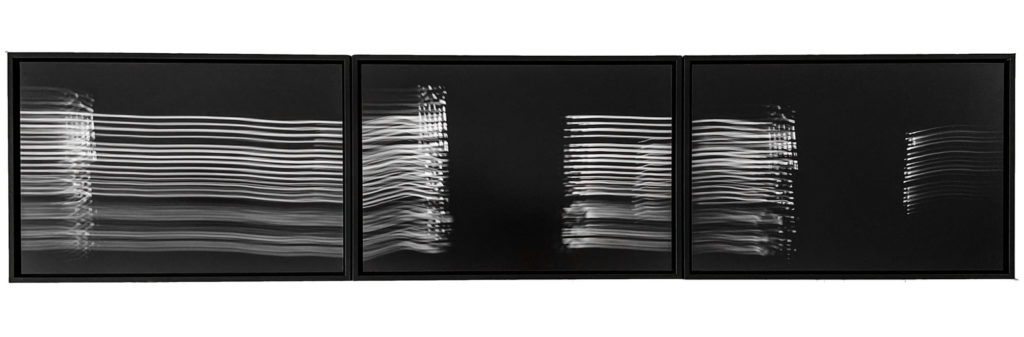
Variations of Light opus 5 [Triptyk 2021] 65x300cm © Éric Petr [in situ kinetic photography]

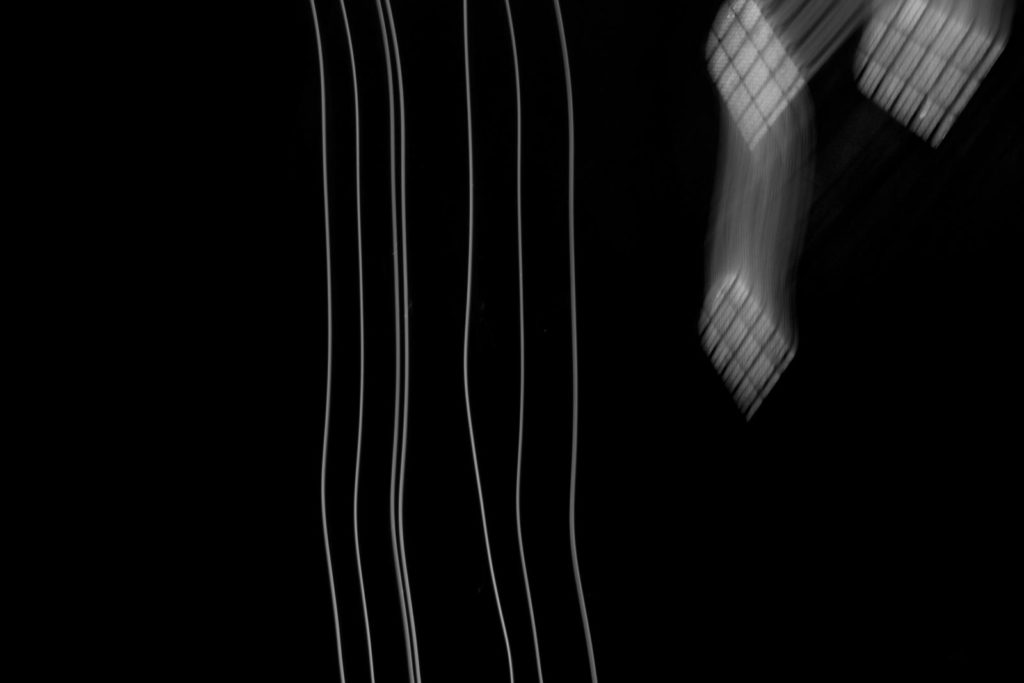
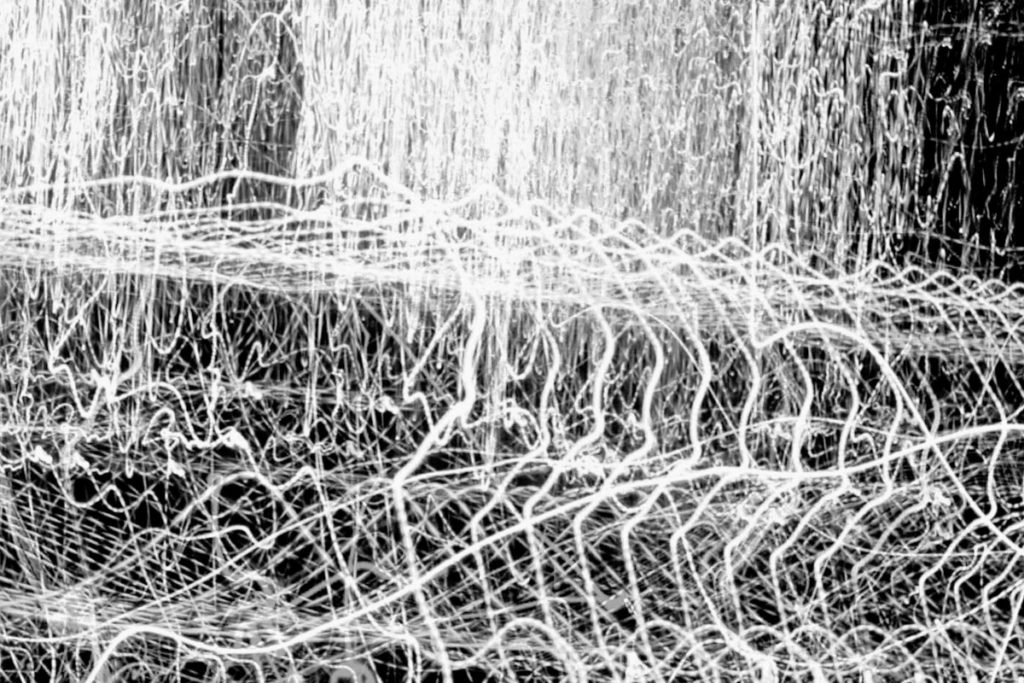
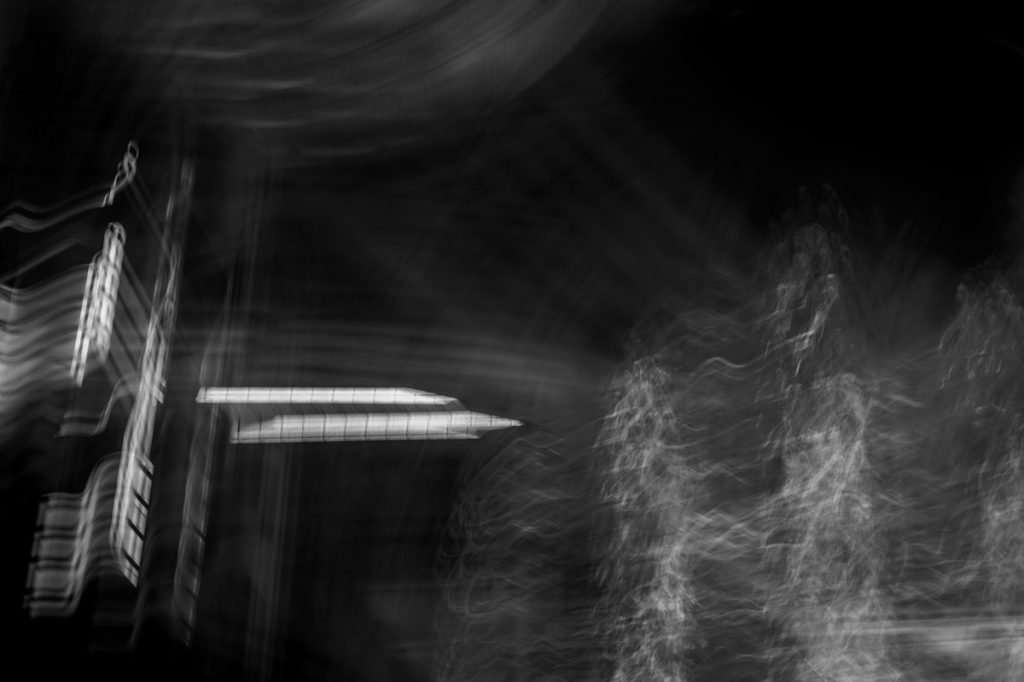
WHEN BLACK REVEALS LIGHT

zz blog: When blacks reveal light © Éric Petr
Photography © Éric Petr [click on the image to enlarge it]

In my work, light is not always the source of its presence.

It’s also a reflection on the light that leads me to construct images, which by its absence, calls out to us in our confrontation with nothingness.

It is these deep blacks that reveal her, as much as our eye can become accustomed to restoring her presence in the evanescent appearance of forms produced by our mind.

zz blog: When blacks reveal light © Éric Petr
Photography © Éric Petr [click on the image to enlarge it]

In today’s world, we prefer images that are easy to read, without having to make the effort to understand or analyze them.

Yet, as Gustave Flaubert said, “For something to be interesting, you have to look at it for a long time.”

zz blog: When blacks reveal light © Éric Petr
Photography © Éric Petr [click on the image to enlarge it]

My images ask the viewer to linger.

Look closely at these images. They’ll reveal their secrets.
There are multiple levels of interpretation.

The photographs are taken in such a way that shapes and silhouettes seem to move under the effect of our retina. Details change too, depending on the angle of view or the focus of our eye.

Perception therefore changes, depending on how we look at it, how bright it is, how much attention or concentration we bring to it, and the state of mind we’re in when we look at the image.

zz blog: When blacks reveal light © Éric Petr
Photography © Éric Petr [click on the image to enlarge it]

THERE IS NO SUCH THING AS CHANCE, MERELY SYNCHRONY

The Battle of the Amazons | Metamorphoses 0xB09FE203 © Éric Petr, 2o2o

“My work constitutes a thought process on the nature of light – a quest for its essence.

I borrow light, in its most primitive form, as raw material, as the foundation, the architecture of my entire photography. Light is not used as something that can show or illuminate what is around us, but only for what it really is, for its undulating, corpuscular nature.

I fashion this light in such a way that its filtering, reflection or dazzling may redefine the space I happen to be in and offer a different perception of the world.

I ask the question of whether our actual perception is but a placement of our own selves in relation to the universe, and as a result, if this perception shapes our own comprehension of reality, or should I say, of a certain reality.

My work is part of a meditative endeavor, but one where I am personally detached from any introspection. I like the idea of being crossed by atoms, of feeling so vast that we have a sense of being in every place at once, yet also focused on just one point, the one my camera happens to be located in. I engage in long working sessions to record the vibration of a place, its atomic resonance, or its indecipherable atmosphere, and like a film whose duration plays out in just one image, a story unfolds according to the diction of scenography and movement whose inspiration is in sync with the elements composing this very place.

In my work on the “Metamorphoses”, light intervenes in a specific way on the reflection of objects, so that their scene setting in situ creates figures akin to dilated bodies, figures composed of floating ethers coalescing in complex and destructured shapes that the image, when developed, restores, as if they conformed to a potential reality.

These bodies do not belong to space or time, nor do they belong to our world, they are but aggregates of waves and particles locked in a perpetual motion, elements which come and collide with my inverted T wave, just for one, brief moment.

My photographic writing is direct, that’s to say that it enters into a narrow relationship with the material. It is born from a meeting that takes but an instant, fixed on the border of temporality, caught between a being and the universe. This is what we could call a point of contact between Heaven and Earth.

There is no such thing as chance, merely synchrony. My meeting with the DF Art Project is of this nature. I would never have thought that there could exist as many common points.

And if this beautiful meeting with Déstructuralisme Figuratif took place, it is also because all the elements had come together so that my work could contribute a humble stone to their edifice. And above all, the DF Art Project involves a communion of individuals around a societal thought on human beings and the infinite possibilities of transgressing their shape through a fragmentation of the figure. A whole aspect of my work enters into consonance with this position, one where figures dilate, and where this full expansion of my imagery aptly questions the conceptualization of these shapes and their quantic connection to reality.”

by Éric Petr

About Figurative Destructuralism

The structure DF Art Project, represented by the Figurative Destructuralism movement, is an artistic collective of living plastic artists sharing a vision of art which is common to them and by which artistic work is oriented towards a fragmentation of what is real. This reality is put into perspective, distorted or dynamically transformed.

Through this conceptualization, the artists position themselves against a rising tide of individualism, where human exchange has given way to rampant loneliness. Their introspective focuses on analysis and the multidimensional creation, where the surreal comes to the fore and where, more generally, new less human, more virtual interactions are created.

These perceptions aim to reveal, through what could be called an optimistic rally cry, a situation, probably generational, of a globalized society in the throes of mutation facing – a society faced with an uncertain, ever-changing future.

Through artistic creation, the DF Art Project presents its considerations on a society where true possibilities for the emancipation of mankind as well as like the independence of human imagination are being redefined.

https://df-artproject.com/en/

ITINERANCES OF BEING | MÉMOIRE DE L’AVENIR

Eric Petr « 0xC018DA04 » Métamorphoses • Photograph on dibond • 60 x 90 cm • 2015

ITINÉRANCES DE L’ÊTRE vol.2
04.09 – 02.10.2021

MÉMOIRE DE L’AVENIR
45/47 rue Ramponeau Paris 20e
M° Belleville [L2 – 11]

Opening: Tuesday to Saturday 11 a.m. – 7 p.m.
www.memoire-a-venir.org

9 artists are exhibited
Adèle Bessy / Adrien Conrad / Brno Del Zou / Eric Petr / Gregory Dreyfus / Juliette Frescaline / Marie-Christine Palombit / Suzanne Larrieu / Yohan Blanco

Mémoire de l’Avenir invites, for two consecutive exhibitions, the international artistic collective of DF Art Project, which brings together artists sharing a common plastic research, around the fragmentation of reality, its perspective, its distortion and/or its dynamic transformation.
The artists of the collective question the subject as much as the medium, through plastic, photographic, sculptural, performative, or video projects.
Text: Mémoir de l’Avenir

My exhibited photographs are from my theme “Métamorphoses”.

Métamorphoses are bodies in expansion like floating ethers, which take shape in complex and unstructured volumes that the image restores to the gaze as a possible reality.
Bodies which belong neither to time, nor to space, nor to our world but which are only aggregates of matter, waves and elementary particles in perpetual motion, to freeze at a moment T on my negative or my sensor.
Métamorphoses would be a photograph of the expansion of the universe, at a precise point in its trajectory, where spectra would take on random and recognizable forms containing the mnemic of the cosmos.
My photographic writing is direct; it is born from the encounter of a moment fixed on the thread of timelessness between man and the universe.

About Métamorphoses

DIFFRACTIONS

zzb 0x3877BF03 | Éric Petr
光 0x3877BF03 © Éric Petr, 2017

In my images, the visual material is redefined, the objects are broken down to be reassembled according to volumes and complex plans, giving a new conception of our vision of the world. 

Pablo Picasso changed through his expressive gaze, the perception of objects and the space that surrounds us to surprise and question the viewer.

In my own way, I recompose our perception of the world by retranscribing the information felt in a language made of visual material.

The vibrations or impressions that I feel in certain sublime places are captured by the prism (or pentaprism) of my camera to take shape in the field of our visual perception, just like light waves (this matter forms elementary particles ) which pass through the pinhole of a black box to take shape for our eyes by their simple diffraction.

In a way, it is a question of suggesting to the reader to feel what is, more than to see what was.

A priori, the reading does not seem direct but as one discovers my images, one gradually finds the keys necessary for their readability and understanding.

In a time when we need to understand everything immediately, where time gives rhythm and orders our emotions, the timelessness of my photographs urges the observer to stop, to suspend his time, to disregard his daily life to penetrate the multiple strata of my images and free his subconscious.

IN THE MANNER OF

A la manière de... exposition | #bootstrap_4/5
#bootstrap © Éric Petr, 2017

In the manner of …

from January 2 to January 20, 2018
Opening on Saturday, January 6, 2018 at 7 pm

THE PLACE

The Associative Gallery les Ateliers Agora
ateliers-agora.fr

2 Place Thiers – 13430 Eyguières, in partnership with ESDAC
(School of Design, Applied Arts, Communication of Aix-en-Provence)
dedicates its places of welcome to an exhibition dedicated to photography on the theme
“In the manner of …”

PREAMBLE

Consciously or unconsciously our photographic activity, whether we are amateur, knowledgeable or professional, always finds its inspiration in the work of a master, a guide, a muse.
Somewhere we become the continuity of his thought, of his work.
It is this point that interests us.
It is this point which is the object of our subject.

IN THE MANNER OF… ?

Whether he is a writer, poet, filmmaker, photographer, sculptor, painter, this artist has been, perhaps, is still a guide in your photographic work.
Why not become an extension of his work.
Why not express your feelings about a part of his work.
It is not a matter of plagiarizing, copying, imitating or reproducing.
It is a question of drawing inspiration from at least one part of your work, of extending in your own way the way you see and put in image, to give a new approach, a new dimension, a new staging of a subject.
To copy is to be a slave.
To borrow, is more interesting because the idea grows.
Inspiration and evolution is rewarding.

THE AUTHOR’S WORD

“IN THE MANNER OF …「 Pierre Soulages 」”

#bootstrap_2o17 is a project, which originates in the footsteps of Pierre Soulages light and on a first reflection in 2004 which leads to a netArt project realized on a html page “TrAVerSéE2nUiT 2oo4”, a work of 36 x 1024 pixels (36.864 pixels) which refers to the breakage of silver for digital.

-> www.pozekafee.net/eric.petr/traversee2nuit/

#bootstrap is first and foremost a tribute to Pierre Soulages but also to Edgard Gunzig because they led, without being aware of it, the orientation and the research of my photographic work until recently, when I establish the obvious correlations between Pierre Soulages on the one hand, for my questioning on light as matter and on the other hand, between Edgard Gunzig who, in a second time, made me think about the essence of this luminous material and its timelessness.

The choice of a highly textured Japanese paper, for this series of five non-dissociable elements, is essential insofar as its structure comes, as an echo, recall the physical matter of the “black-light” paintings of Pierre Soulages.

Note: Bootstrap is an explanatory theory of the origin of the universe developed by Edgard Gunzig.

EXPOSED ARTWORK

#boostrap_2o17 | pentaptyk #1/3 copies + 1 AP

This Photographic artwork is a series of 5 images (8×12 cm) on a horizontal line of 140 cm.
The photographs are printed on a Washi Fine Art paper 260g fringed and very textured (10×15 cm) and they are frame-mounted without glass with a floating fixation of the image and each frame measures 15×20 cm.

Please look at the details of this artwork