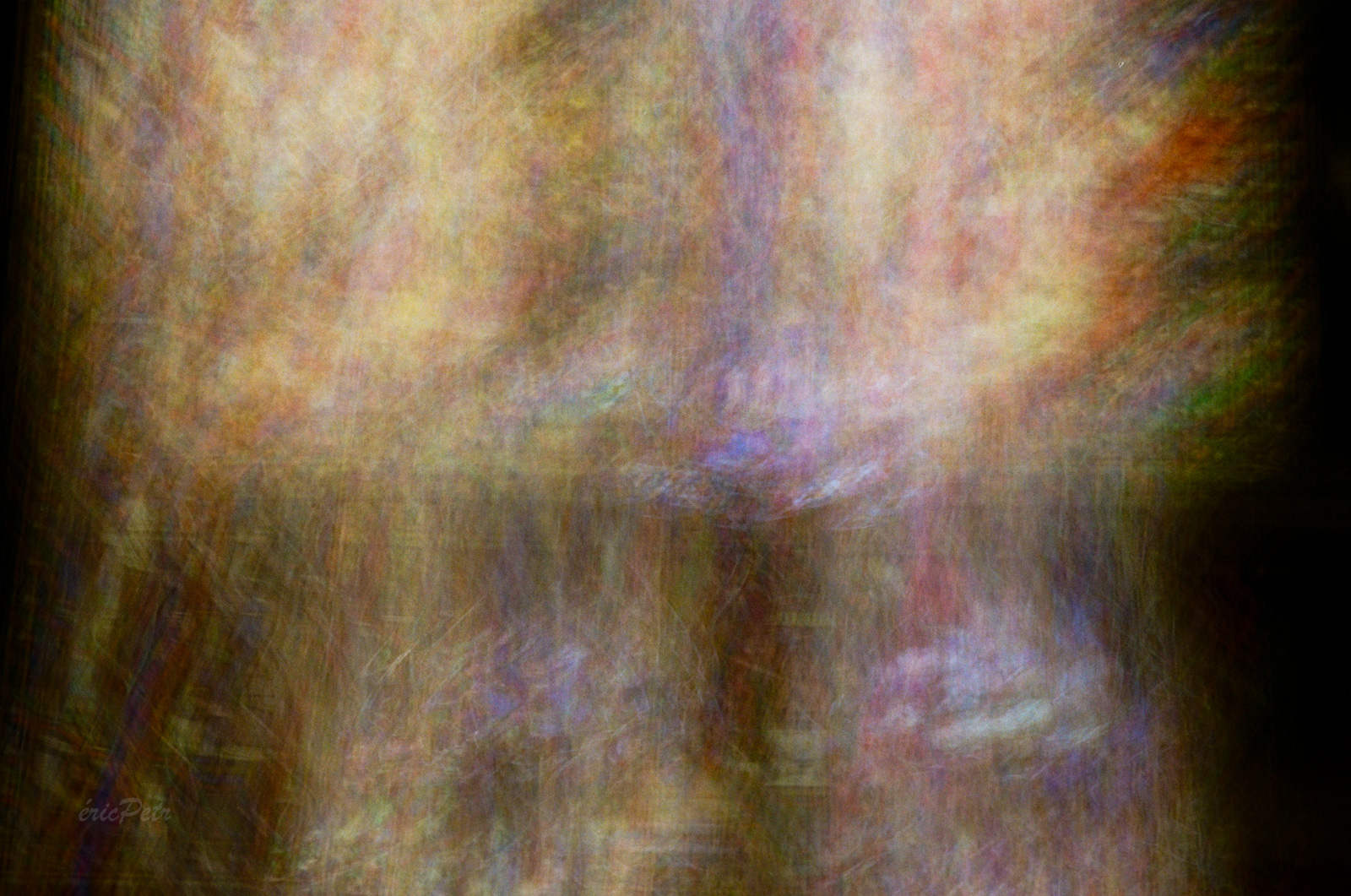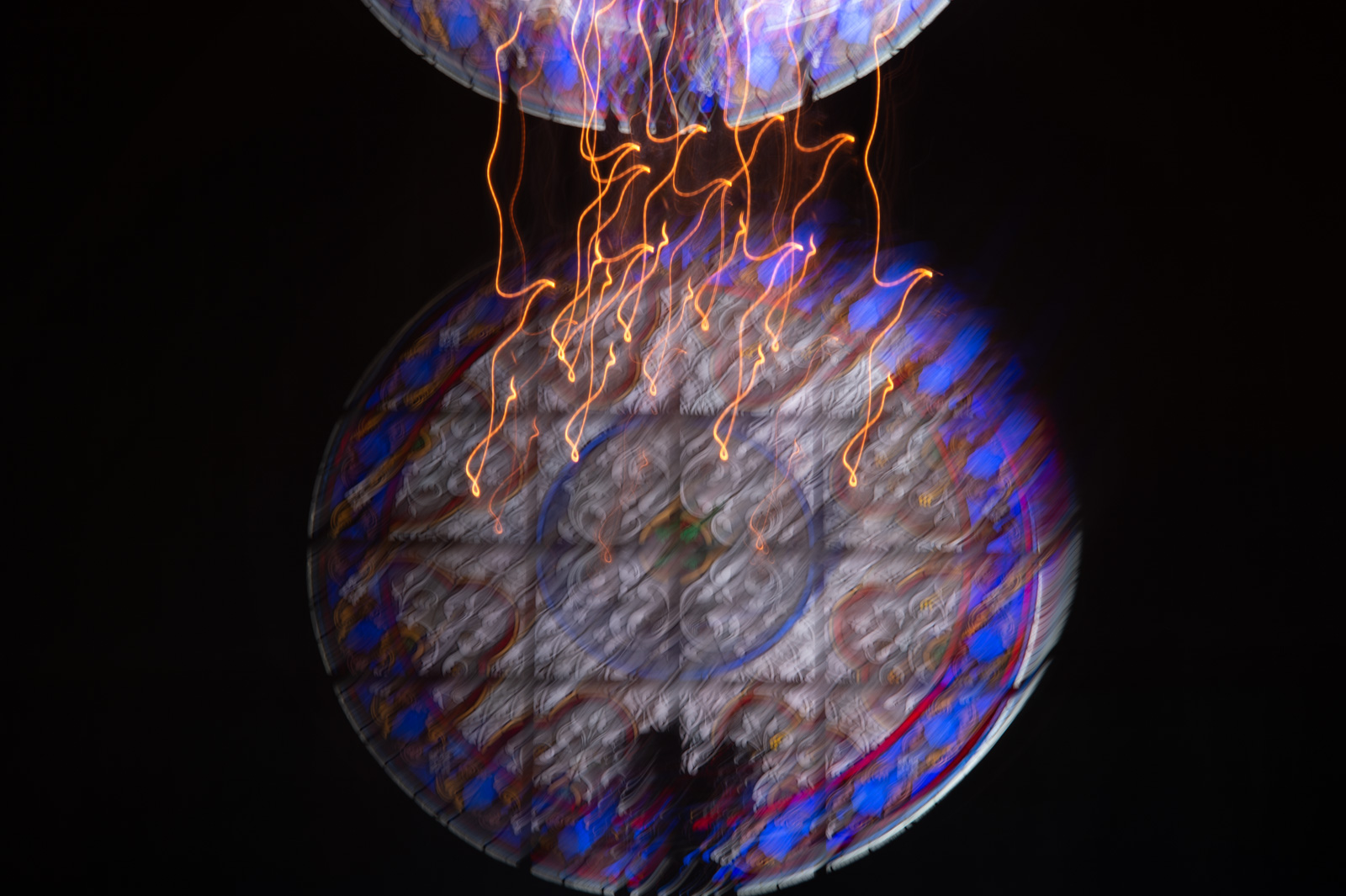
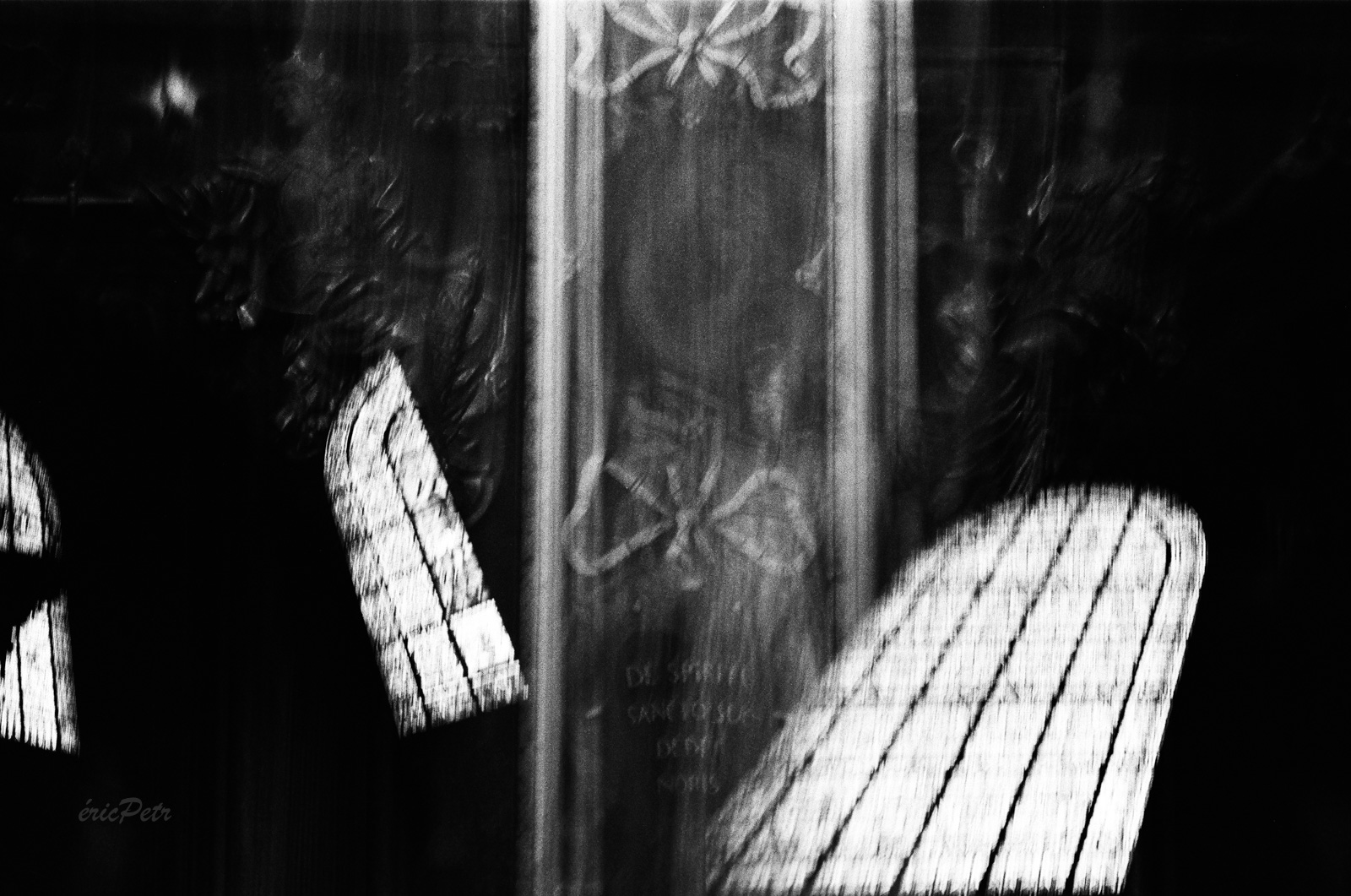
What is « In situ kinetic photography », « Photographie cinétique in situ » or « ISK photo » ?
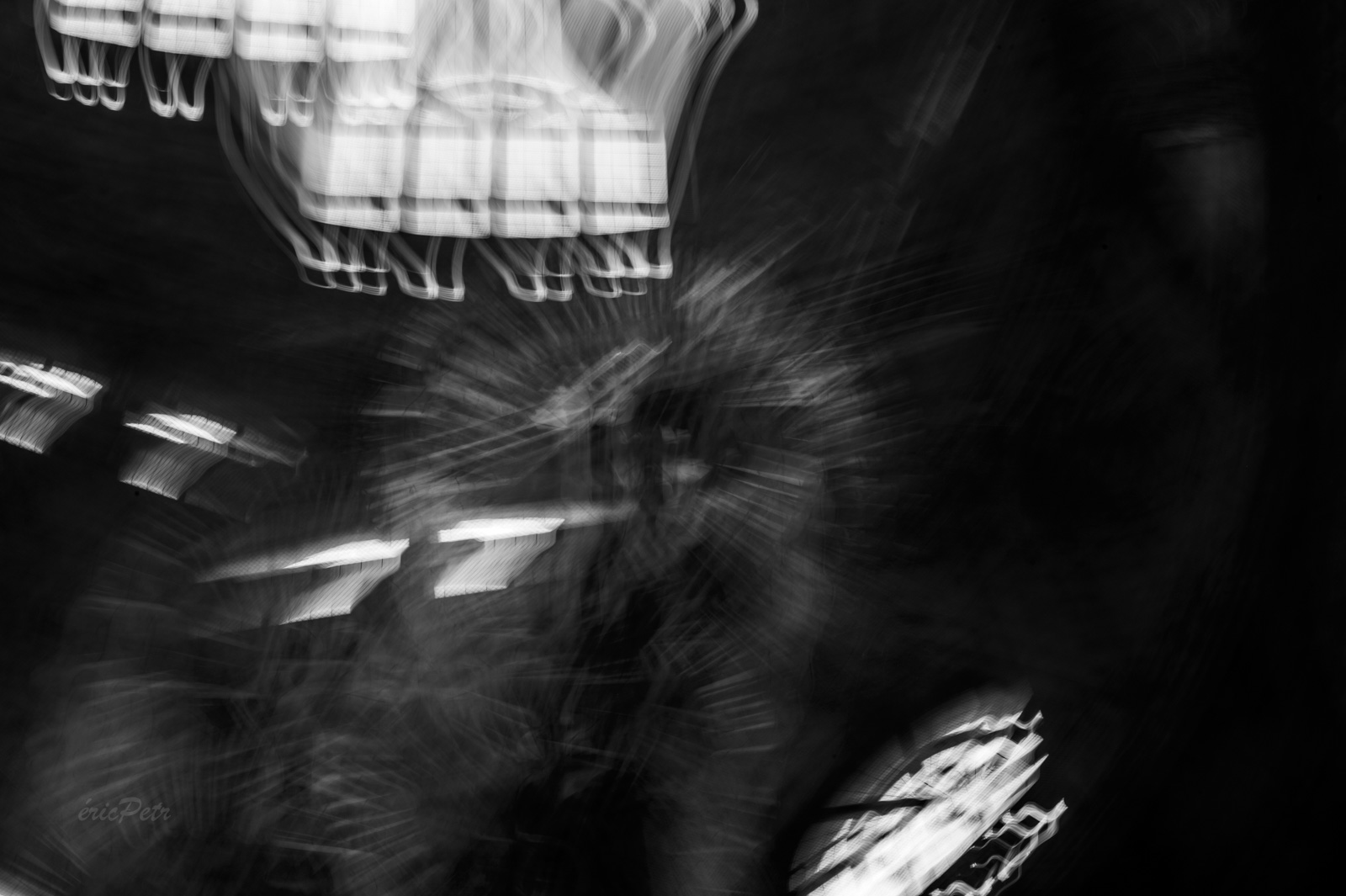
More than a concept, “In Situ Kinetic Photography” is a photographic language developed in the early 2000s.
The intention is to explore the recording of light as photographic material and to develop a body of work in which the references of time and space are profoundly altered.
This approach was based on the intention to:
・to work with a single exposure, without post-processing or multiple exposure, in order to remain as close as possible to the recorded subjective experience,
・to use relatively long exposure times and, depending on the composition, ranging from a few seconds to several minutes, in order to allow for a condensation of emotions, light and matter,
・to intentionally move the camera during the recording of the image, in order to recontextualise the scene according to another order, that of an aesthetic and inner experience,
・to allow, during the recording process, subtle variations through which the experience may unfold into unforeseen possibilities,
・and to construct the image on site, “in situ”, so that this encounter between the observer (the photographer) and the place, along with what emanates from it, is not disrupted by external factors unrelated to the scene and the experience.
The intention is therefore no longer simply to show movement, as in the classical principle of long exposure — “I move the camera to create blur” — but rather to compose an image as a temporal condensation of a place.
JI could even compare this to a kind of “micro-film recorded on a single image”, or to a form of “echography of a place”.
Through this process, I aim to explore the gap that emerges between:
・the observation of a scene “in situ”, using a camera as a measuring instrument,
・and the recording of this scene as obtained by the observer (the photographer), who takes as reference both his feelings at the precise moment of taking the photographs and external elements such as light, matter and the energy of the place.
This gap reflects an introspection produced by an unconscious form of reflection carried out by the observer (the photographer), in resonance with the surrounding elements. The resulting recording reveals an image that expresses the inner gaze of a scene experienced from the outside.
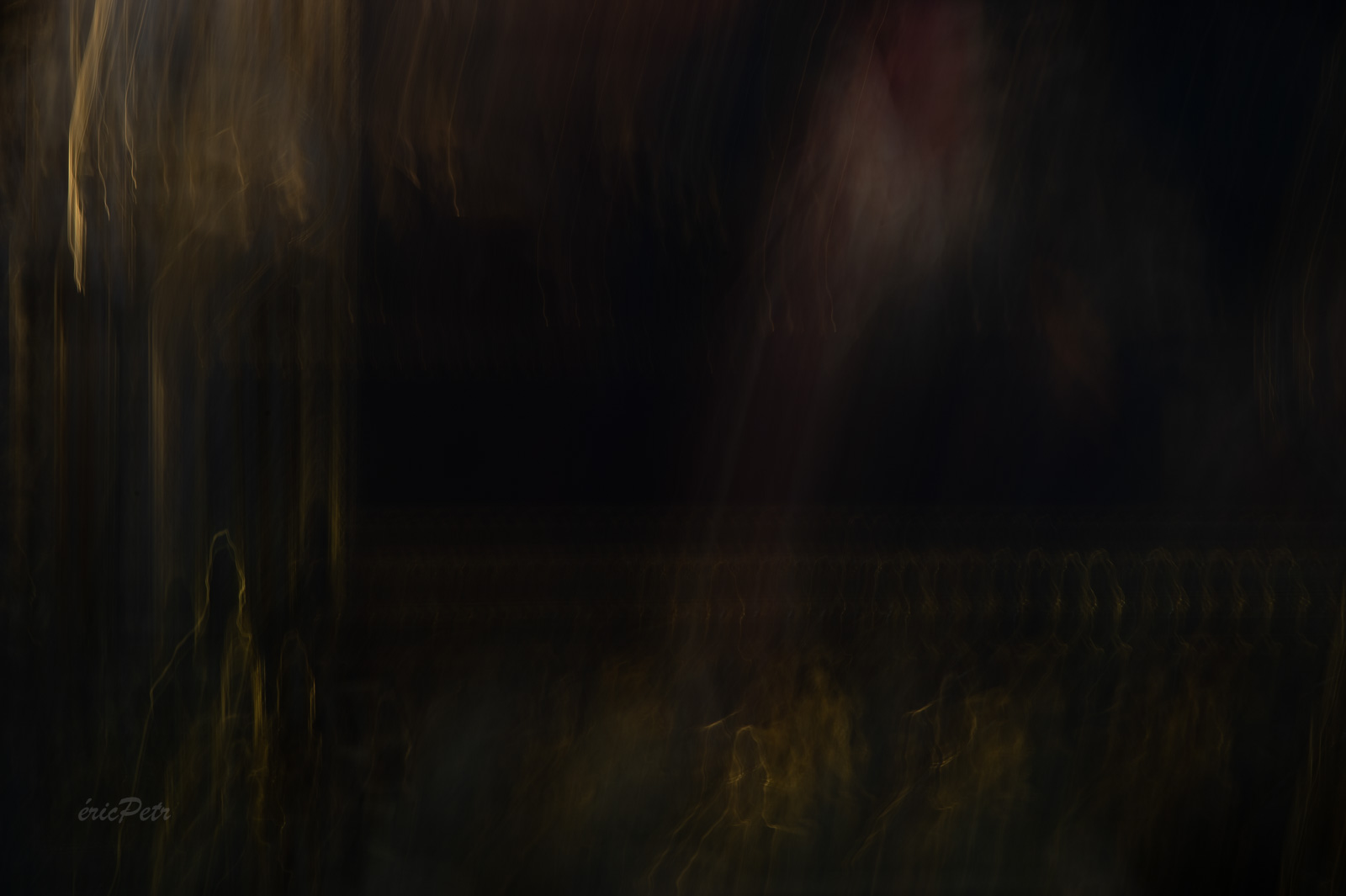
What does the concept “In situ kinetic photography” refer to?
This concept is based on the principle of long exposure and, although I have devoted much of my reflection to it as a visual artist photographer, long exposure is also a subject on which many other artists and photographers have worked.
Among them, I will mention in a non-exhaustive way some of the most well-known, such as Gustave Le Gray (1820–1884), painter and photographer, Alfred Stieglitz (1864–1946), Man Ray (1890–1976), experimental photographer, László Moholy-Nagy (1895–1946), Josef Sudek (1896–1976), Brassaï (1899–1984), Ernst Haas (1921–1986), William Klein (1926–2022), Barbara Kasten (1936), Michael Wesely (1945), Eric Staller (1947), Hiroshi Sugimoto (1948), Abelardo Morell (1948), Uta Barth (1956), Mitch Dobrowner (1956), Michael Kenna (1957), Francesca Woodman (1958–1981), Tokihiro Sato (1957), and among my contemporaries Adam Fuss (1961), Alexey Titarenko (1962), Thierry Cohen (1963), and Rut Blees Luxemburg (1967).
What is interesting to observe here is that, beyond long exposure, each artist has appropriated this shooting technique to create very different worlds.
However, while writing this article and revisiting each artist’s work, I can see emerging from these long exposures a genuine, lasting visual language, rather than a mere effect, which I could map as a kind of cartography of the different currents or aesthetics that have been created.
1. The pioneers of photographic time
Reveal
Long exposure conceived as a technical necessity, as photography at the time required it. It becomes a visual language identifiable within its own chronology.
Gustave Le Gray (1820–1884)
Alfred Stieglitz (1864–1946)
Brassaï (1899–1984)
Here, long exposure first emerges from a material constraint, before becoming a visual vocabulary.
Le Gray quickly understands that exposure is not merely a form of recording, but a construction of the visible.
Stieglitz transforms atmosphere and weather into expressive matter.
Brassaï reveals the city as a nocturnal theatre.
2. Experimenters of light
To experiment
Long exposure conceived as a laboratory of the medium, with all its possible axes of experimentation.
Man Ray (1890–1976)
László Moholy-Nagy (1895–1946)
William Klein (1926–2022)
Barbara Kasten (1936)
Adam Fuss (1961)
Eric Staller (1947)
Here, we are no longer simply photographing the world: we are photographing the very conditions of vision itself. Duration becomes a luminous experience.
3. The contemplatives of landscape and extended time
Contemplate
Long exposure as a temporal condensation of the real.
Josef Sudek (1896–1976)
Hiroshi Sugimoto (1948)
Michael Kenna (1957)
Mitch Dobrowner (1956)
The subject becomes less the place than the duration of the place.
Sugimoto pushes this to a quasi-metaphysics of time.
Kenna transforms the landscape into silent memory.
4. The architects of accumulated time
Accumulate
Photography as a temporal accumulation.
Michael Wesely (1945)
Abelardo Morell (1948)
Thierry Cohen (1963)
Here, the image is no longer an instant but a temporal construction.
In Wesely’s work, time becomes almost a building material.
In Morell’s work, place and its projection merge.
In Cohen’s work, multiple temporalities come together.
5. The photographers of absent presence
Transform
Long exposure as a human trace.
Francesca Woodman (1958–1981)
Alexey Titarenko (1962)
Rut Blees Luxemburg (1967)
Time does not erase: it transforms presence.
Woodman works on the disappearance of the body.
Titarenko focuses on social dissolution.
Rut Blees Luxemburg explores urban memory.
6. Phenomenologists of gesture and space
Move
Long exposure as a lived experience of vision.
Ernst Haas (1921–1986)
Tokihiro Sato (1957)
Uta Barth (1956)
Here, we no longer simply record what is seen: we photograph the act of seeing itself.
Time becomes perception.
Where does the concept of “in situ kinetic photography” fit?
I did not list these aesthetic trends in order to put artists into categories, something I myself tend to avoid.
However, it does allow for a methodical approach to understanding how, through the history of photography, long exposure, initially a technical constraint, has become an aesthetic intention in its own right.
As for me, if I had to define myself within these trends, I would find it difficult. First, because it is always hard to judge oneself, and secondly because I do not identify with any of the six chapters outlined.