WHEN FILM PHOTOGRAPHS ITSELF: INVESTIGATING A PHANTOM ANALOGUE IMAGE

A ghost image on film: reflection, light piping, or an optical phenomenon?

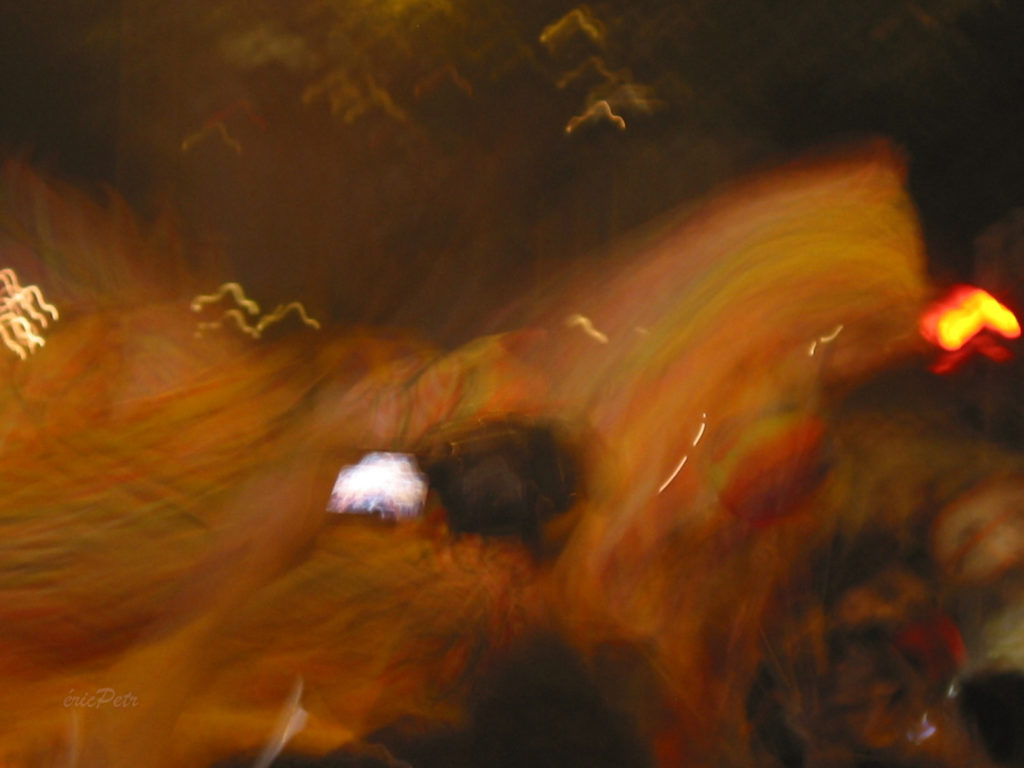
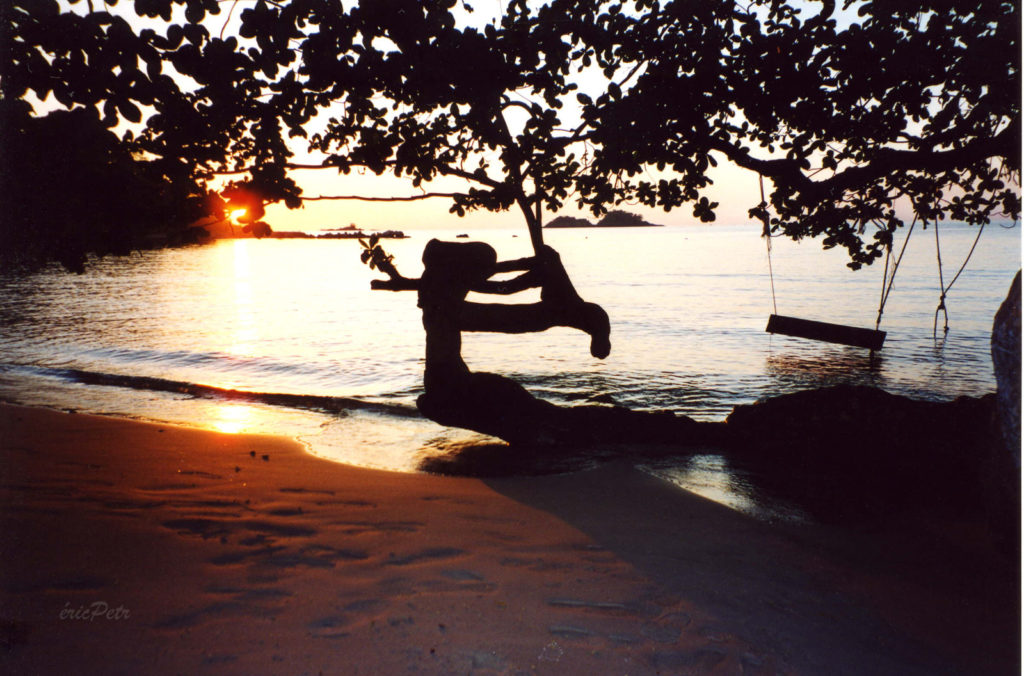
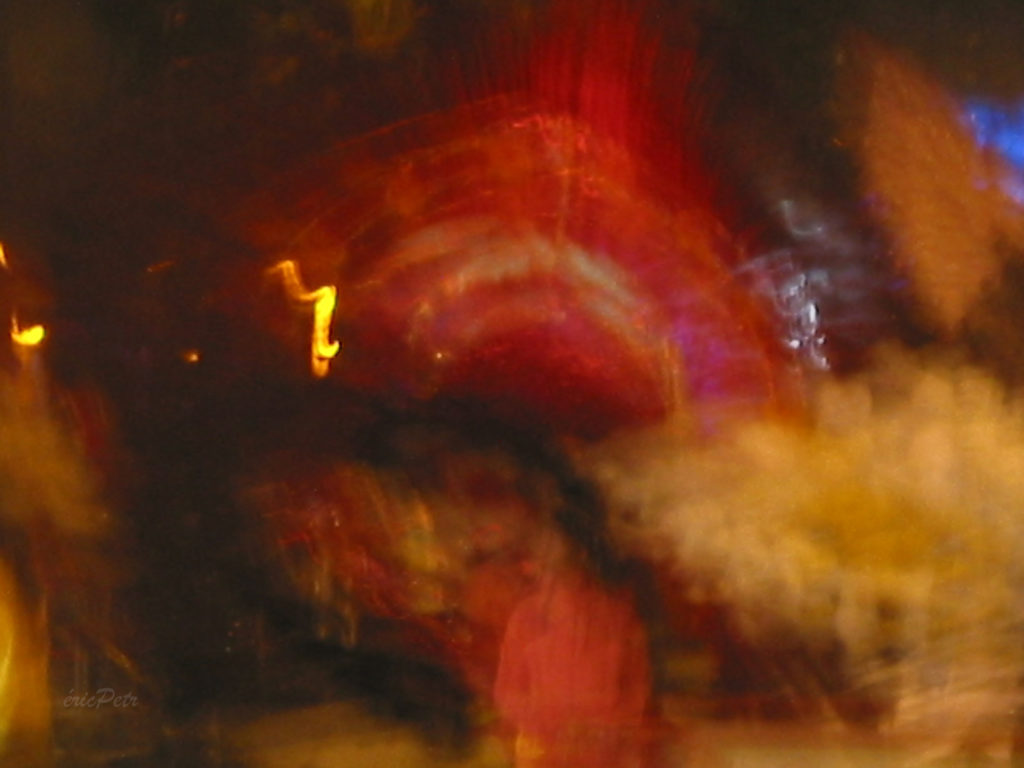
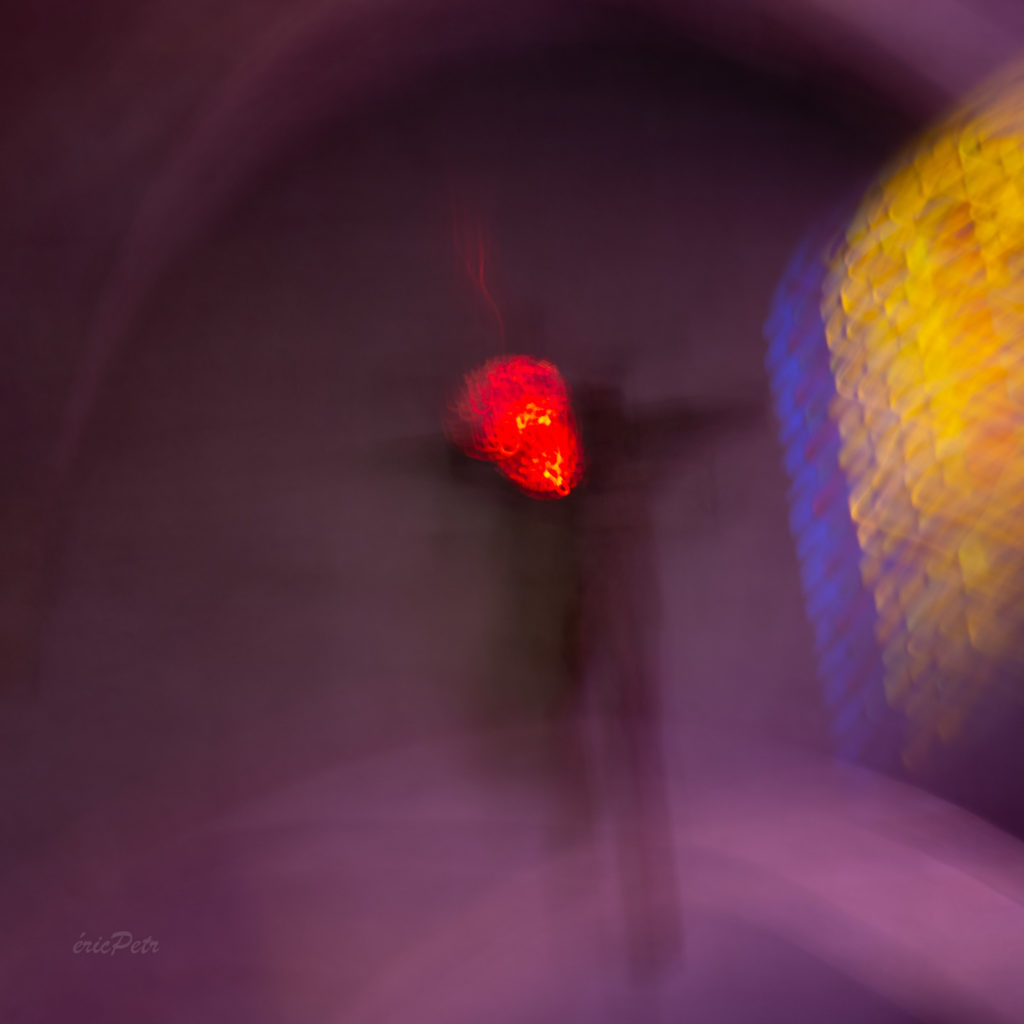
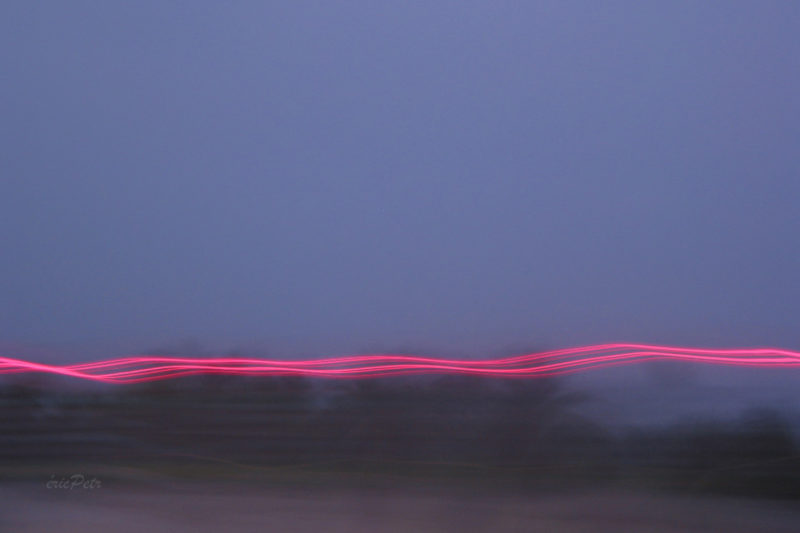
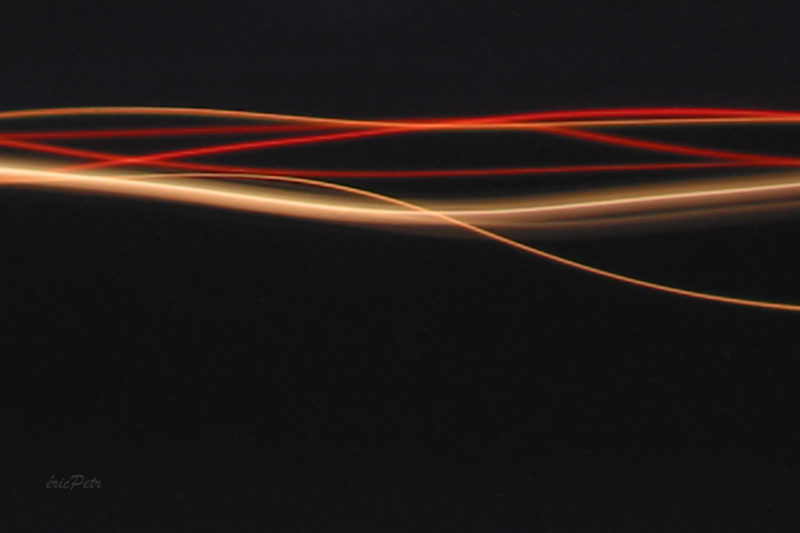
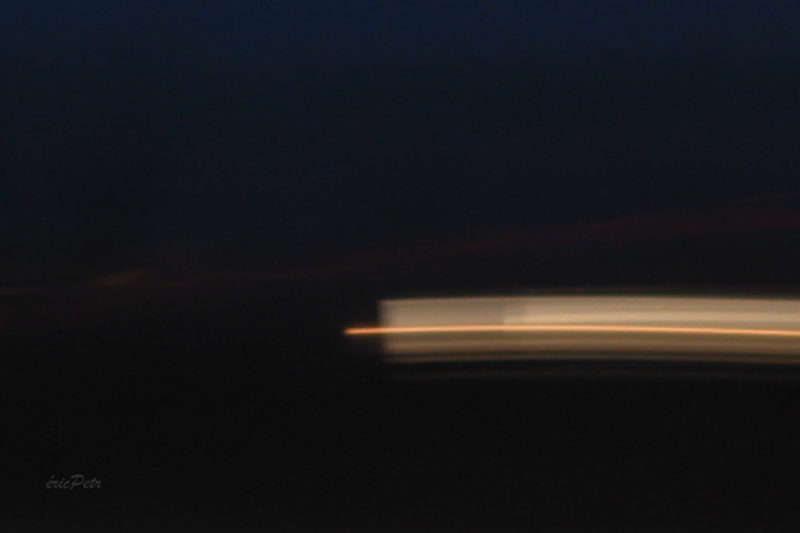
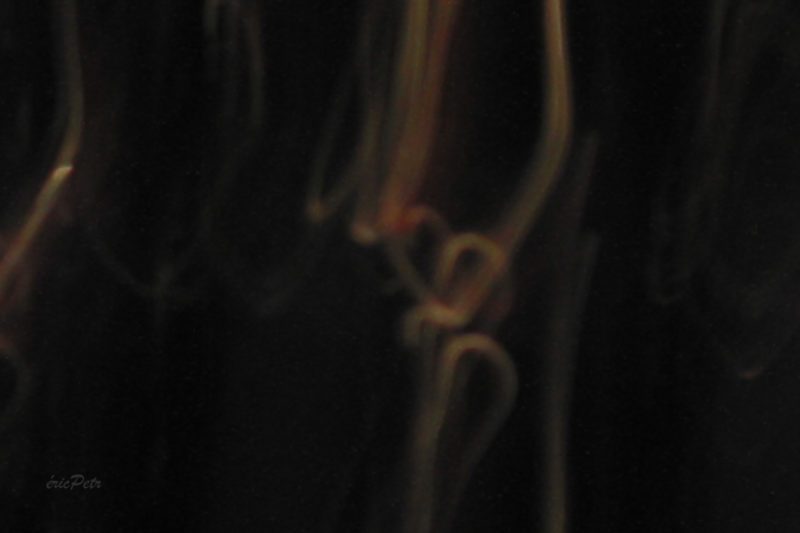
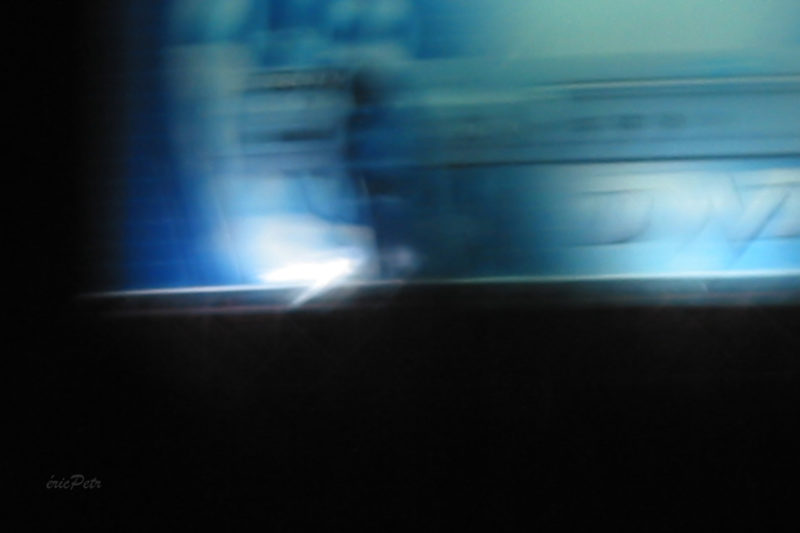
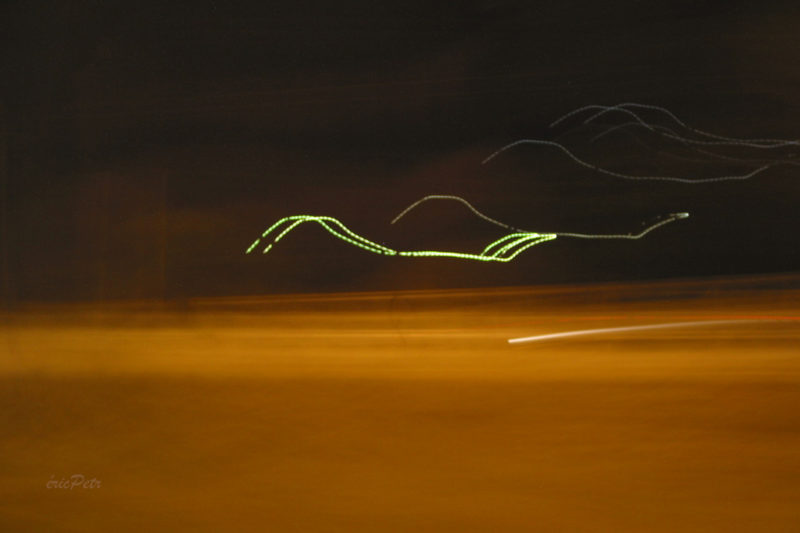
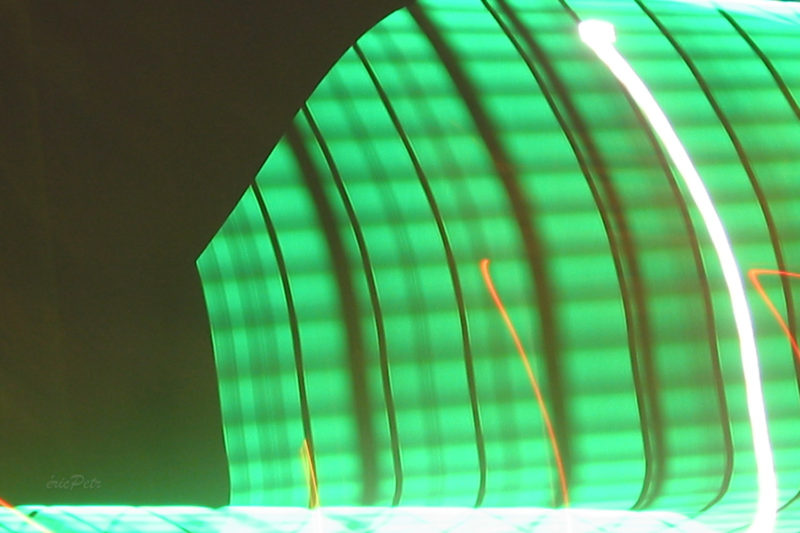
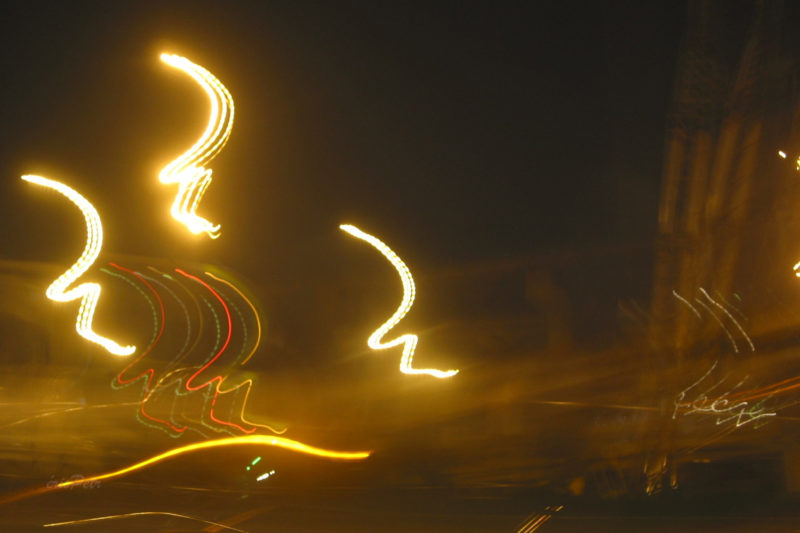
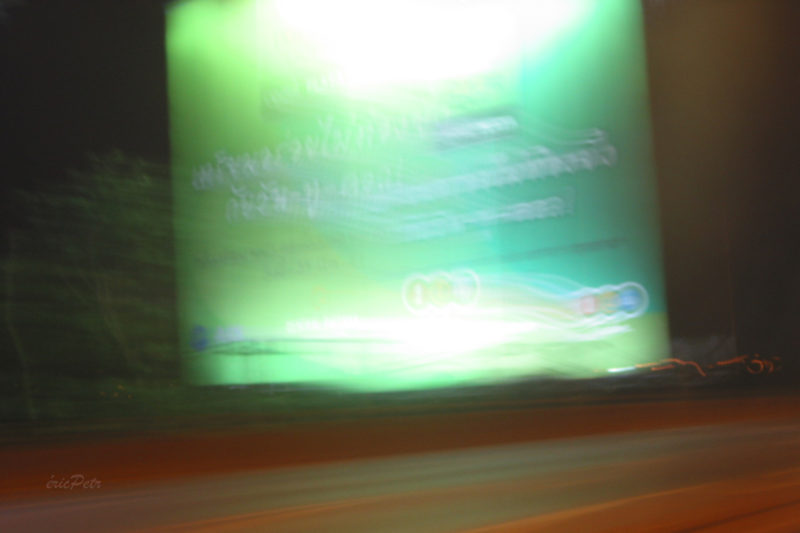
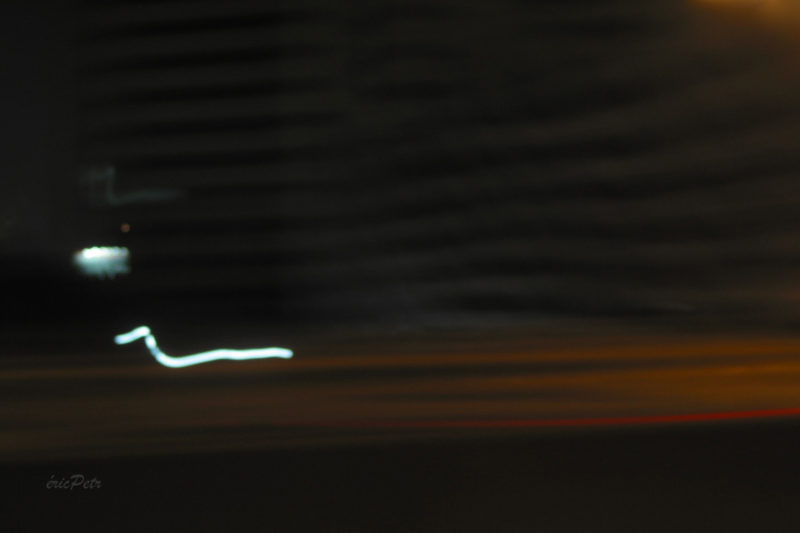
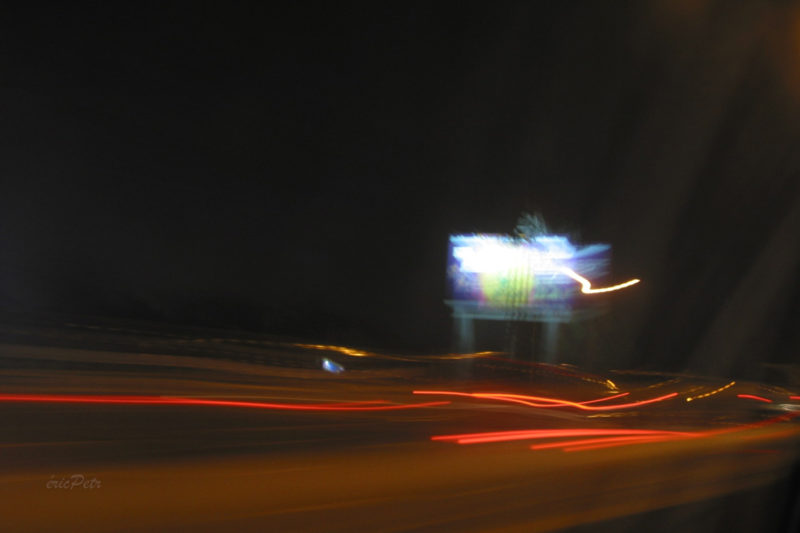
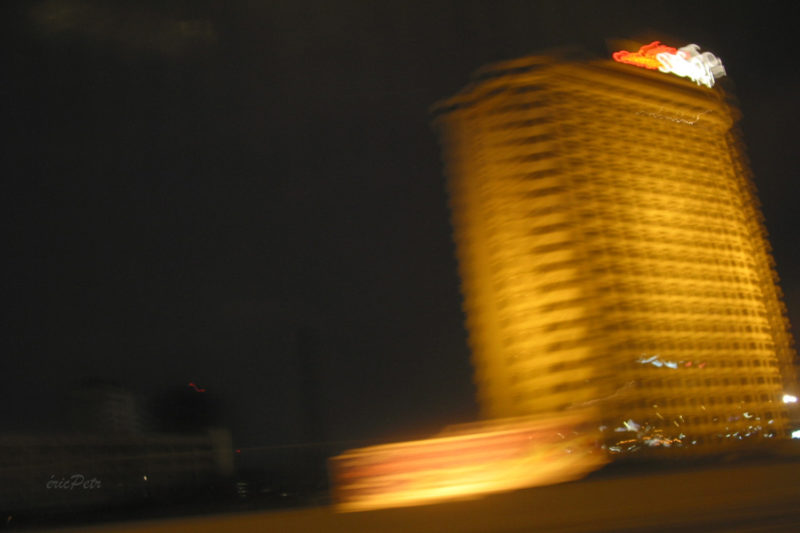
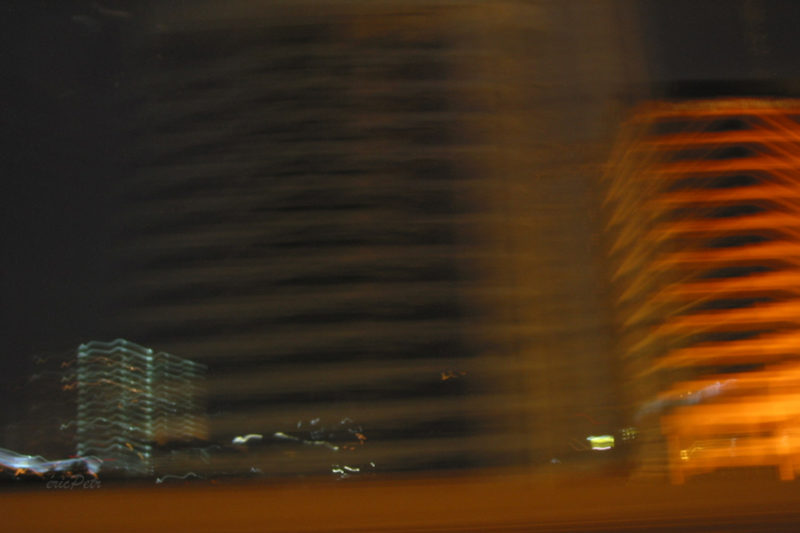
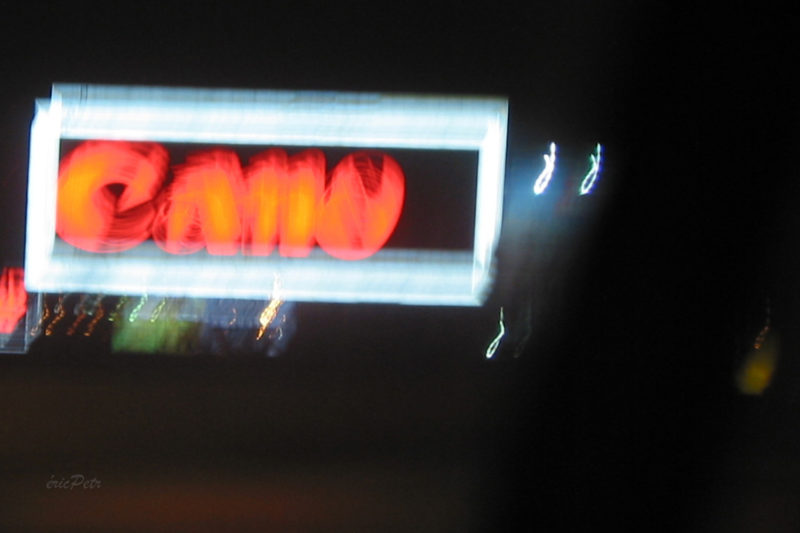
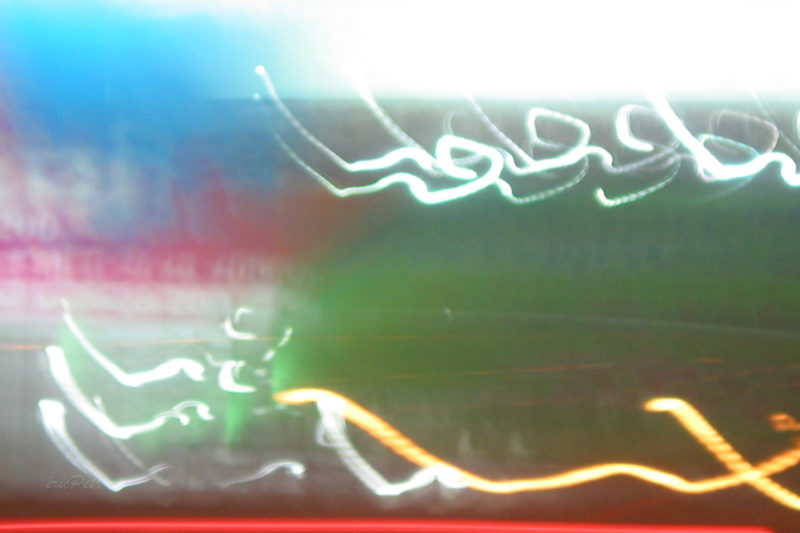
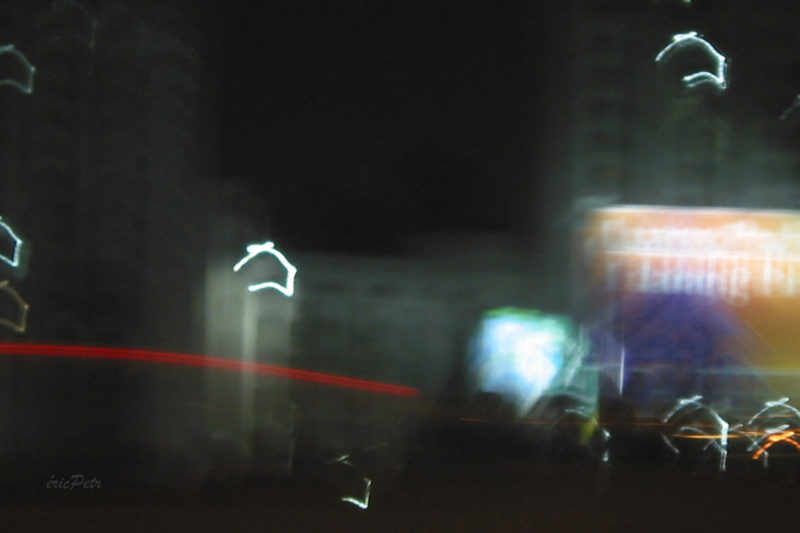
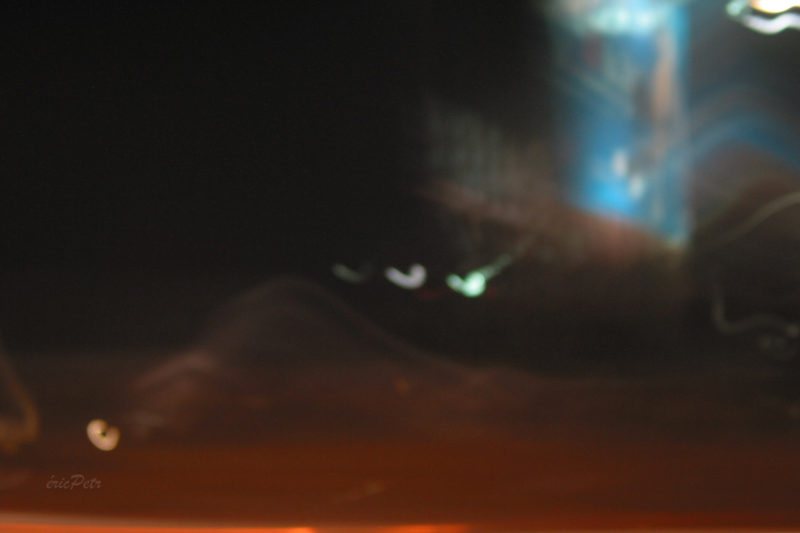
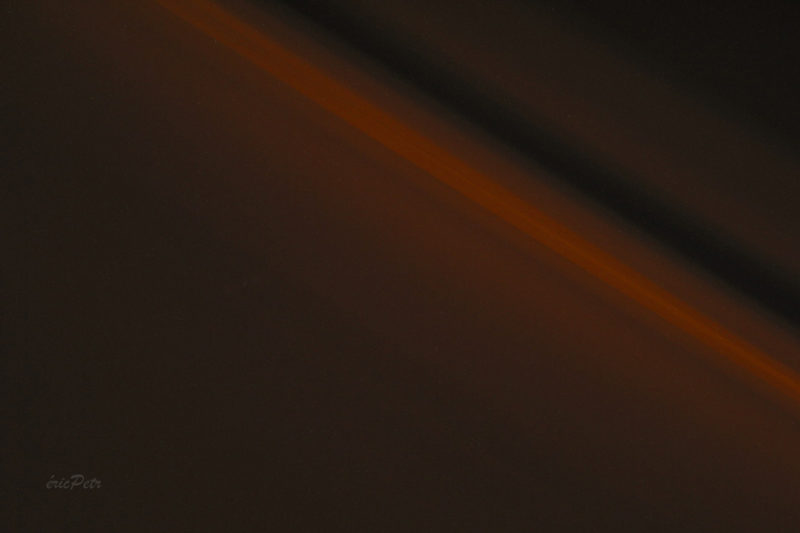
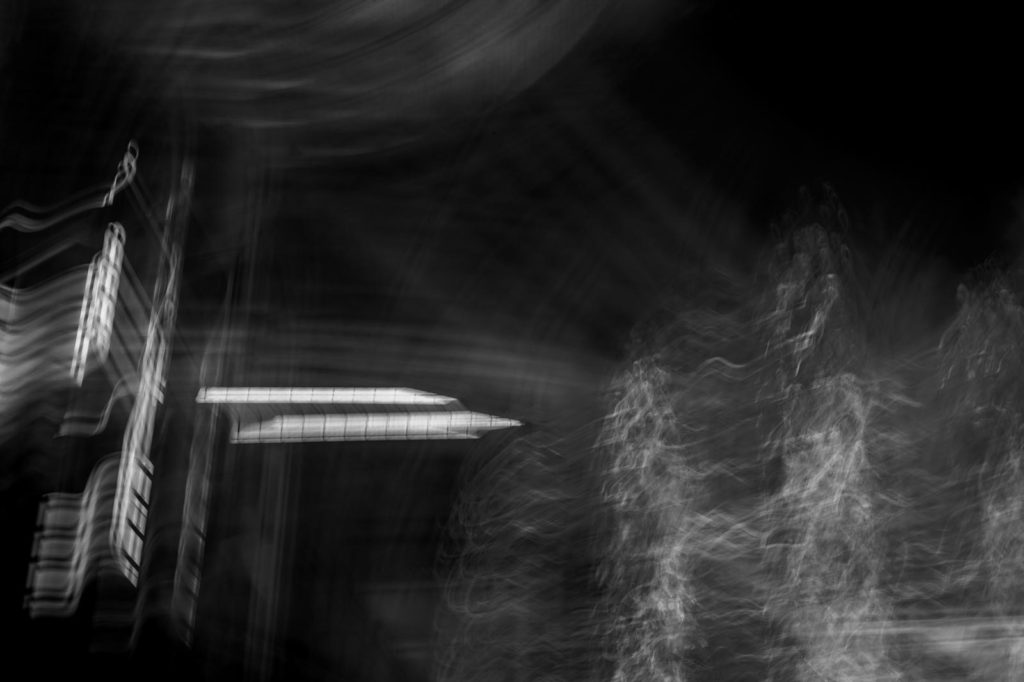
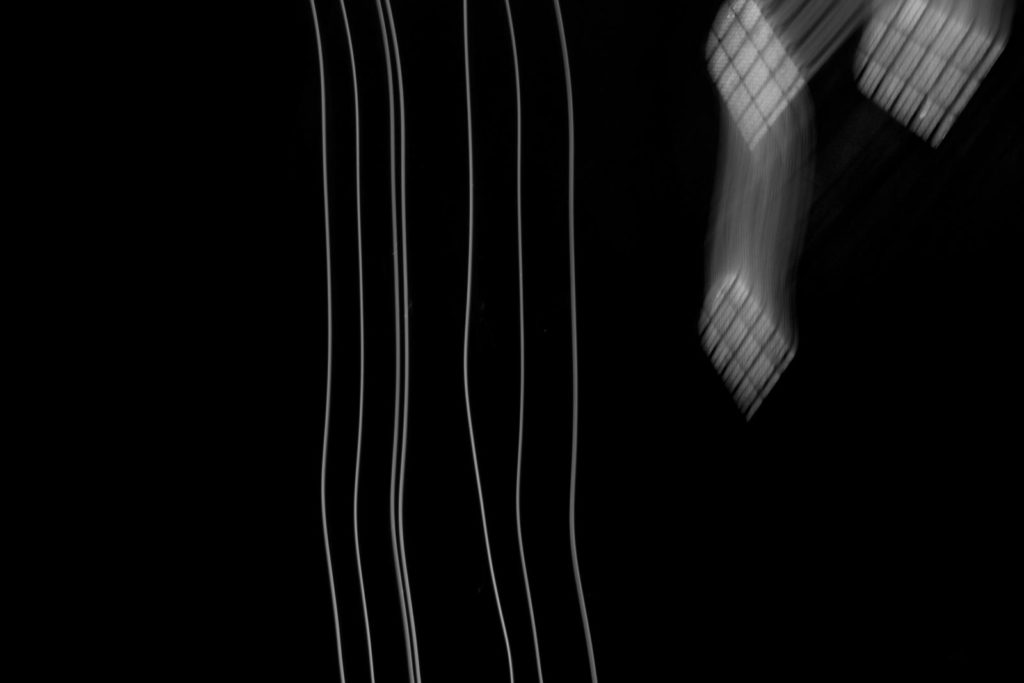
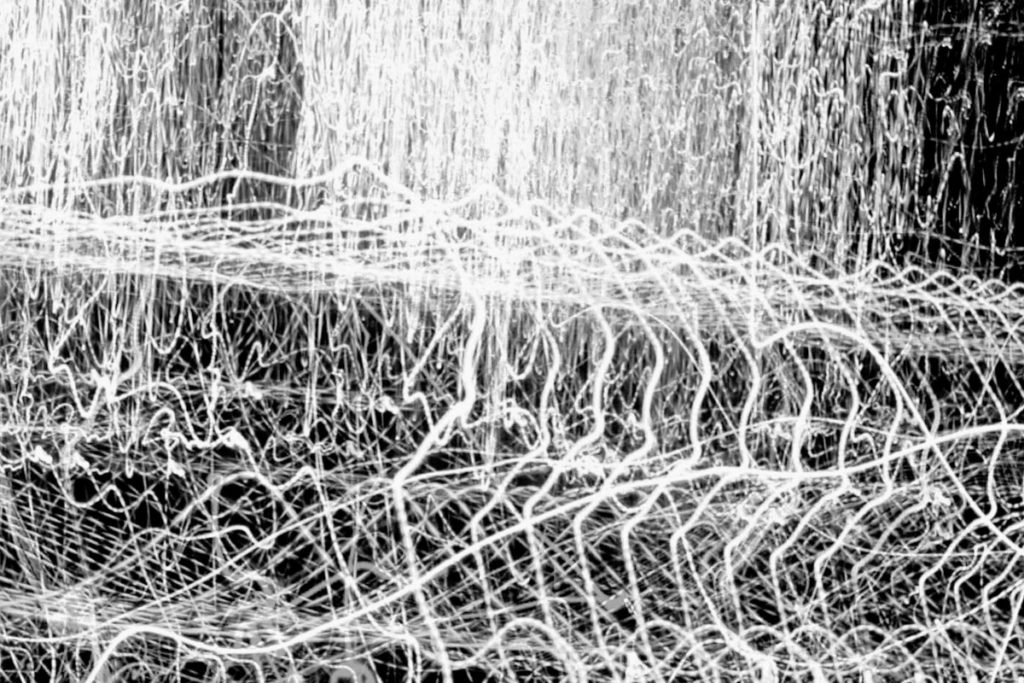
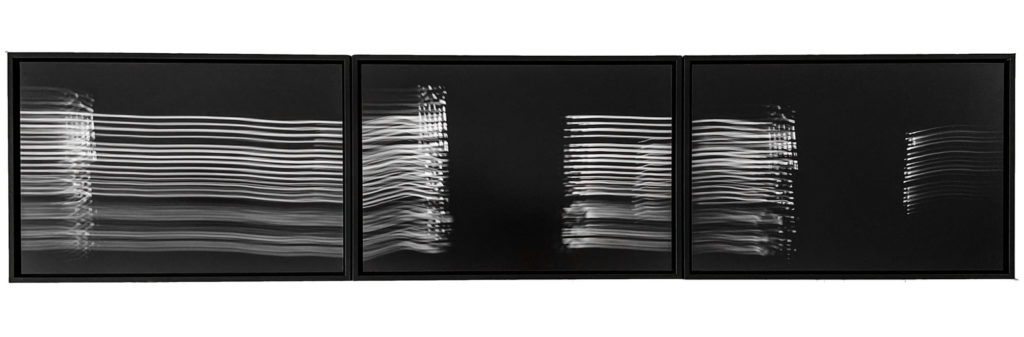
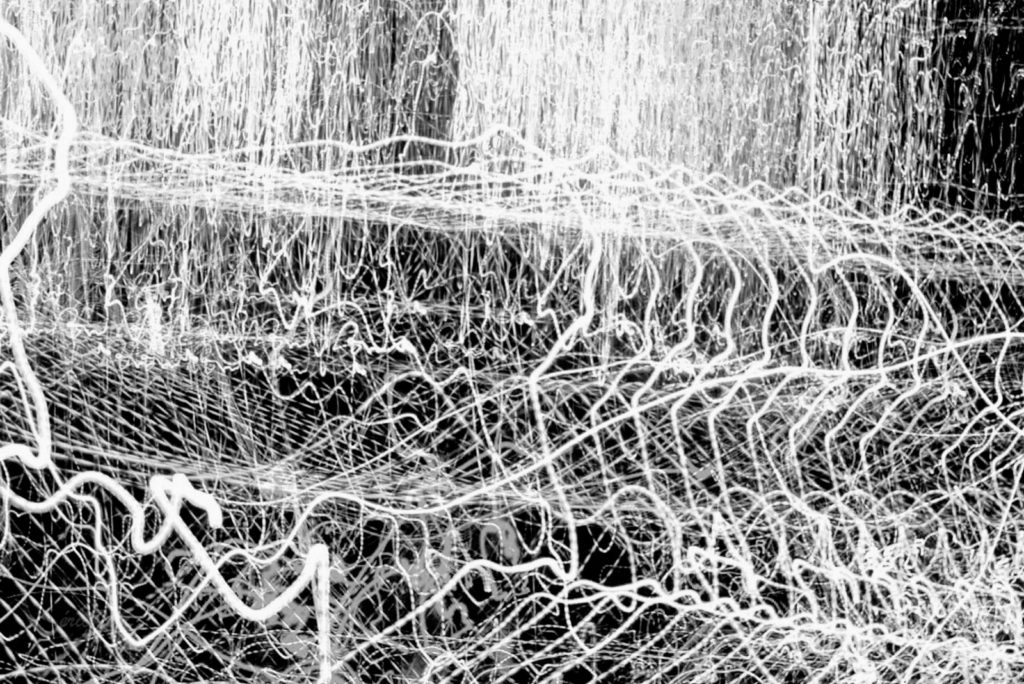
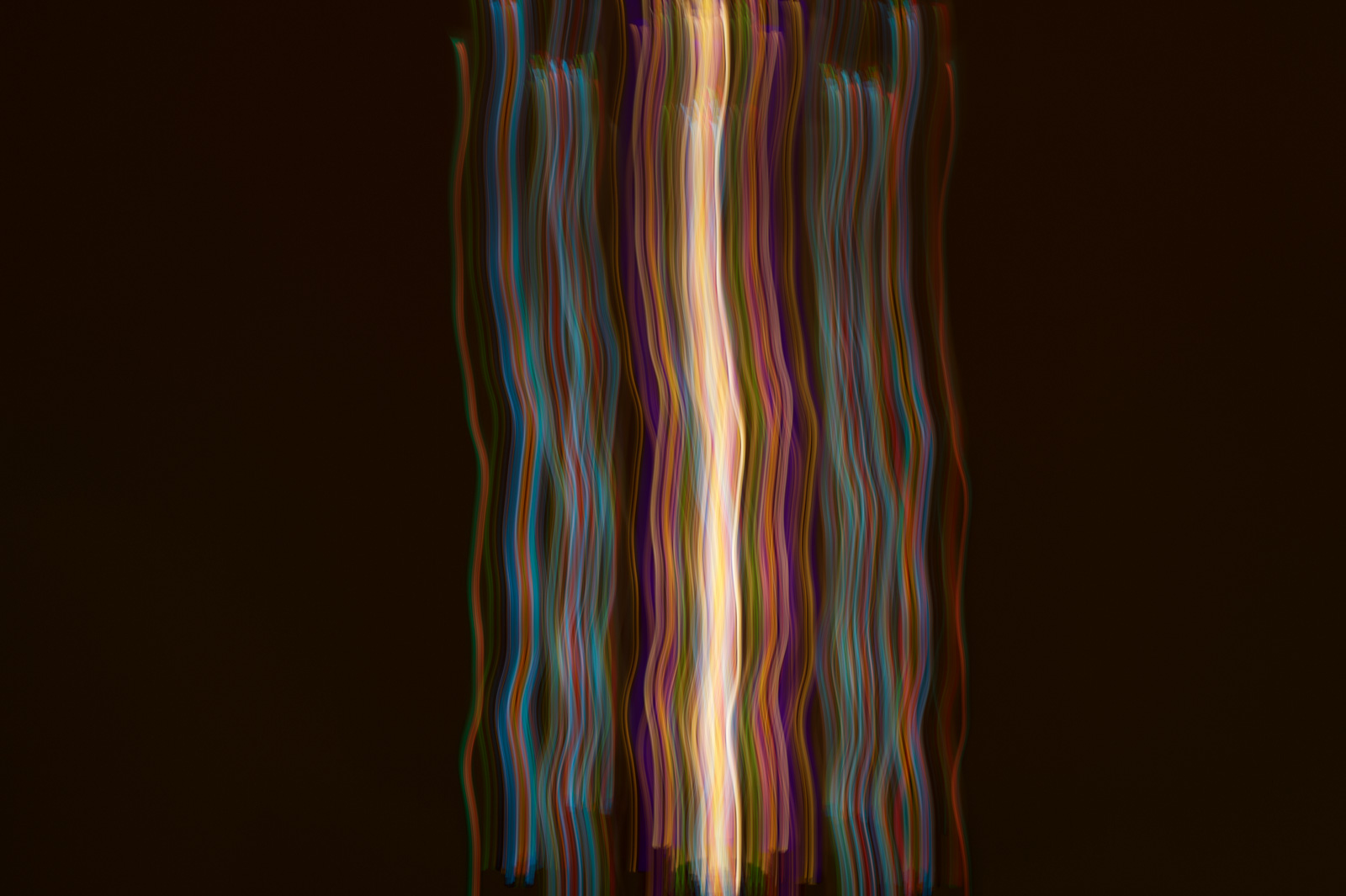
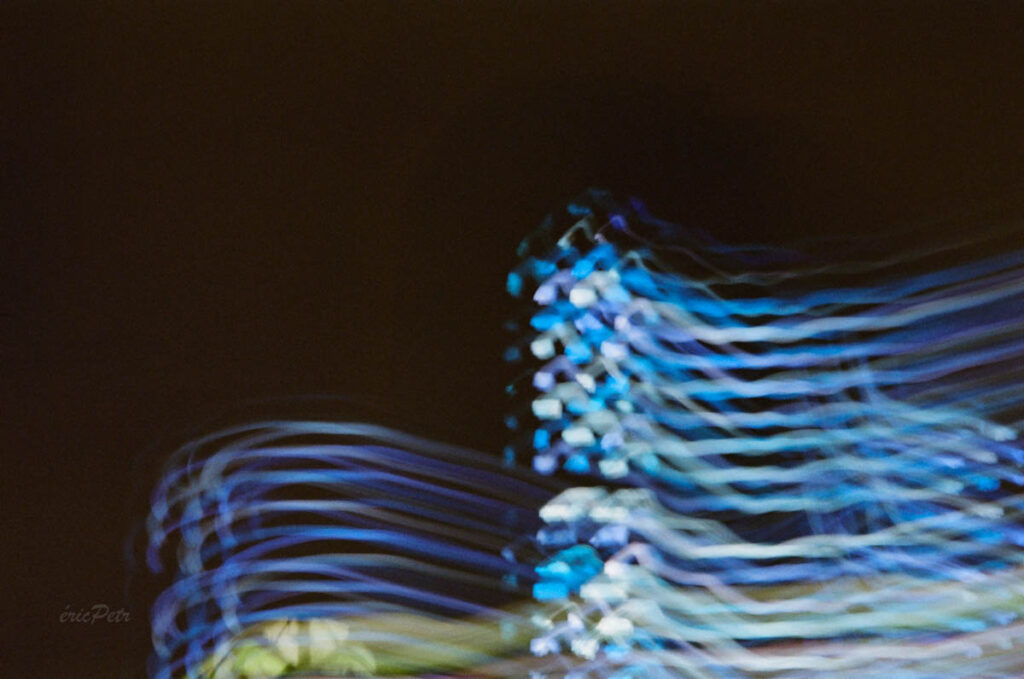
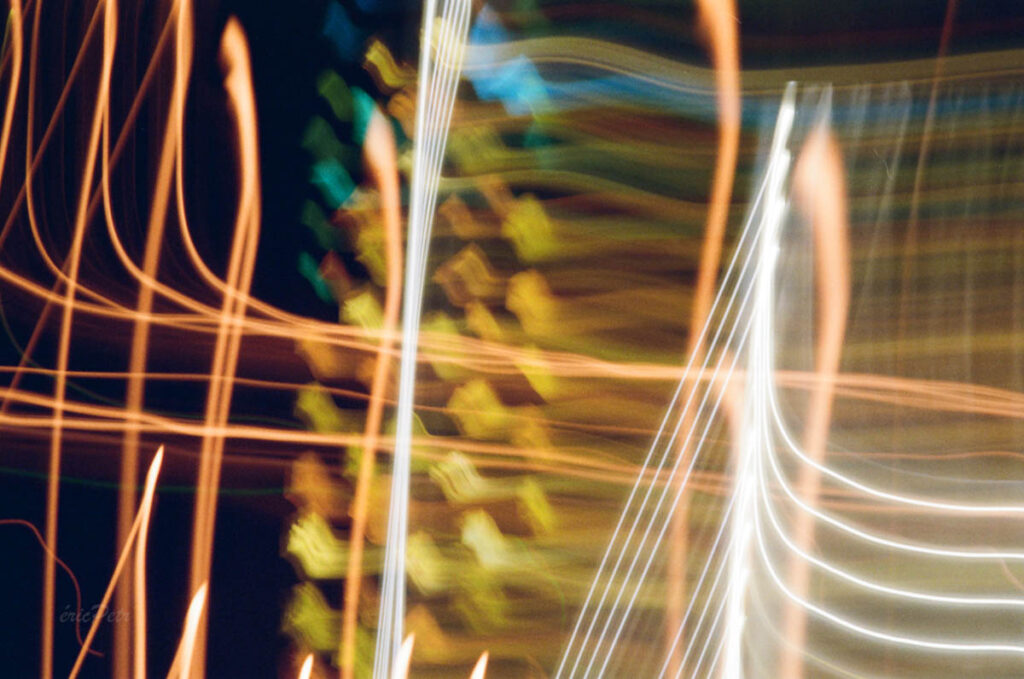
These film photographs were taken very recently using film as part of my research on in situ kinetic photography [In Situ Kinetic Photography]. You can explore the various posts on my blog that address this topic, but I’ll summarize here what this technique entails. It involves the photographic exploration of a location or scene, captured in a single exposure lasting several tens of seconds, or even a few short minutes. It’s a sort of mini-film recorded in a single frame.

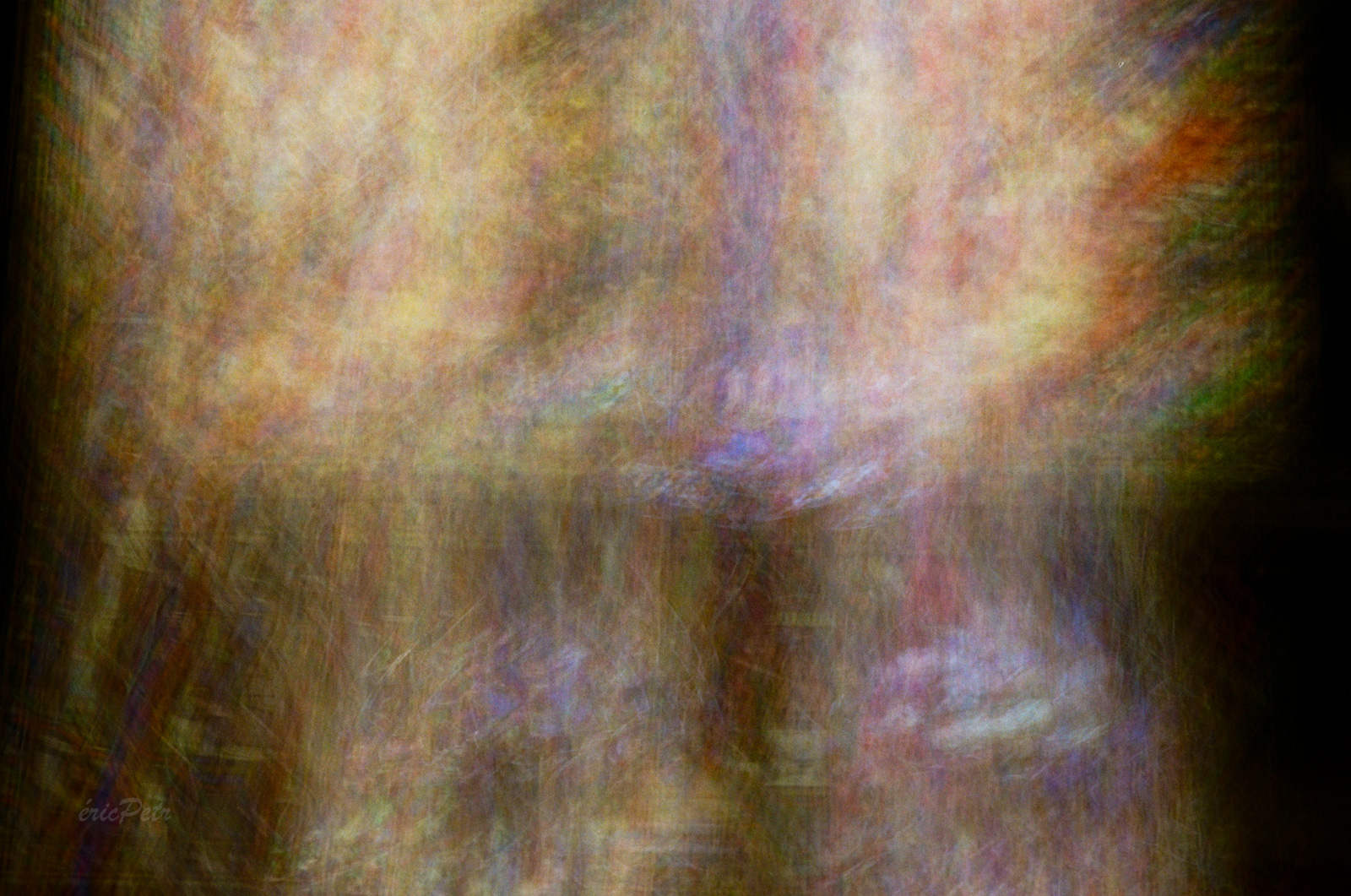
I really like this Kodak Color Plus 200 film, which produces warm colors and has a slightly retro feel. It doesn’t have a striking dynamic range, but it has a soft, slightly old-fashioned quality with shimmering colors.

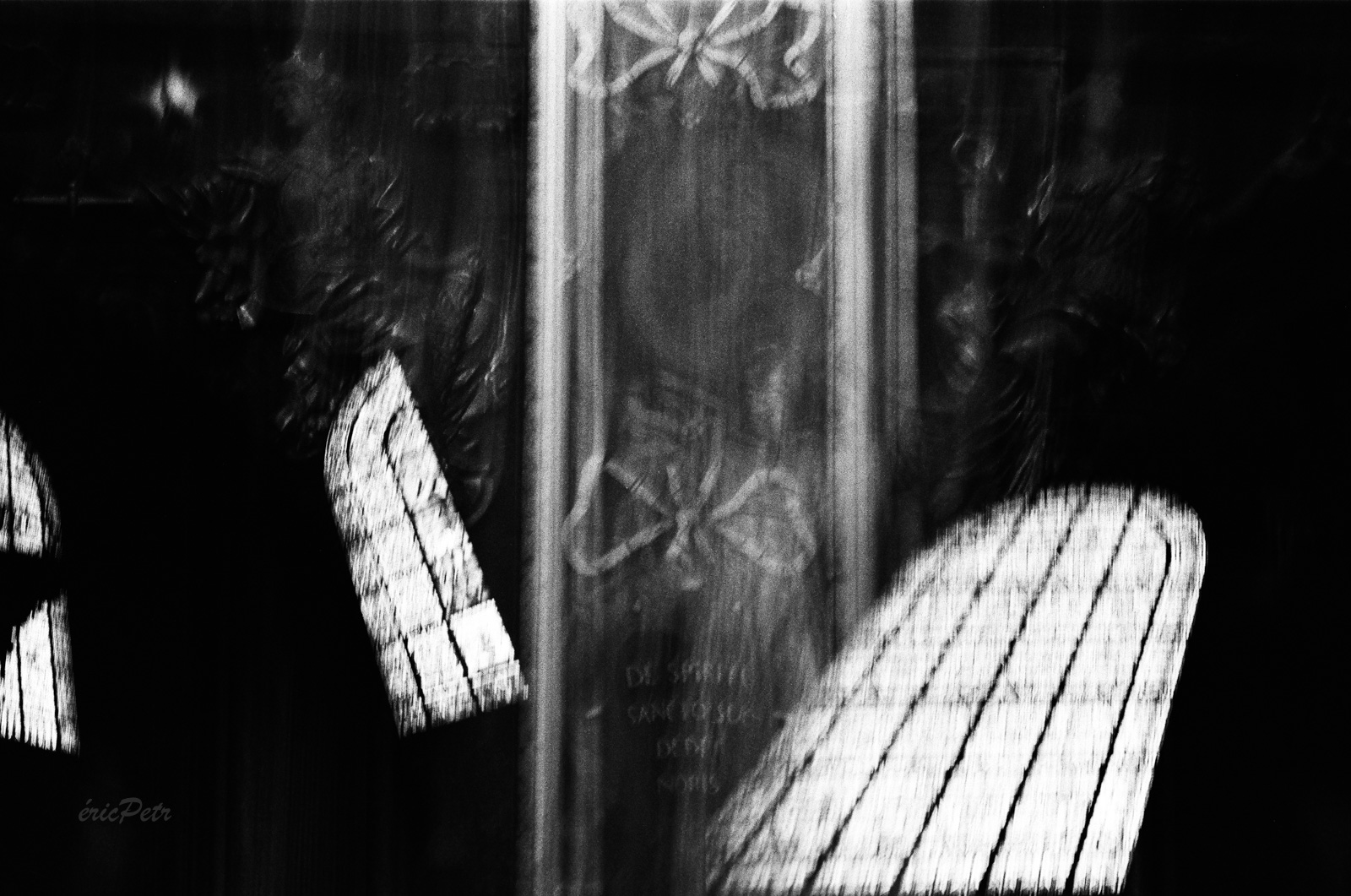
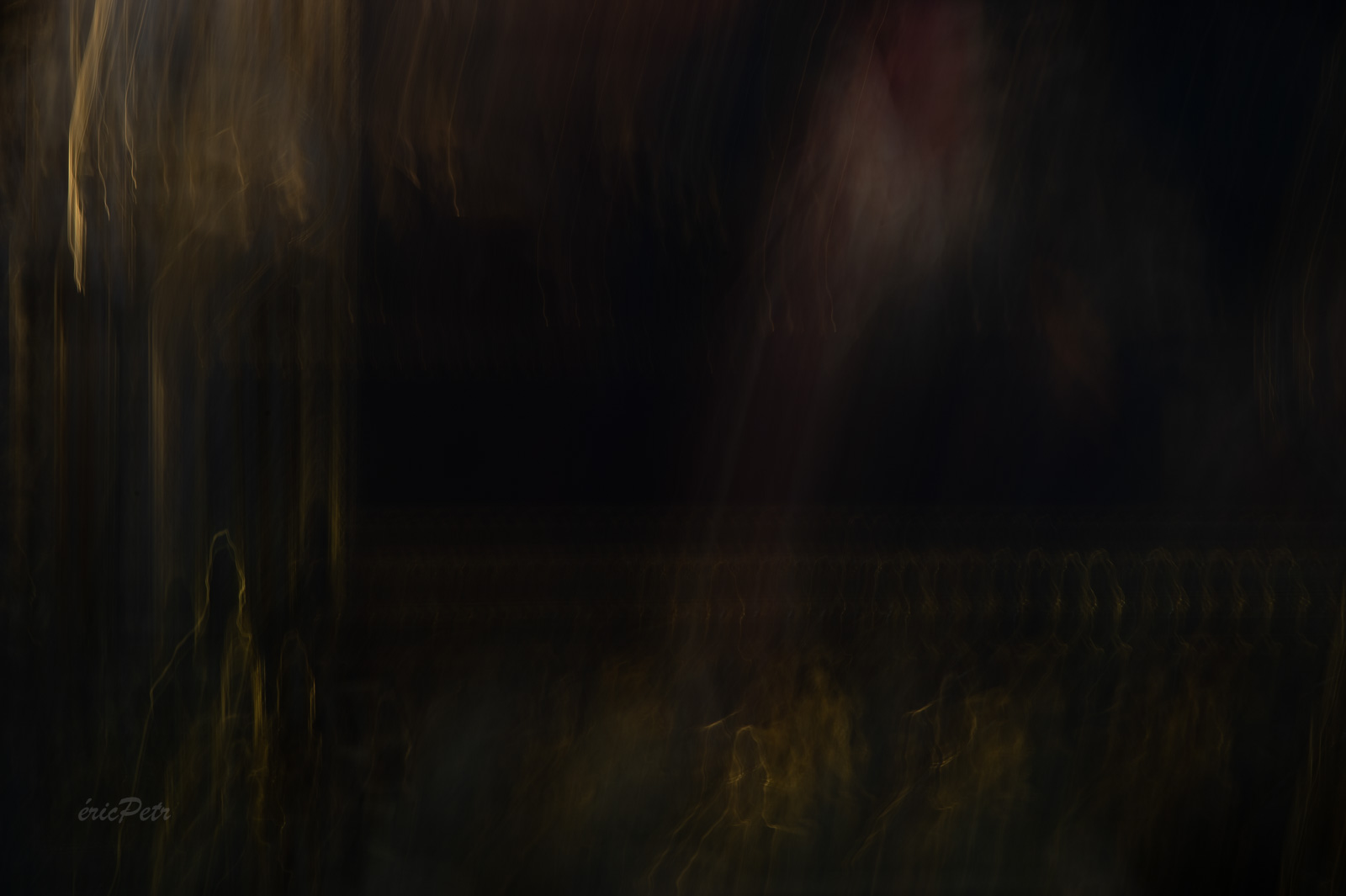
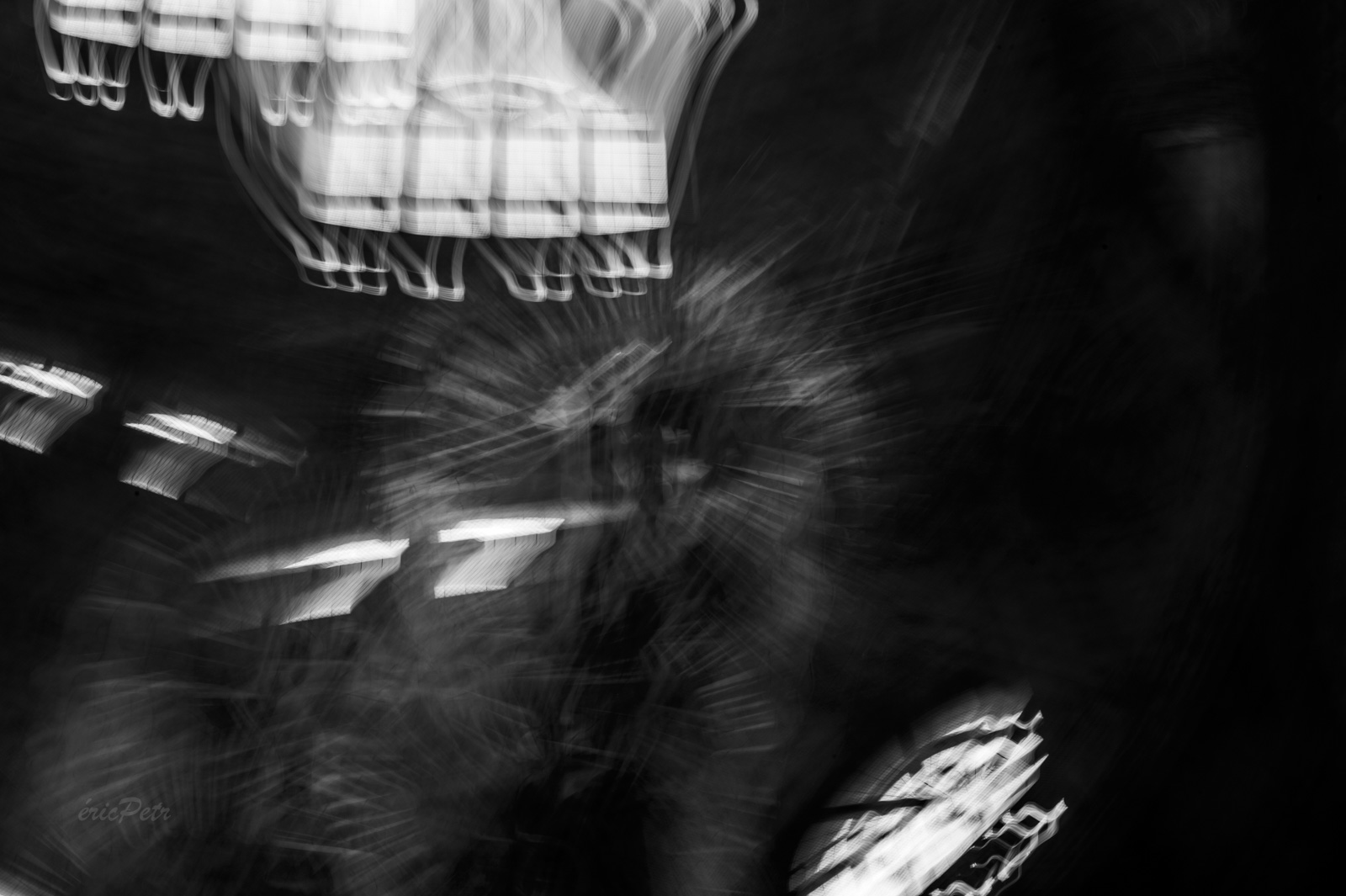
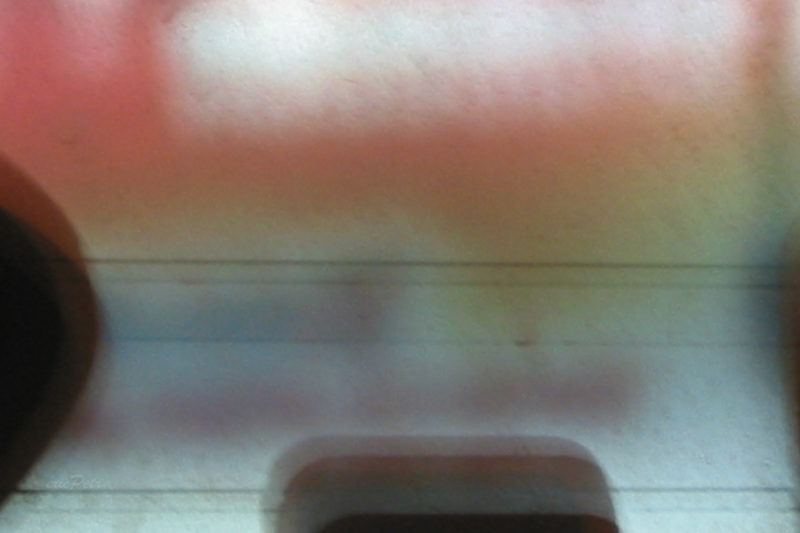
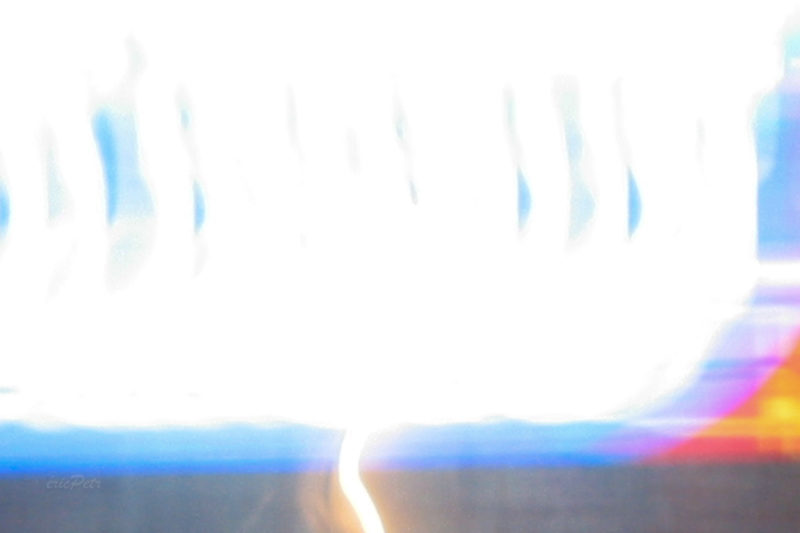
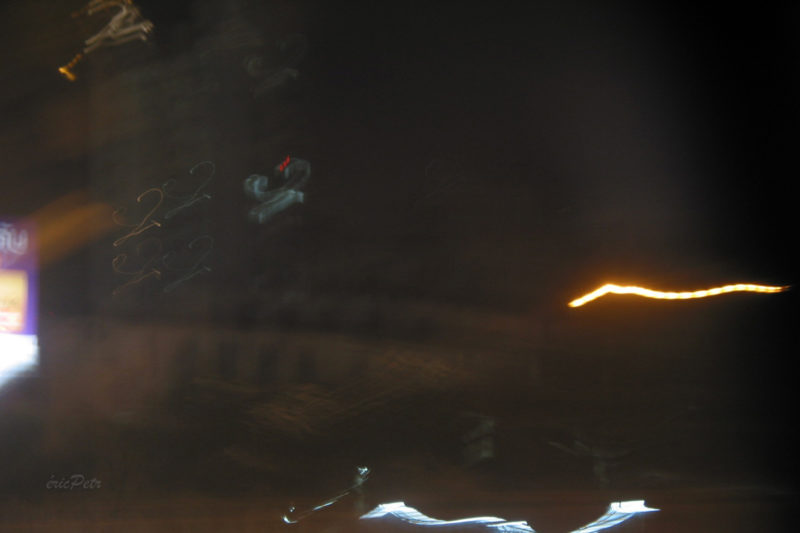
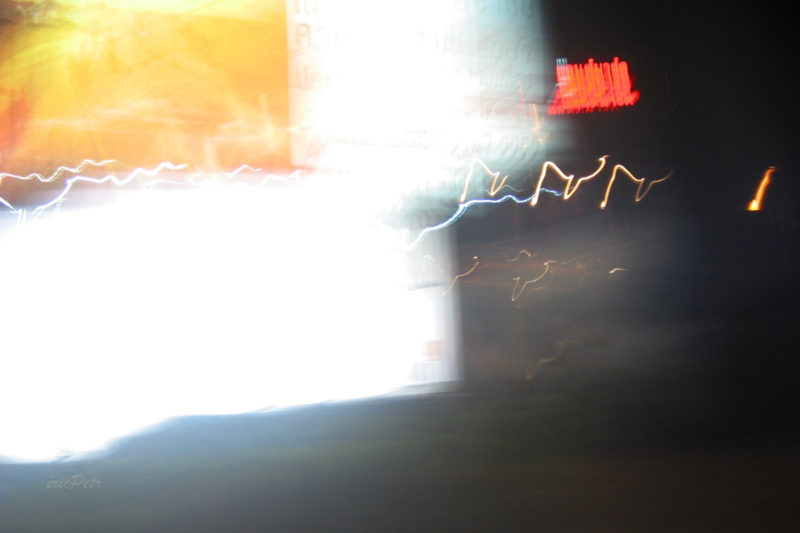
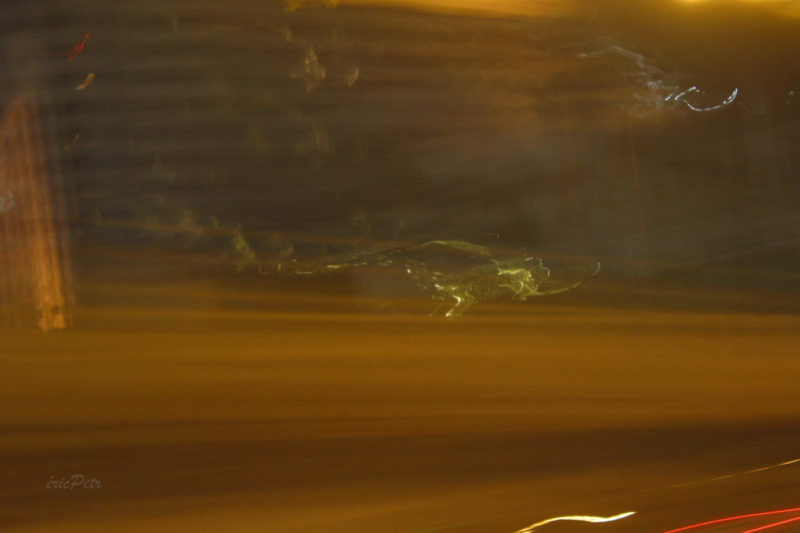
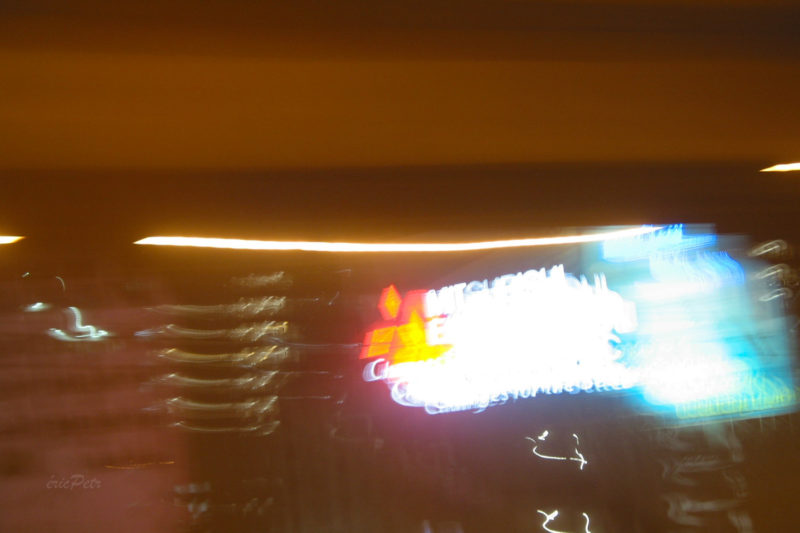
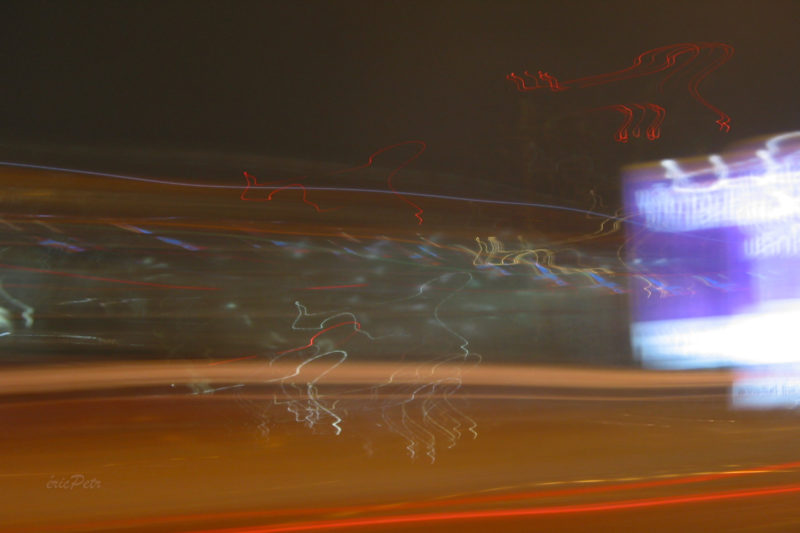
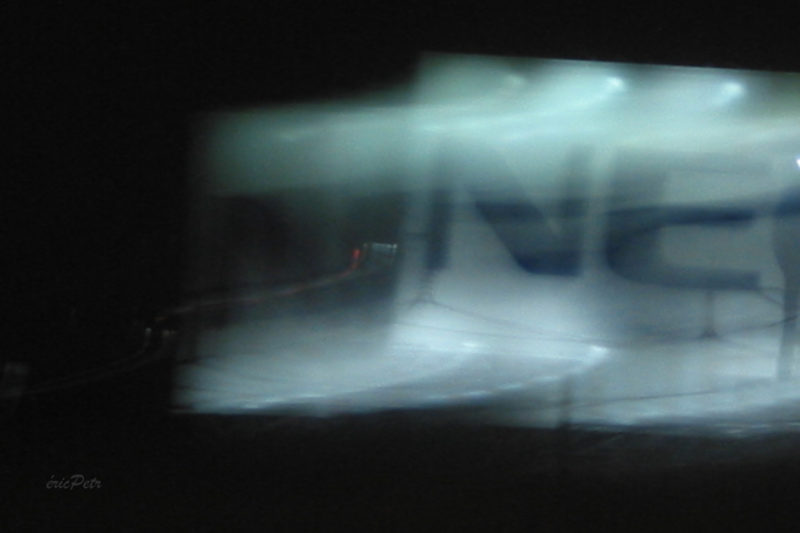
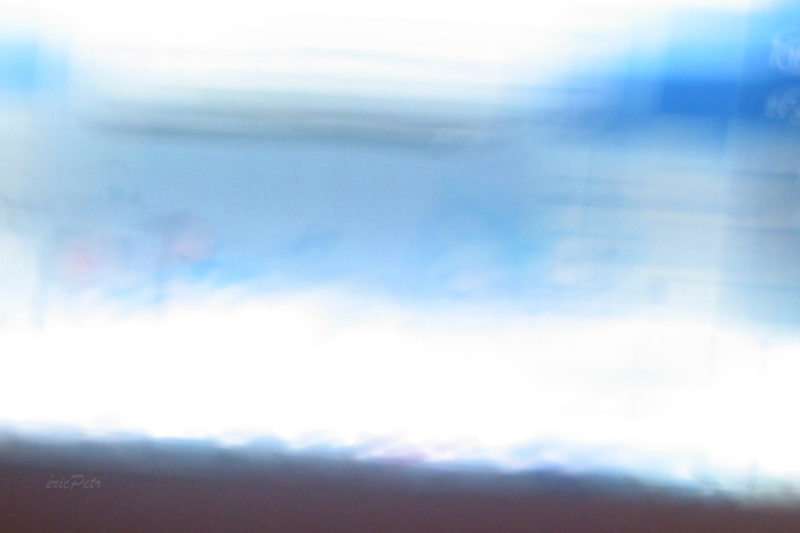
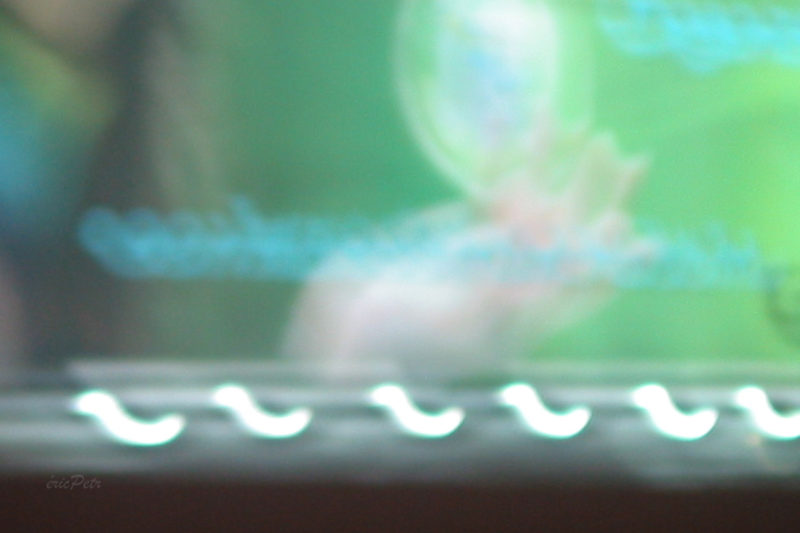
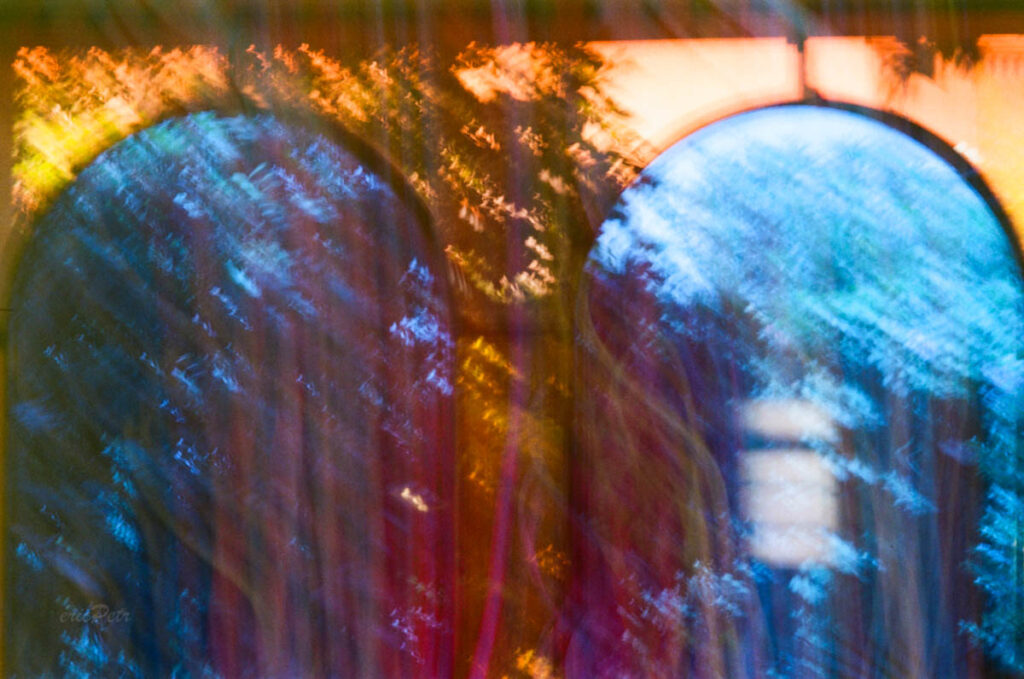
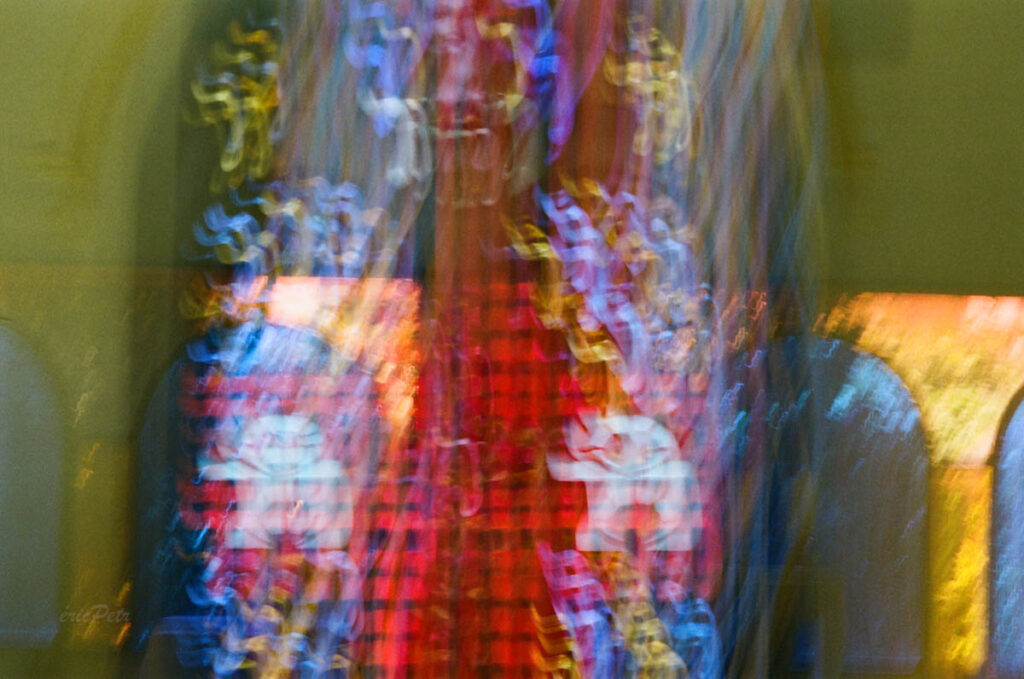
In any case, the reason I’m writing this article and presenting these four film photographs—which are part of a larger series—is that one of them depicts a phenomenon that is uncommon in photography, known as a “ghost image,” or “ghosting” in English.
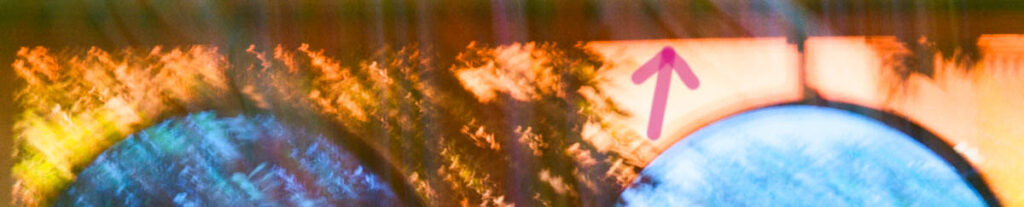
What you see here is not a scanning or image-processing artifact, but a phenomenon physically imprinted on the negative itself. In any case, this is an unusual phenomenon in my own practice of film photography, and one that I am encountering experimentally for the very first time.

As you will see, the perforated part of the 35 mm film is superimposed on the image and appears at a slight angle.

In order to conduct a proper analysis, I need to specify the shooting conditions and the type of equipment used.

  1. As for the equipment, it’s a Nikon F3T in excellent condition, which was mounted for the occasion with a five-element, non-AI Nippon Kogaku Nikkor-Q 135 mm f/2.8 lens from 1965.
  2. The back of the camera is completely waterproof, and its seals are practically brand-new. Its hinges are perfectly aligned and do not let in any light. Its waterproofing is regularly checked and is flawless.
  3. This is a roll of Kodak Color Plus 200 ISO film that I recently purchased and have been storing in a special container designed to preserve film until it is used.
  4. This photo was taken with an exposure time of about one minute—maybe just a tiny bit longer.
  5. I always put the viewfinder cap on when I’m taking pictures, which prevents any stray light from creating a halo effect while the shutter is open.
  6. The film rewound properly, and the cover was never accidentally opened while the film was in the camera. The film was immediately placed in its black box after being removed from the camera.
  7. Here you can see the photographs that come before or after the one in question. You will notice that none of them show any kind of light haze or artifact.

Given the context described above, the hypothesis that a possible light source is leaking through the rear film loading hatch is highly unlikely.

In fact, if light were to leak through the camera’s body, this stray light could have illuminated the film from behind and formed a severely degraded image of a structure located in the immediate vicinity of the film’s light-sensitive area, such as a bright edge, a window mask, a metal edge, or an adjacent perforated area.

And if that were the case, the perforations visible in the photograph in question could have indirectly contributed to the formation of thisghost image.
I am therefore inclined to believe that the film base itself (that is, not the light-sensitive emulsion, but its transparent plastic structure consisting of multiple thin layers) acts as a component of the optical and image-recording system.

As a reminder, a film consists of several layers, namely:

・The emulsion surface;
・The interfaces between layers;
・The transparent plastic substrate;
・The protective layers
・The anti-halo layer.

Of course, I can’t say for certain exactly which mechanism is responsible for this strange superposition, but two physical hypotheses come to mind.

First Hypothesis

The first hypothesis is thought to be related to a phenomenon known as “light piping.”

When an intense light source strikes the film at an oblique angle, the light could penetrate through the transparent edge of the film and then propagate through the film base.

The perforations in the film could, in fact, serve as an entry point for light to travel through the film’s structure to the emulsion layer, where it would partially reveal the geometry of the film’s edges.

We could think of the path that light travels in this way:

[scene] ~ [lens] ~ [film structure] ~ [film emulsion] ~ [image]

Second hypothesis

The second hypothesis—more speculative but particularly interesting—would be that of an internal reflection involving the film itself.

When exposed to an intense beam of light arriving at a certain angle, this non-sensitive, transparent portion of the film located near the perforations could have been illuminated from the side. A fraction of this light might then have been transmitted through the various layers of the film, reflected toward the surface of the rear lens element, and finally partially reflected back toward the light-sensitive surface of the film, thereby creating this superimposition with the photographed image.

It is also highly likely that this long exposure time allowed the light to travel all that way and be captured in the photograph.

The hypothetical route could then be illustrated as follows:

[scene] ~ [lens] ~ [film frame / film structure] ~ [rear optical surface] ~ [film emulsion] ~ [image]

Under this assumption, film would no longer be merely the passive medium onto which the image is recorded; rather, through its properties of transmission and reflection, it would itself contribute to the creation of the final photograph.

Of course, this is merely a hypothesis on my part that would need to be supported by specific experiments—given the complexity of the interactions between the various organs—in order to be able to state with certainty the exact mechanism behind this phantom image. 
So, for now, this image remains an optical mystery whose exact origin I cannot determine with certainty.

The extremely unusual conditions under which it was taken (namely, an exposure of about one minute, the presence of intense light sources, and the use of an old lens with an optical design different from contemporary ones), may have allowed a phenomenon that is usually imperceptible to gradually imprint itself on the emulsion.

The first hypothesis—that light propagates internally within the film base—could explain the presence of the perforated structure. 

The second, more speculative approach envisions a series of interactions between the film plane and the rear optical surfaces of the lens, momentarily transforming the photographic medium itself into an active element of the optical system.

What fascinates me about this experiment is precisely this possibility: that the medium intended to receive the image might, during the exposure time, have itself contributed to the composition of the image.

Photography would then no longer be simply a luminous trace of an outdoor scene; we already know this. But the camera, the lens, the type of film, and even the very materiality of the film would have unwittingly become participants in the image.

A photographic accident—that’s for sure! 

But it also reveals a transient phenomenon that highlights the idea that the medium of photography can photograph itself 😉

Food for thought…!
IN SITU KINETIC PHOTOGRAPHY: AN APPROACH TO LONG-EXPOSURE

In situ kinetic photography, long exposure in photography
Matter © Éric Petr, 2018 | Nikon F3, Ilford FP4 film

What is « In situ kinetic photography », « Photographie cinétique in situ » or « ISK photo » ?
More than a concept, “In Situ Kinetic Photography” is a photographic language developed in the early 2000s.

The intention is to explore the recording of light as photographic material and to develop a body of work in which the references of time and space are profoundly altered.

This approach was based on the intention to:

・to work with a single exposure, without post-processing or multiple exposure, in order to remain as close as possible to the recorded subjective experience,
・to use relatively long exposure times and, depending on the composition, ranging from a few seconds to several minutes, in order to allow for a condensation of emotions, light and matter,
・to intentionally move the camera during the recording of the image, in order to recontextualise the scene according to another order, that of an aesthetic and inner experience,
・to allow, during the recording process, subtle variations through which the experience may unfold into unforeseen possibilities,
・and to construct the image on site, “in situ”, so that this encounter between the observer (the photographer) and the place, along with what emanates from it, is not disrupted by external factors unrelated to the scene and the experience.

The intention is therefore no longer simply to show movement, as in the classical principle of long exposure — “I move the camera to create blur” — but rather to compose an image as a temporal condensation of a place.
JI could even compare this to a kind of “micro-film recorded on a single image”, or to a form of “echography of a place”.

Through this process, I aim to explore the gap that emerges between:

・the observation of a scene “in situ”, using a camera as a measuring instrument,
・and the recording of this scene as obtained by the observer (the photographer), who takes as reference both his feelings at the precise moment of taking the photographs and external elements such as light, matter and the energy of the place.

This gap reflects an introspection produced by an unconscious form of reflection carried out by the observer (the photographer), in resonance with the surrounding elements. The resulting recording reveals an image that expresses the inner gaze of a scene experienced from the outside.

In situ kinetic photography, long exposure in photography
Spiritual Odysseys © Éric Petr, 2025

What does the concept “In situ kinetic photography” refer to?

This concept is based on the principle of long exposure and, although I have devoted much of my reflection to it as a visual artist photographer, long exposure is also a subject on which many other artists and photographers have worked.

Among them, I will mention in a non-exhaustive way some of the most well-known, such as Gustave Le Gray (1820–1884), painter and photographer, Alfred Stieglitz (1864–1946), Man Ray (1890–1976), experimental photographer, László Moholy-Nagy (1895–1946), Josef Sudek (1896–1976), Brassaï (1899–1984), Ernst Haas (1921–1986), William Klein (1926–2022), Barbara Kasten (1936), Michael Wesely (1945), Eric Staller (1947), Hiroshi Sugimoto (1948), Abelardo Morell (1948), Uta Barth (1956), Mitch Dobrowner (1956), Michael Kenna (1957), Francesca Woodman (1958–1981), Tokihiro Sato (1957), and among my contemporaries Adam Fuss (1961), Alexey Titarenko (1962), Thierry Cohen (1963), and Rut Blees Luxemburg (1967).

What is interesting to observe here is that, beyond long exposure, each artist has appropriated this shooting technique to create very different worlds.
However, while writing this article and revisiting each artist’s work, I can see emerging from these long exposures a genuine, lasting visual language, rather than a mere effect, which I could map as a kind of cartography of the different currents or aesthetics that have been created.

1. The pioneers of photographic time

Reveal
Long exposure conceived as a technical necessity, as photography at the time required it. It becomes a visual language identifiable within its own chronology.

Gustave Le Gray (1820–1884)
Alfred Stieglitz (1864–1946)
Brassaï (1899–1984)

Here, long exposure first emerges from a material constraint, before becoming a visual vocabulary.
Le Gray quickly understands that exposure is not merely a form of recording, but a construction of the visible.
Stieglitz transforms atmosphere and weather into expressive matter.
Brassaï reveals the city as a nocturnal theatre.

2. Experimenters of light

To experiment
Long exposure conceived as a laboratory of the medium, with all its possible axes of experimentation.

Man Ray (1890–1976)
László Moholy-Nagy (1895–1946)
William Klein (1926–2022)
Barbara Kasten (1936)
Adam Fuss (1961)
Eric Staller (1947)

Here, we are no longer simply photographing the world: we are photographing the very conditions of vision itself. Duration becomes a luminous experience.

3. The contemplatives of landscape and extended time

Contemplate
Long exposure as a temporal condensation of the real.

Josef Sudek (1896–1976)
Hiroshi Sugimoto (1948)
Michael Kenna (1957)
Mitch Dobrowner (1956)

The subject becomes less the place than the duration of the place.
Sugimoto pushes this to a quasi-metaphysics of time.
Kenna transforms the landscape into silent memory.

4. The architects of accumulated time

Accumulate
Photography as a temporal accumulation.

Michael Wesely (1945)
Abelardo Morell (1948)
Thierry Cohen (1963)

Here, the image is no longer an instant but a temporal construction.
In Wesely’s work, time becomes almost a building material.
In Morell’s work, place and its projection merge.
In Cohen’s work, multiple temporalities come together.

In situ kinetic photography, long exposure in photography
Hikari © Éric Petr, 2025

5. The photographers of absent presence

Transform
Long exposure as a human trace.

Francesca Woodman (1958–1981)
Alexey Titarenko (1962)
Rut Blees Luxemburg (1967)

Time does not erase: it transforms presence.
Woodman works on the disappearance of the body.
Titarenko focuses on social dissolution.
Rut Blees Luxemburg explores urban memory.

6. Phenomenologists of gesture and space

Move
Long exposure as a lived experience of vision.

Ernst Haas (1921–1986)
Tokihiro Sato (1957)
Uta Barth (1956)

Here, we no longer simply record what is seen: we photograph the act of seeing itself.
Time becomes perception.

Where does the concept of “in situ kinetic photography” fit?

I did not list these aesthetic trends in order to put artists into categories, something I myself tend to avoid.

However, it does allow for a methodical approach to understanding how, through the history of photography, long exposure, initially a technical constraint, has become an aesthetic intention in its own right.

As for me, if I had to define myself within these trends, I would find it difficult. First, because it is always hard to judge oneself, and secondly because I do not identify with any of the six chapters outlined.

In situ kinetic photography, long exposure in photography
Spiritual Odysseys © Éric Petr, 2026 | Nikon F3, Kodak ColorPlus 200 film

Perhaps this is why I felt the need to name this territory of visual exploration rather than situate myself within an existing movement, such as “long exposure with intention”, which was only later, in the late 2010s, referred to as “ICM (Intentional Camera Movement)”.

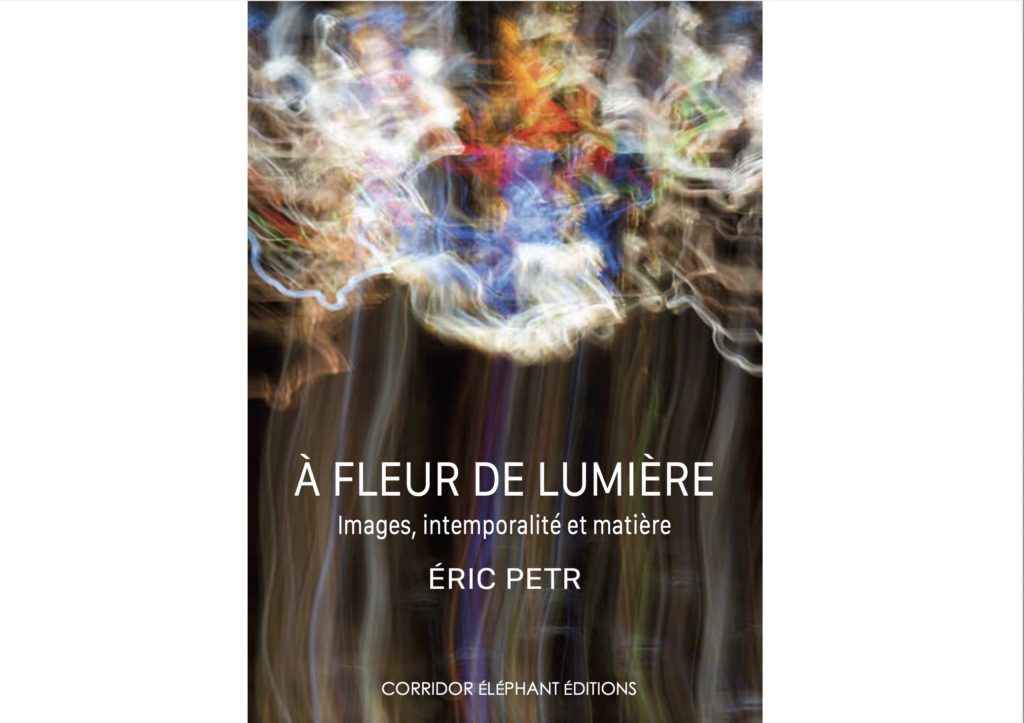
“À FLEUR DE LUMIÈRE” CONTRIBUTE TO ÉRIC PETR’S BOOK

À FLEUR DE LUMIÈRE

a book by Éric PETR
published by Éditions Corridor Éléphant

À Fleur de Lumière is a limited-edition monograph, numbered, signed by the artist, and certified with an embossed seal from Corridor Éléphant publishing house.

Its crowdfunding campaign is carried out through pre-orders on HelloAsso.com, a French social enterprise founded in 2009.

The step-by-step contribution guide: PDF

ABOUT THE BOOK

This book will be printed in January 2026 and shipped in early February.
The printing will be done on 170 g semi-matte paper, with a 400 g soft matte-laminated cover. The chosen format, 21×15 cm in landscape orientation, offers a comfortable hold for the 152 pages and 108 photographs presented by the author.

The book offers an insight into four decades of photographic exploration, and I’m delighted to share them with you through this beautiful edition.

A word from the editor

Éric Petr’s photography is neither conventional nor what one expects photography to be. It defies meaning, disregards rules, and plays with shadows. It tells nothing or almost nothing. It ridicules overly long sentences, wandering descriptions, and confusing variations. It shows what one dares not look at: time. And with it, the multitude of dimensions that intertwine.
Éric Petr’s work does not simply show; it captures. More than geometric figures or overlapping traces of light, the artist freezes that tangible invisibility, that “abstract, constant and present”.

THE MOVING IMAGE OR PHOTOGRAPHY AND AIKIDŌ

Hong Kong by night, February 2005 © Éric Petr

My path, in my reflection on the moving image

I was a passionate film photographer from 1983 to 1993. I developed my films and printed my photographs in a photo lab I borrowed from the Paris Airport.
Then I suddenly stopped photography. At that precise moment in its history, I undoubtedly felt that an earthquake had occurred, and that I no longer had a place in it. The digital world was emerging.

And so went the years without taking a single photograph and without touching a camera in the decade that followed.
When I look at my photo albums, I see a gaping hole of a decade’s worth of unprinted memories, some of which have disappeared into the depths of my subconscious.
The first lesson I learned from this deprivation of images is that photography, drawing and travel journals, beyond their beauty, are first and foremost an indispensable and necessary tool for memory.

But I had to step back from my obsessive and sickly relationship with the camera, and the ten years I’d been away from it made me aware of this, and gave me the distance I needed to reflect freely and without constraint on the power of the image, its role, its power, and above all, the way in which the photographic image could touch on the immaterial, the metaphysical, and express unspeakable emotions of the spiritual or invisible order.

And so it was that this decade of gestation, which was accompanied by an intense practice of uncompromising Aikidō, changed my view of the world, or rather, brought to it an acuity that until then had met with some difficulty in expressing itself clearly within me.

It’s also undeniable that Aikidō, in its pure practice, traditional approach, intensive training and regular meditation, provides access to a wider field of spiritual knowledge and our relationship with the universe.
This is how Aikidō has helped me so much and continues to bring me this depth in the conception of my photography.

I would like to express my gratitude to Armand Mamy-Rahaga and Michel Kovaleff who, through their practice of a fair and uncompromising martial art, have helped me to find a path in my reflection, and to resume my photographic work with the strength that Aiki gives us.

Koh Chang 2002 © Éric Petr
Twelfth exposure of a first-ever photo film made after a ten-year hiatus from photography.

So in December 2002, after a ten-year hiatus, I took up photography again, where I had left off in 1993, but with a more structured coherence than my work of the 80s had produced.

It was a chance encounter with a 12-exposure disposable Pocket Instamatic Kodak, initiated by a trip from Thailand to Cambodia. 
Twelve great moments of emotion!
Just twelve photos taken during a trip to the ends of the earth is like holding your breath until the end.
On this trip, I learned to take my time, to search my subconscious for the triggering breath of the photographic click, the pleasure of the release.
I realized that photography is, above all, about listening to our universe.

The first photographic works I produced from 2003 onwards (Tōkyō under the rain_2oo3, Bangkok_2oo4, TrAveRséE2nUiT_2oo4, Windows_2oo5, and others), constitute the foundations and underpinnings of a knowledge acquired during this decade of interruption in photographic practice.

The three images I’m presenting today from 2005 are highly representative of my style. My photography not only uses light as the primary constituent of the work, but is also distinguished by its ability to capture the subtlest details of a scene or place, transforming visible objects and magnifying their secret perception. Through this gaze, each image becomes a kind of visual poem, where the invisible takes shape, and the viewer is invited to discover a world all his or her own, while remaining connected to the universal human experience.

These images from my Hong Kong by night series, taken in February 2005, attempt to reproduce the ineffable atmosphere of Asian cities, bringing with them what will become my signature as a photographer, that aspect of dense, poetic luminous matter, that dreamlike atmosphere and that feeling of timelessness.
Although these images were taken twenty years ago, their power makes us forget the poor quality of the digital camera used at the time, which remains a feat.

Hong Kong by night, February 2005 © Éric Petr

My photographic work will continue uninterrupted within the framework of this reflection on light, movement, space and time.
I have named this photographic process to define it: “in situ kinetic photography” or “photographie cinétique in situ”.

This work continues today with my Variations de Lumière but also, and always, with 光 (Hikari), Métamorphoses or my Spirituelles Odyssées which gave rise to the publication of a numbered and signed book in 2016, by Corridor Éléphant, Éditeur de photographies contemporaines.

This work on light and movement, which I began to disseminate on social networks in 2010, remained largely unknown to photographers and the general public. My numerous publications gave way, little by little, to a photographic trend that other photographers, in turn, took up and developed on their own, then named in the years 2015 “Intentional Camera Movement”.

I’m happy to be one of the very first investigators of this photographic movement, and to name but a few who preceded me, Kōtarō Tanaka (1905-1995), Ernst Haas (1921-1986), and also my contemporary Alexey Titarenko (b. 1962), who for his part worked specifically on crowds in motion.

I personally see myself as a photographer who has concentrated all my work and efforts over the course of my life on this principal reflection of the moving image, creating a totally unique style.

Hong Kong by night, February 2005 © Éric Petr

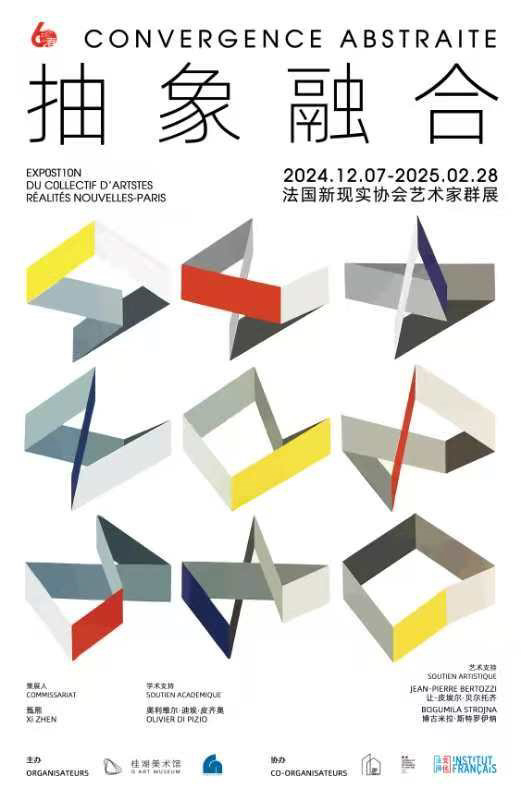
ABSTRACT CONVERGENCE | FUZHOU CHINA 2024-2025

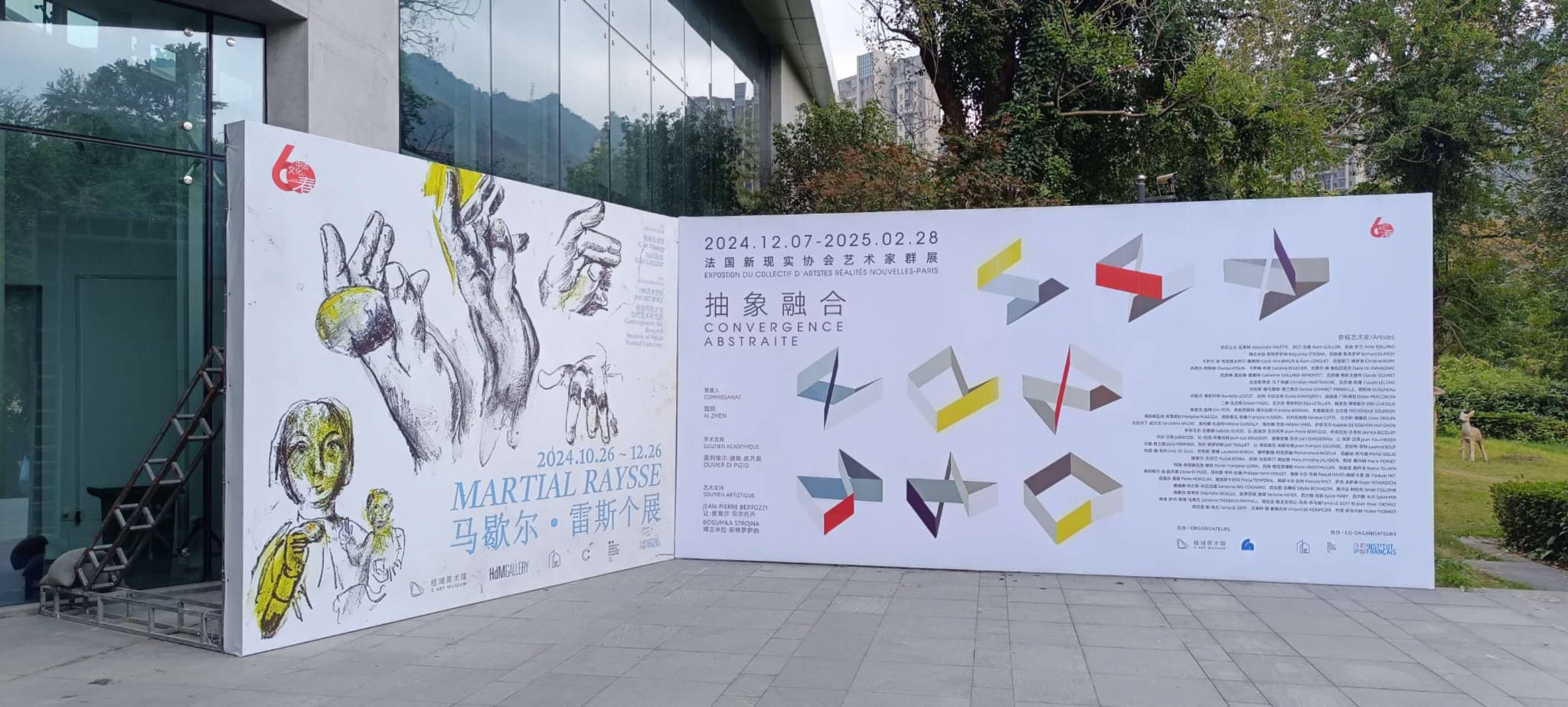
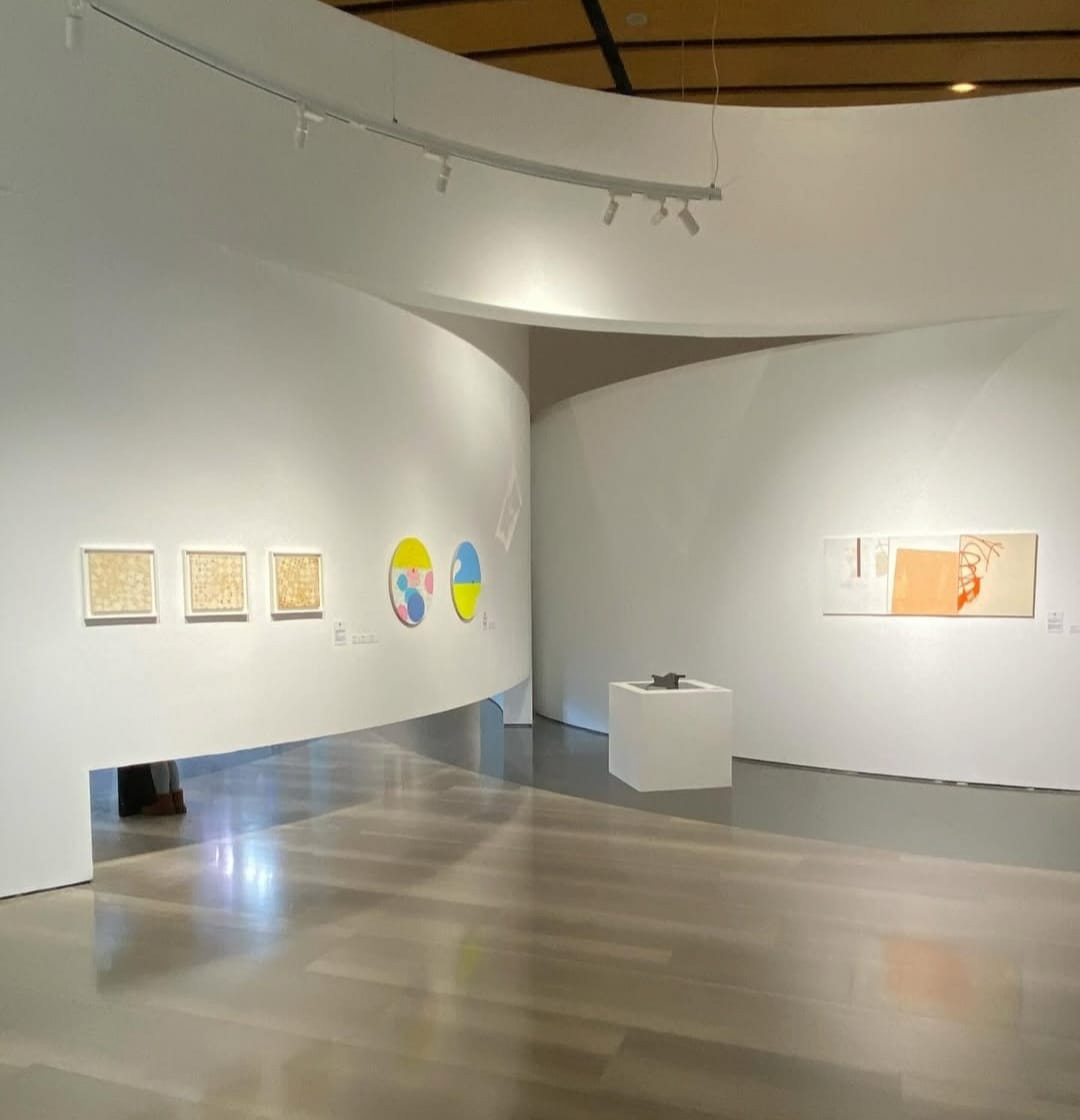
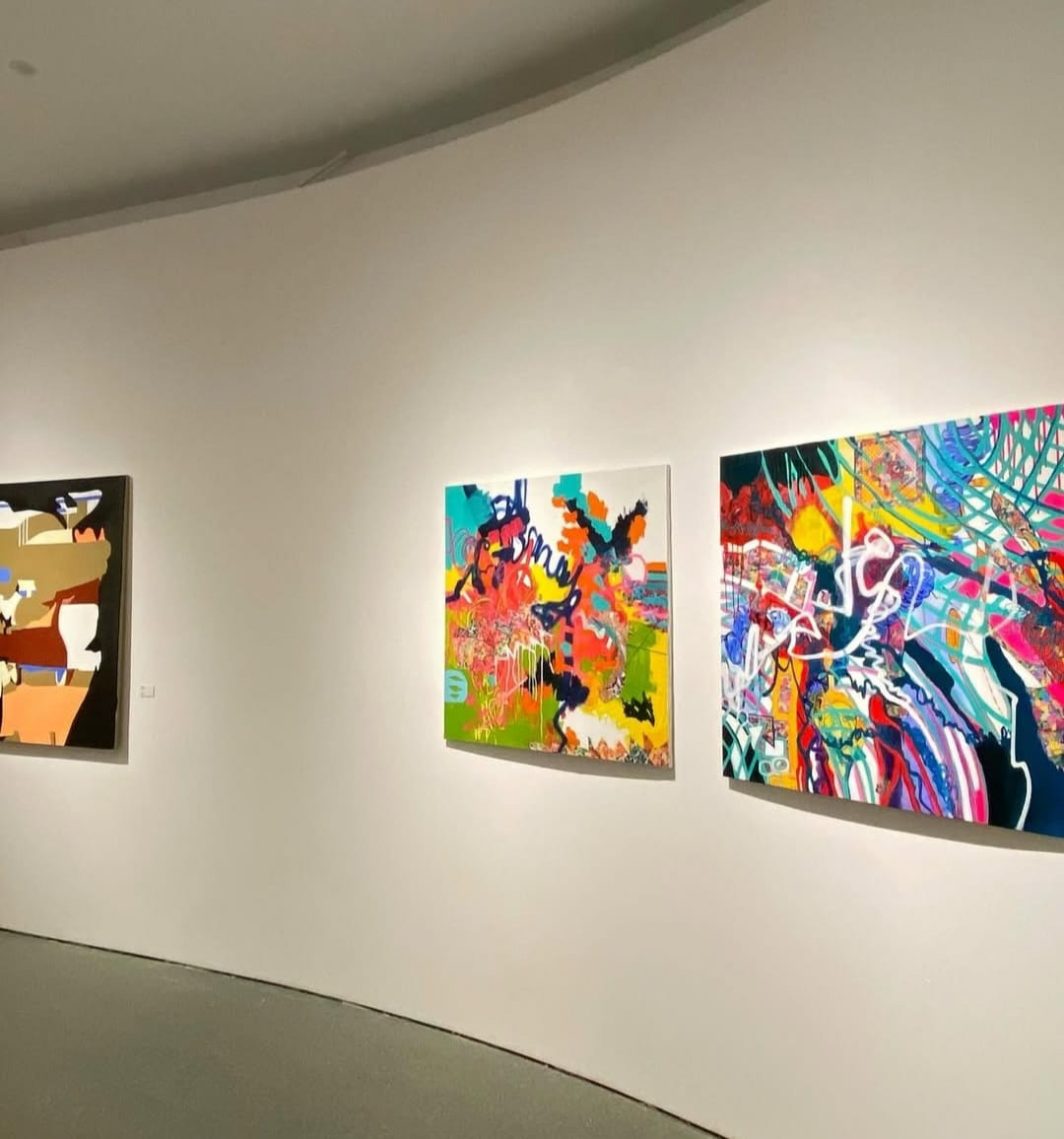
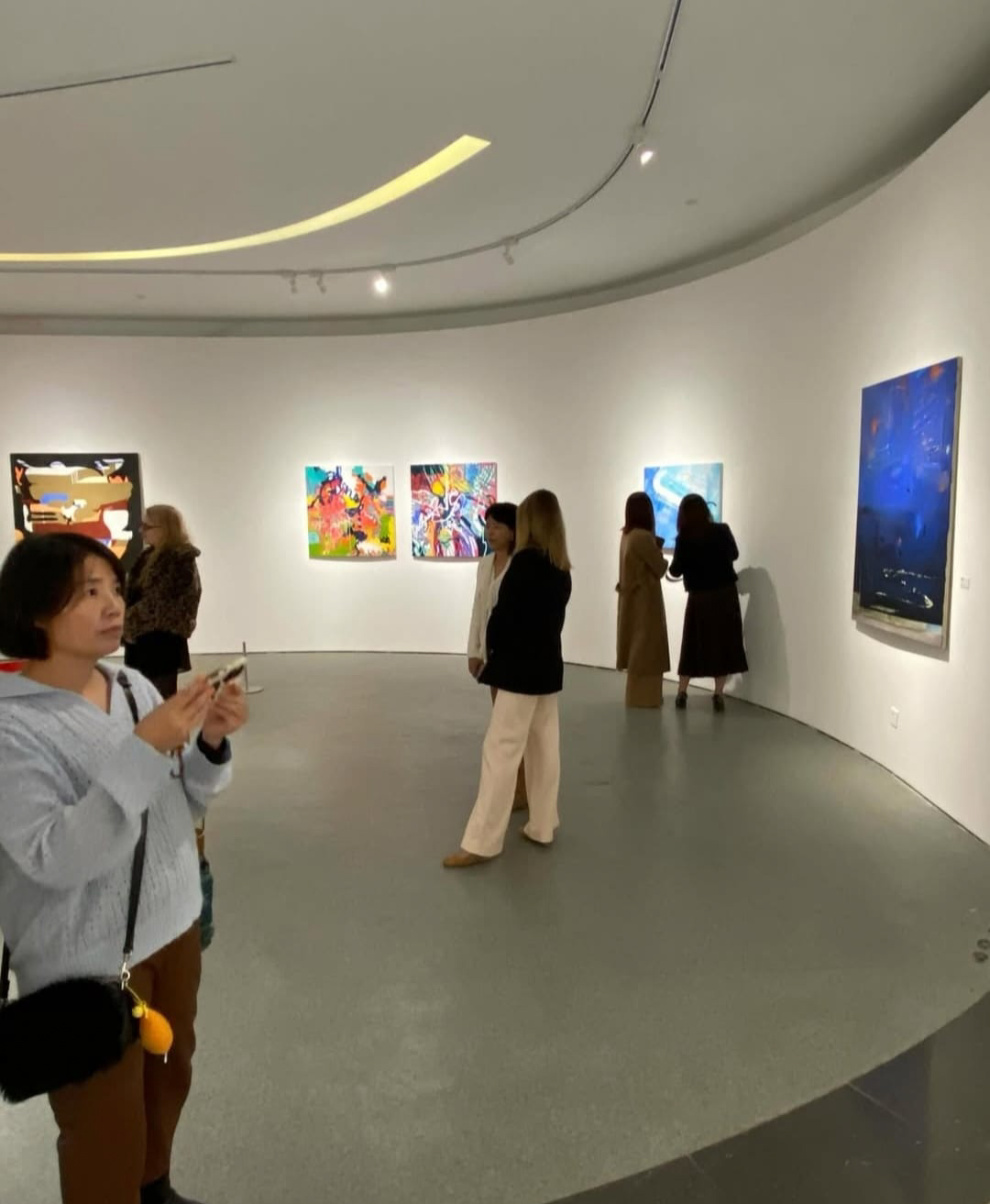
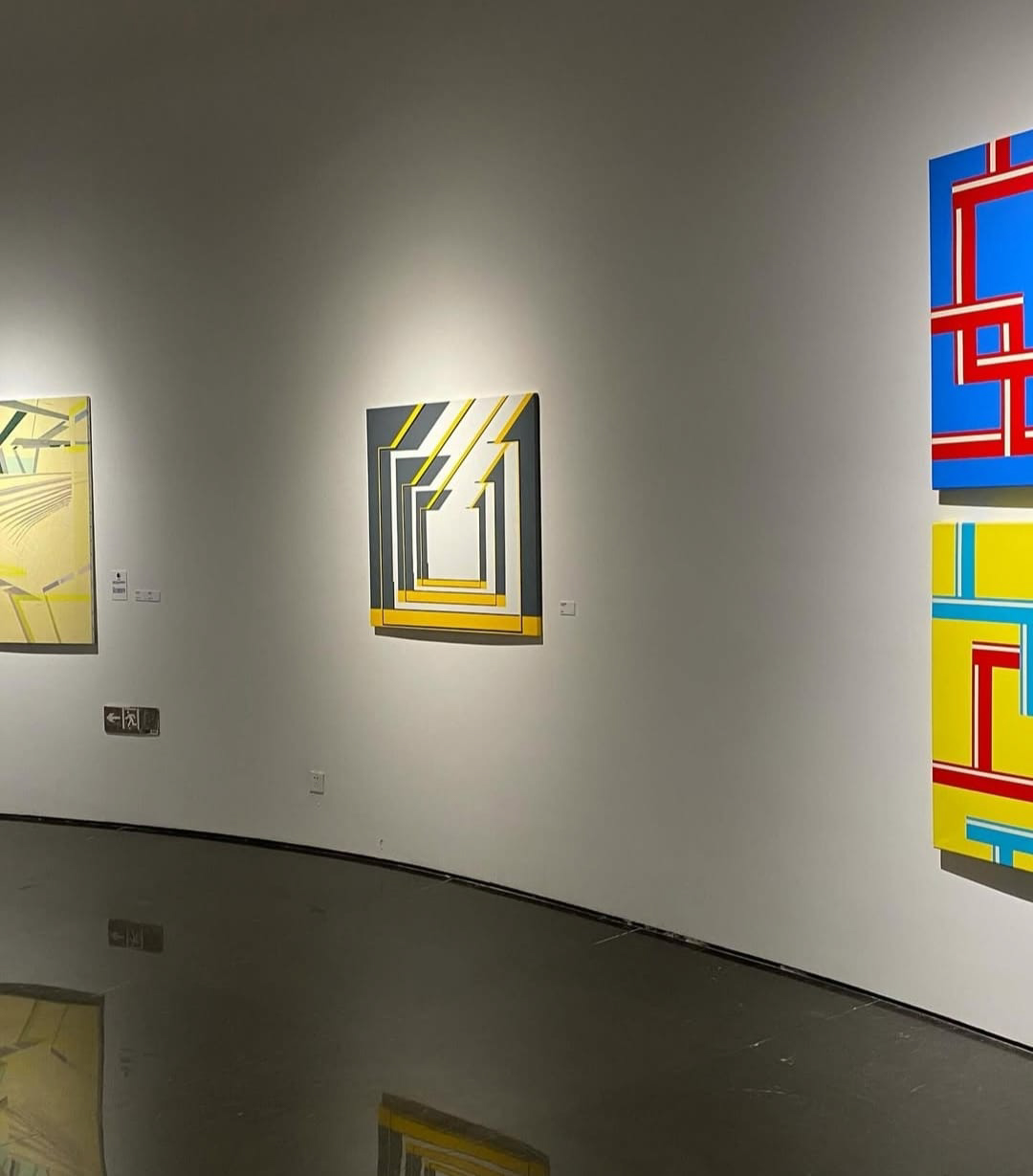
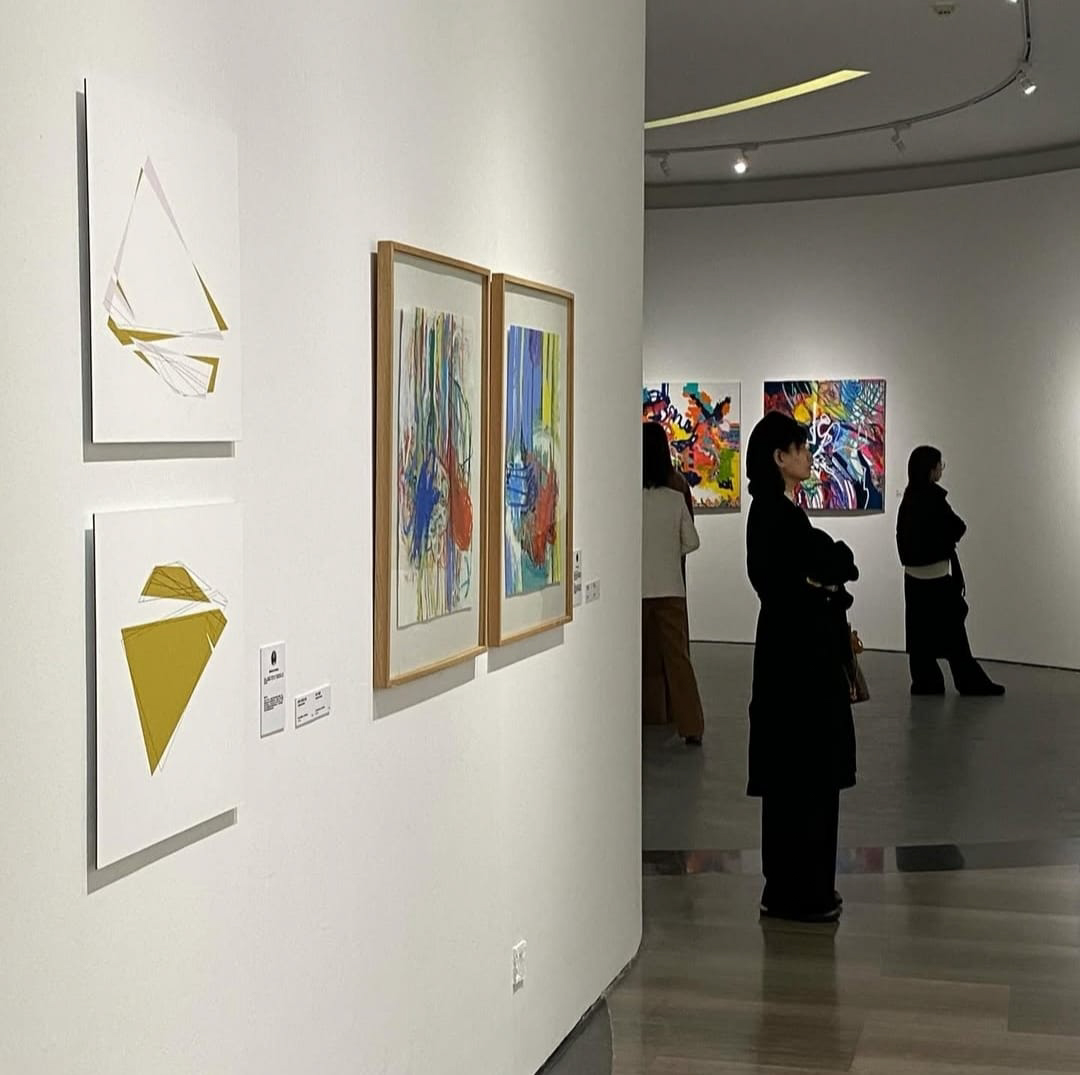
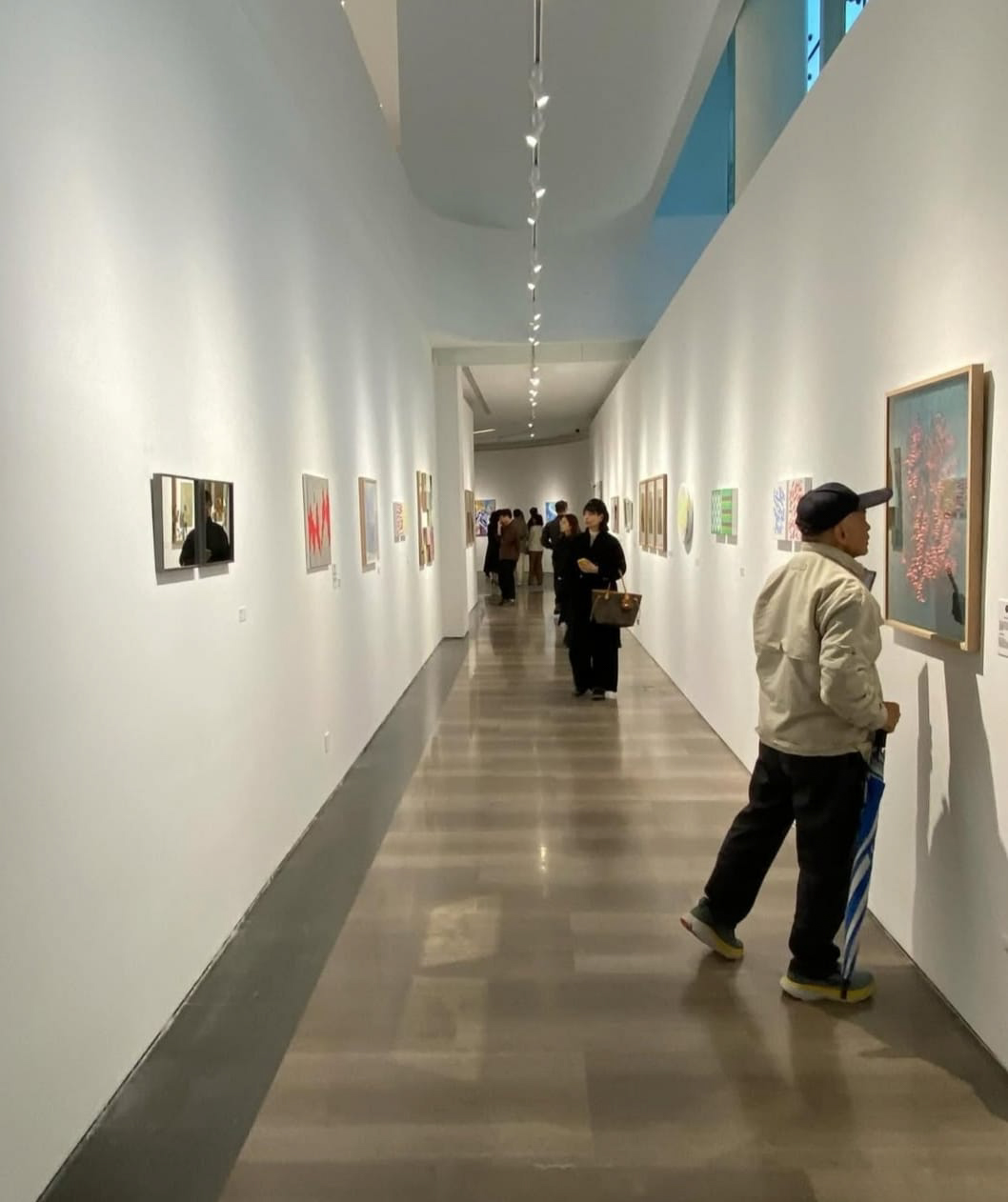
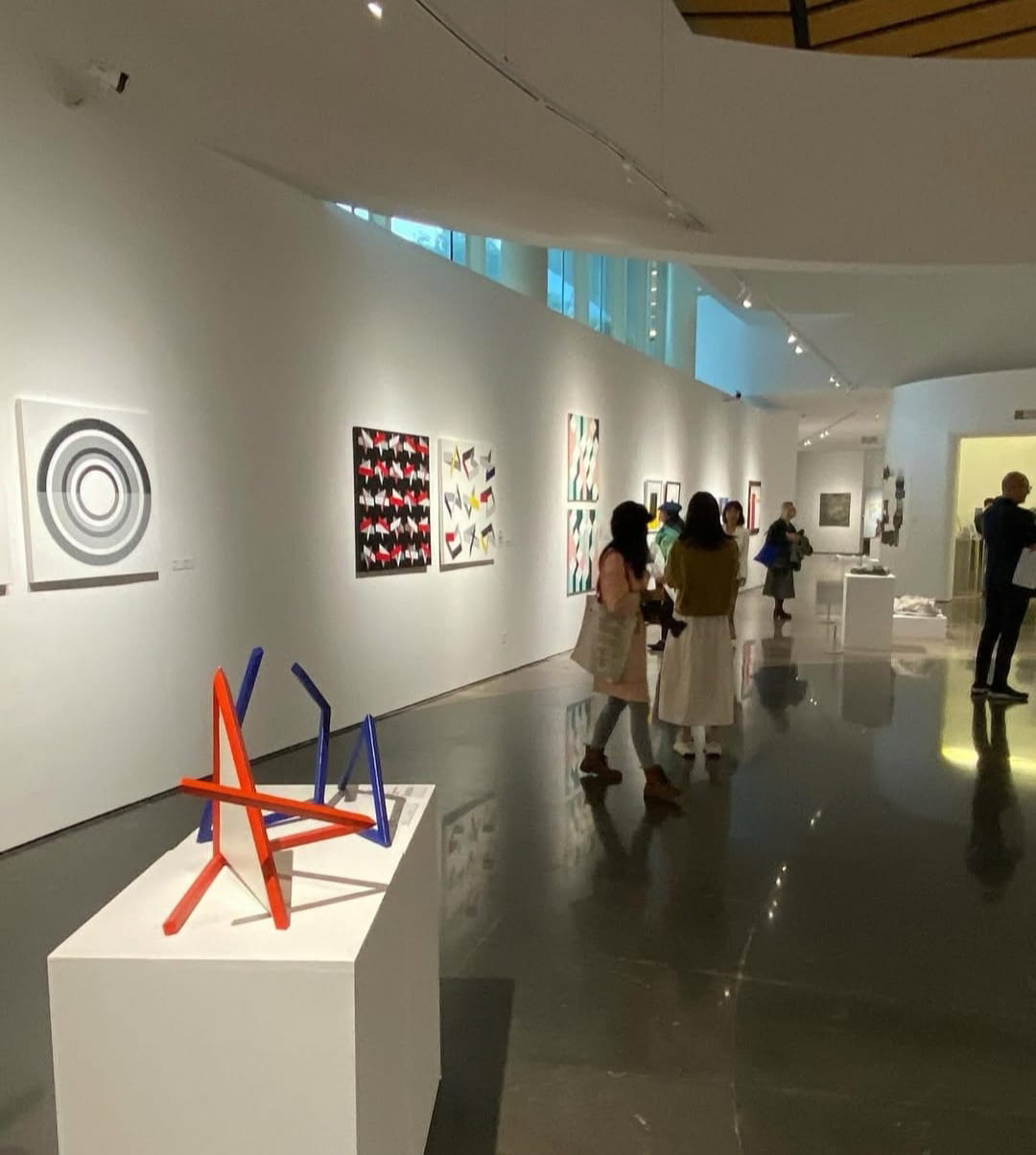
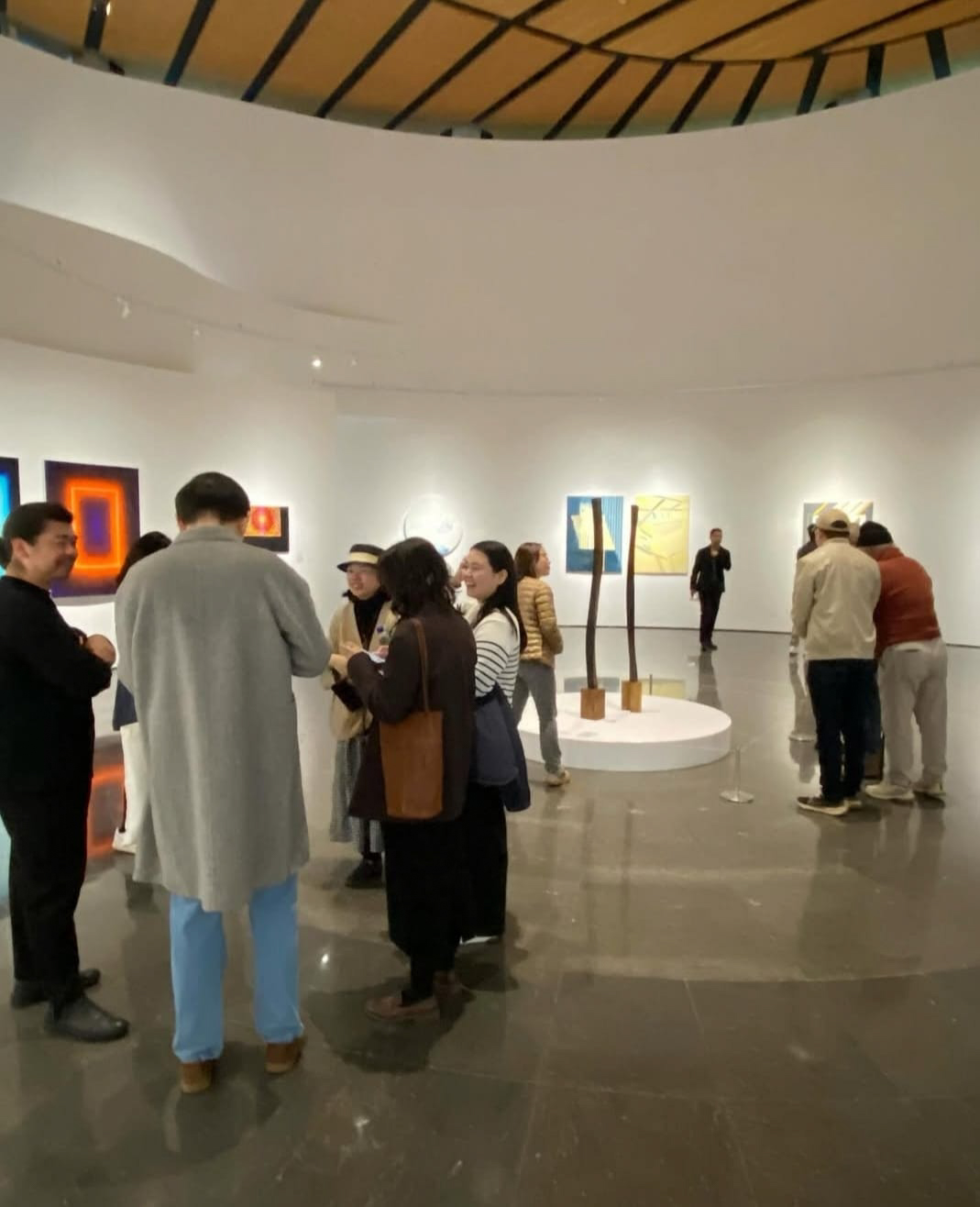
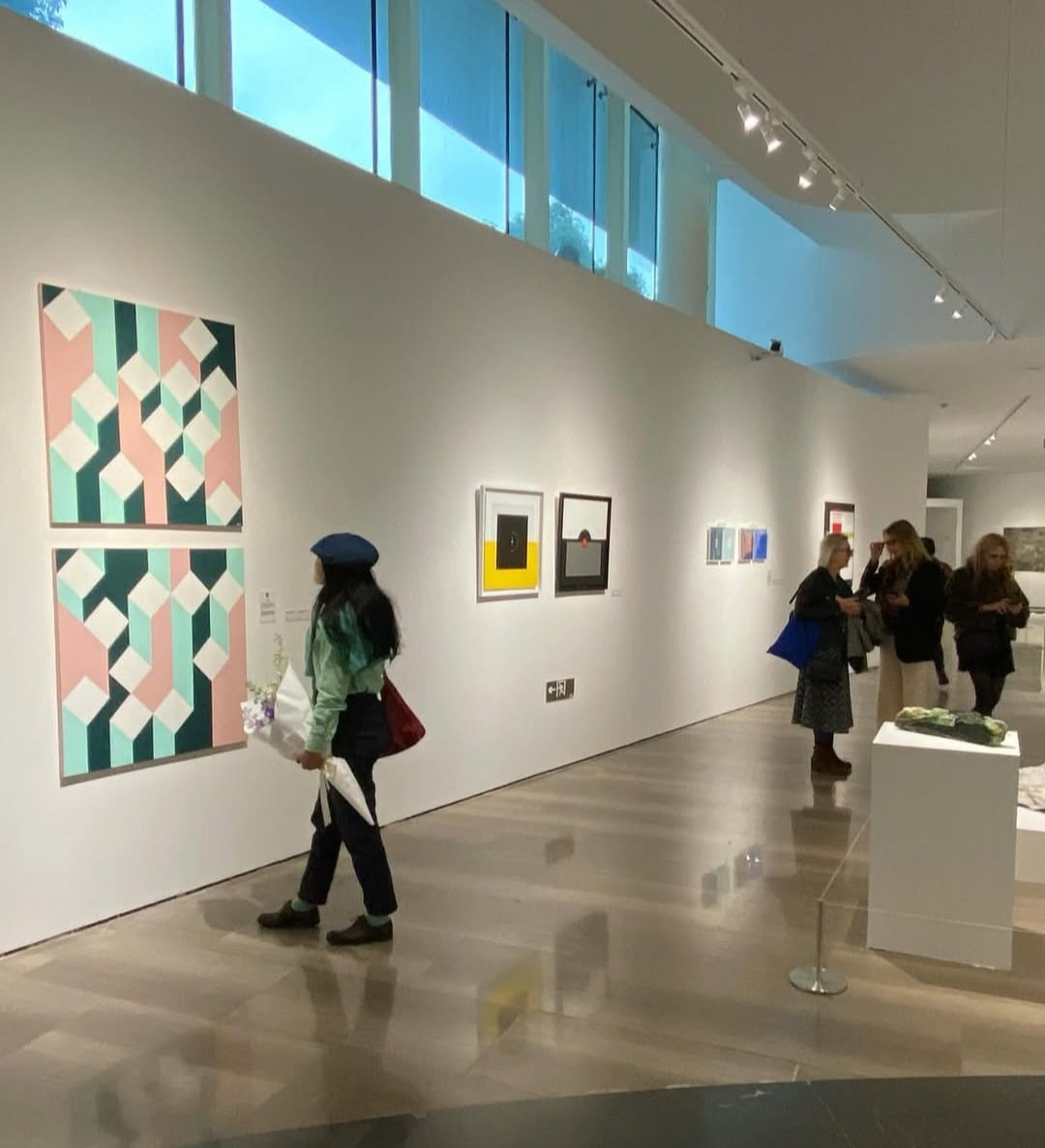
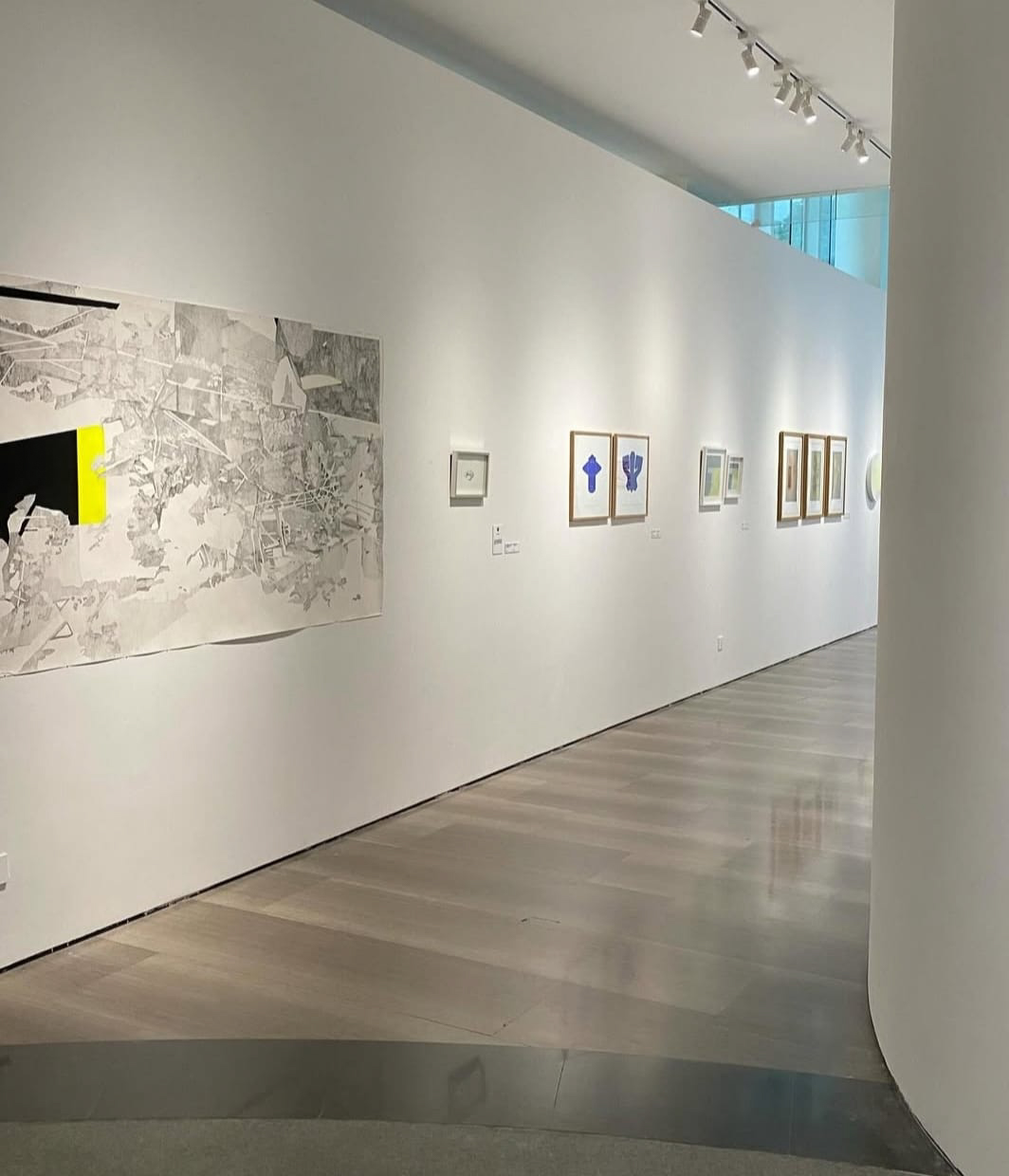
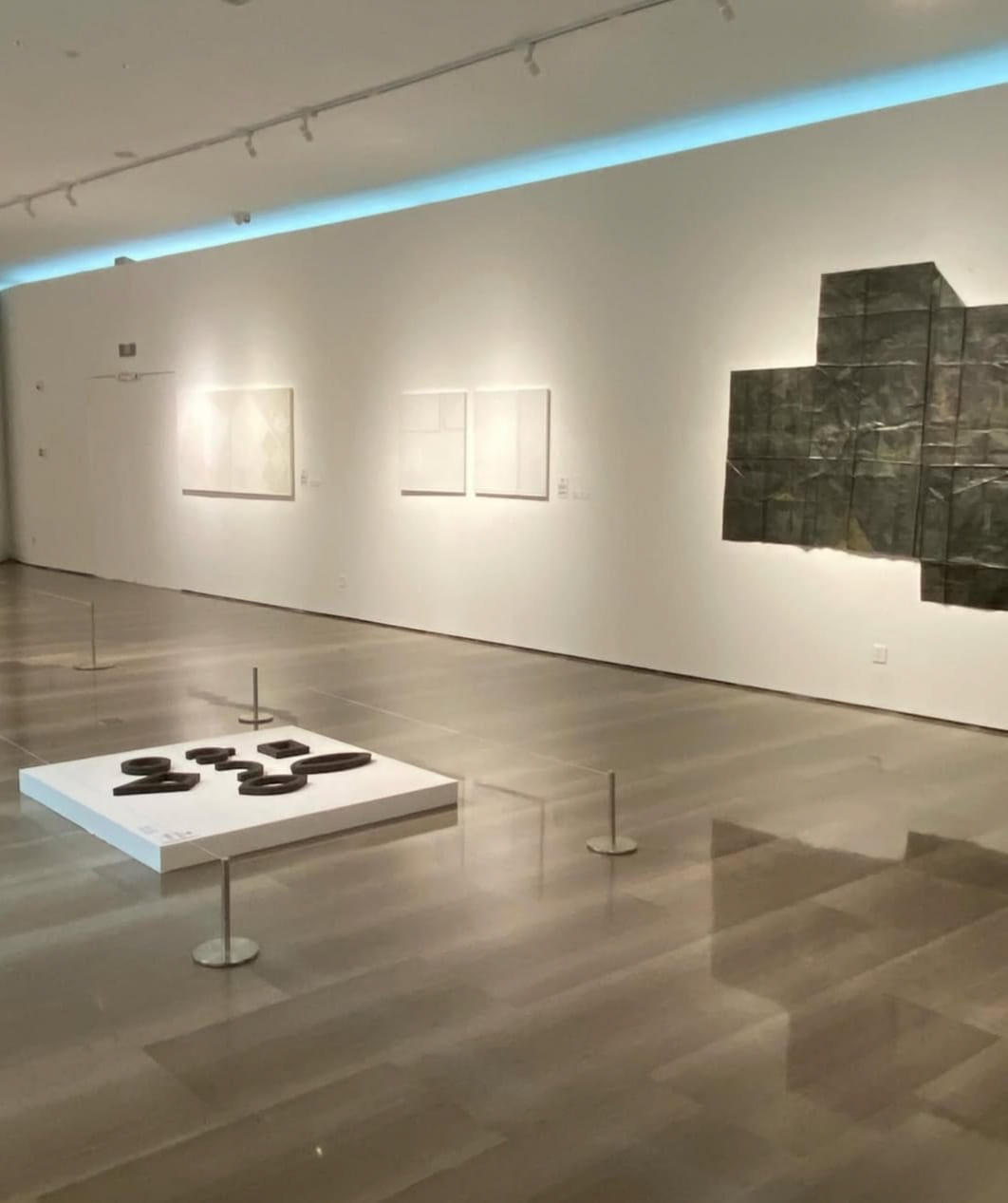
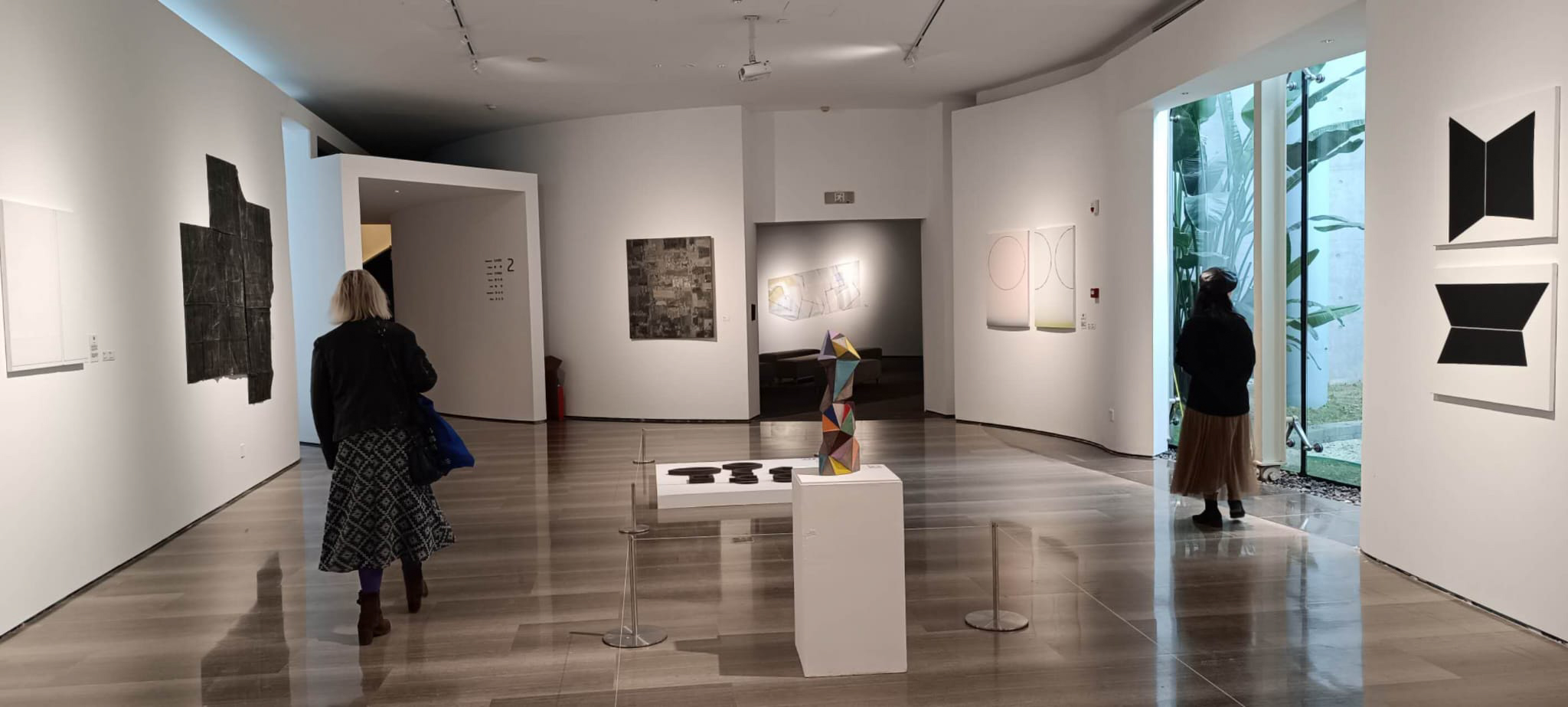
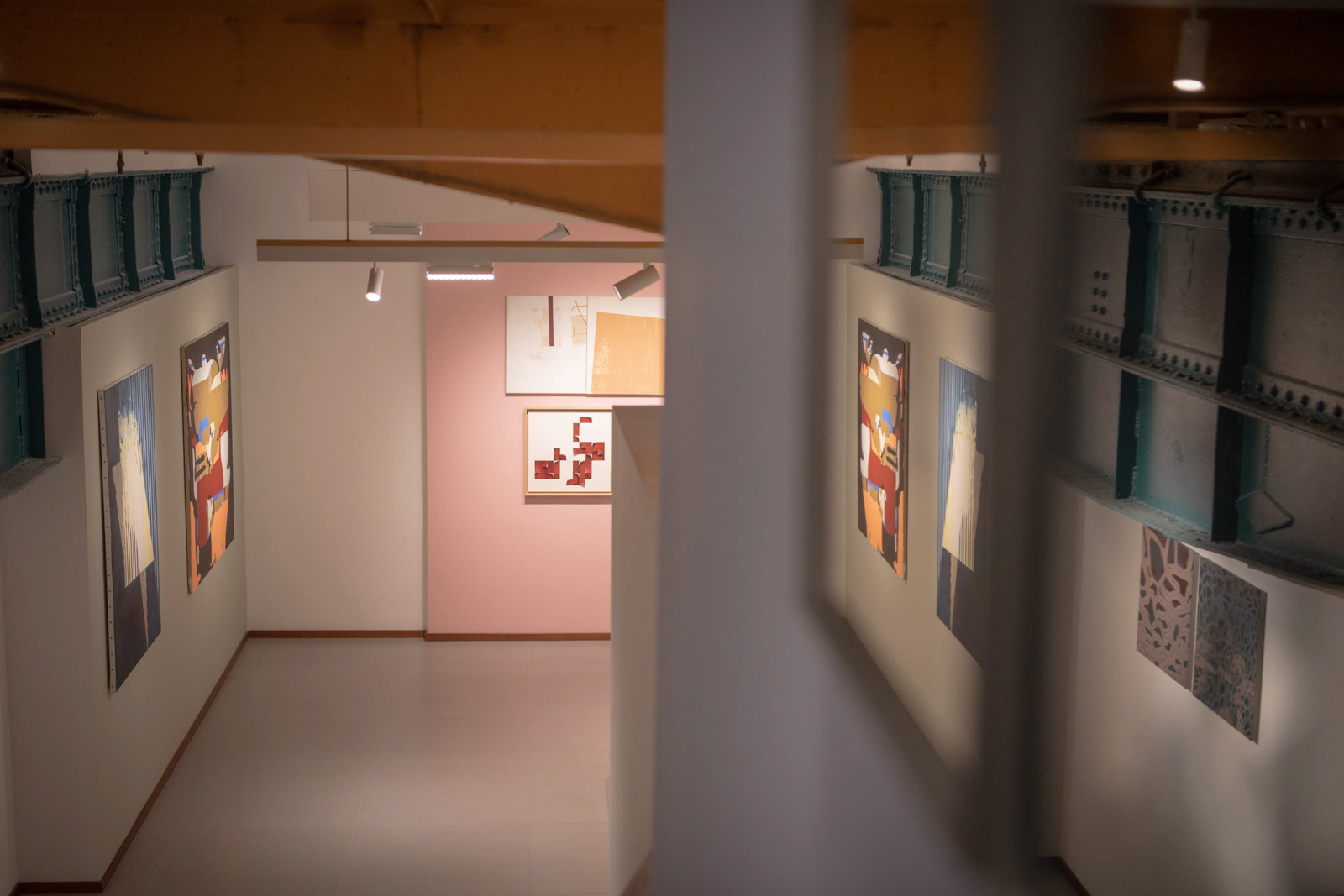
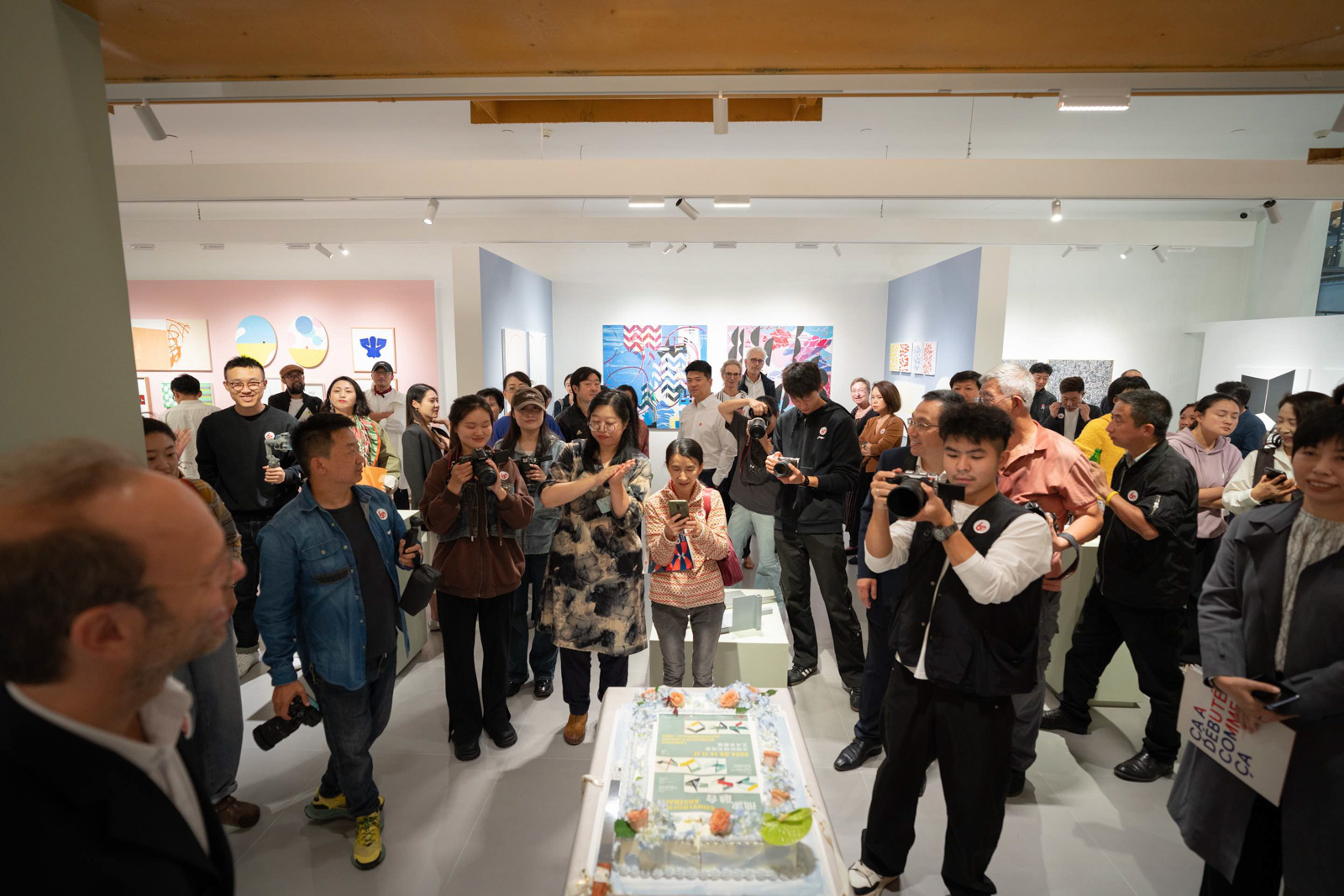
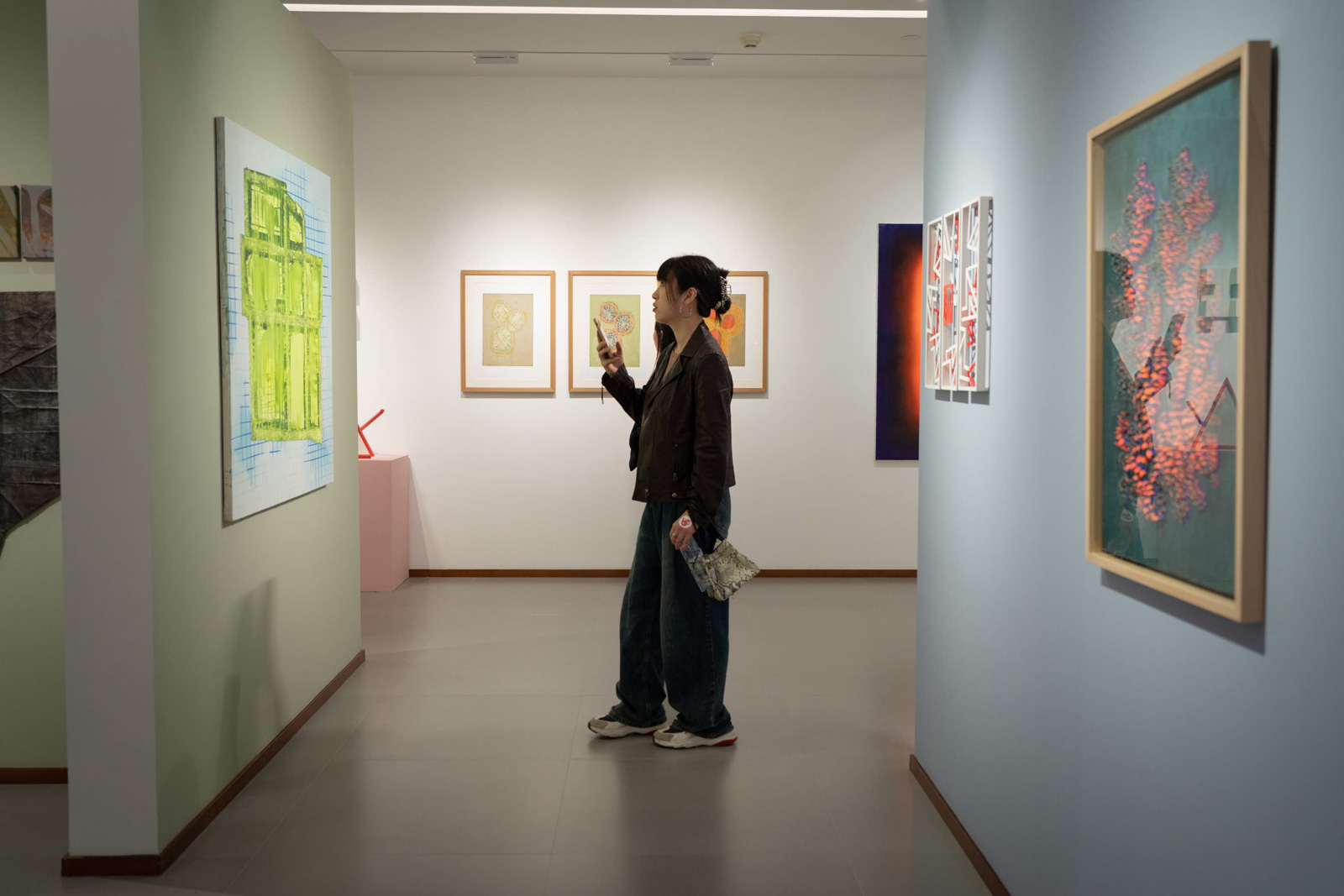
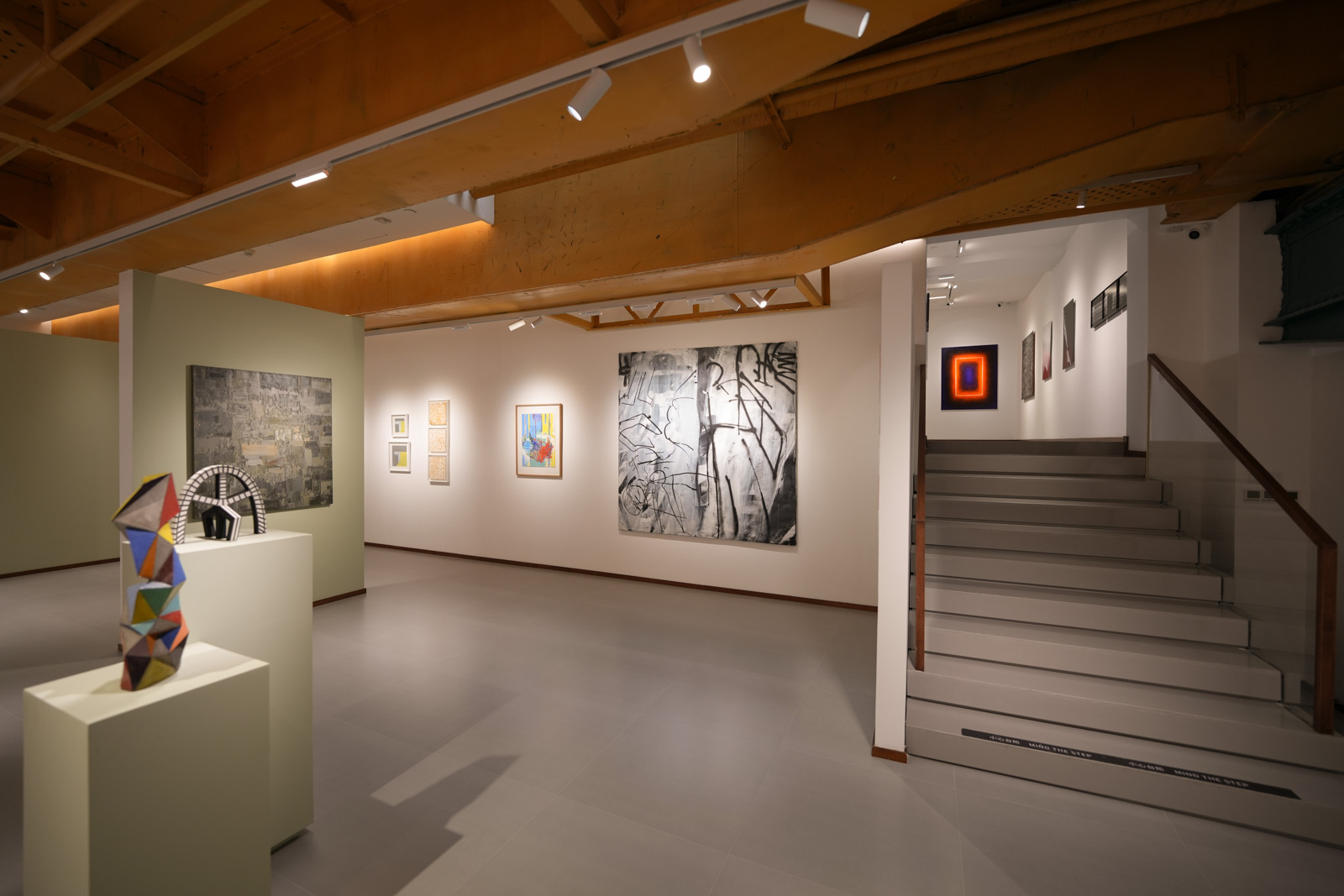
I’m delighted to announce my participation in the Réalités Nouvelles Hors les Murs exhibition in Fuzhou, China!

§ – § – §

抽象融合 – ABSTRACT CONVERGENCE


ACADEMIC SUPPORT ・ 学米支持
OLIVIER DI PIZIO ・ 奥利维尔 • 迪埃 • 皮齐奥

ARTISTIC DIRECTOR ・ 艺未总临
JEAN-PIERRE BERTOZZI ・ 让-皮埃尔 • 贝尔托齐
BOGUMILA STROJNA ・ 博古米拉 • 斯特罗伊纳

CURATOR:ZHEN XI
策展人:甄熙

07.12.2024 〜 28.02.2025

法国新现实协会
艺术家群展
EXHIBITION
ARTIST COLLECTIVE
RÉALITÉS NOUVELLES – PARIS
www.realitesnouvelles.org

展覧地点|EXHIBITION PLACE
福建省福州市晋安区宦溪镇 桂湖美术馆
Guihu Art Museum, Yuxi City, Jin’an District, Fuzhou City, Fujian Province

Baidu Maps: map.baidu.com/search/桂湖美术馆/

About the G-Lake Art Gallery at the Guihu Museum of Art・桂湖美术馆

The Guihu Art Museum is located in Fuzhou, the capital of Fujian province. It is committed to exploring the connotation of local Fujian culture in depth, and to presenting various academic research and artistic practices in a variety of exhibition formats. In addition to the exhibition, the Guihu Art Museum will also organize various special lectures, salons, workshops and literary fashion activities, and is equipped with independent libraries, public classrooms and cafés.

The art museum has long supported Fujian’s new generation of artists and cooperated closely with local art lovers and cultural and rural groups. It has also regularly invited art groups, artists, curators, designers and writers from outside Fujian province and around the world to make resident creations in Fujian. At the same time, the art gallery will also actively promote cultural exchange across the Strait.

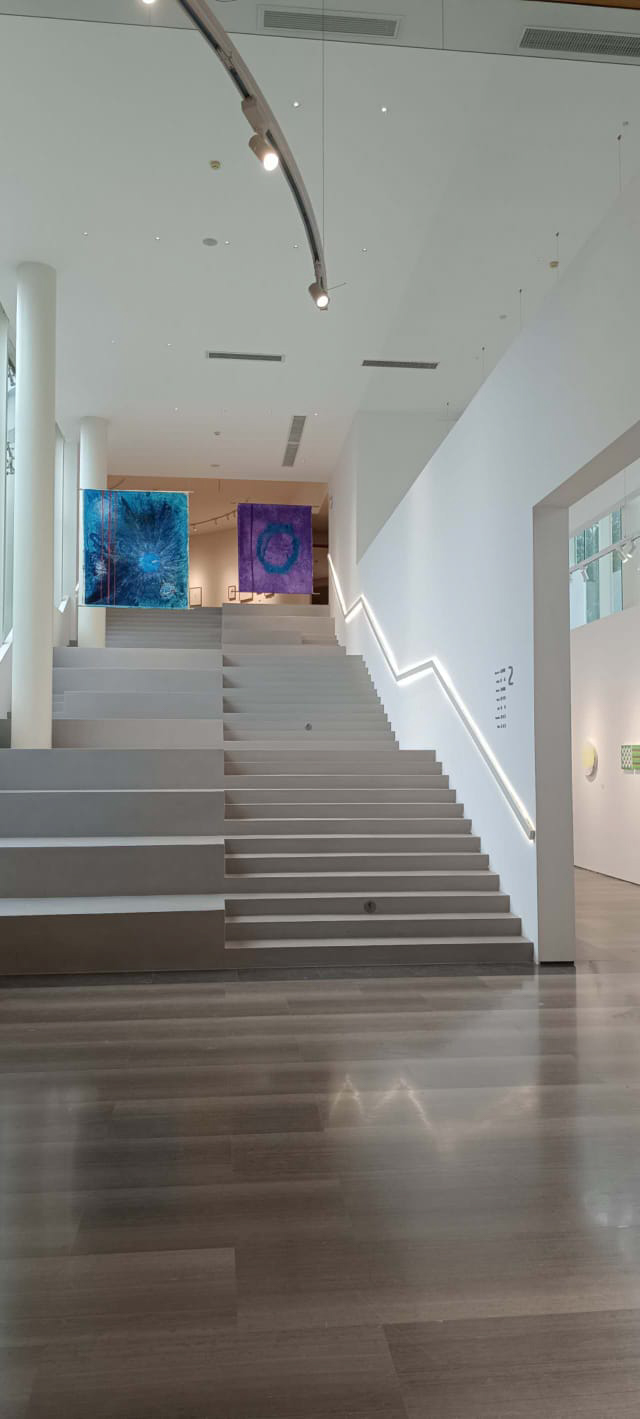
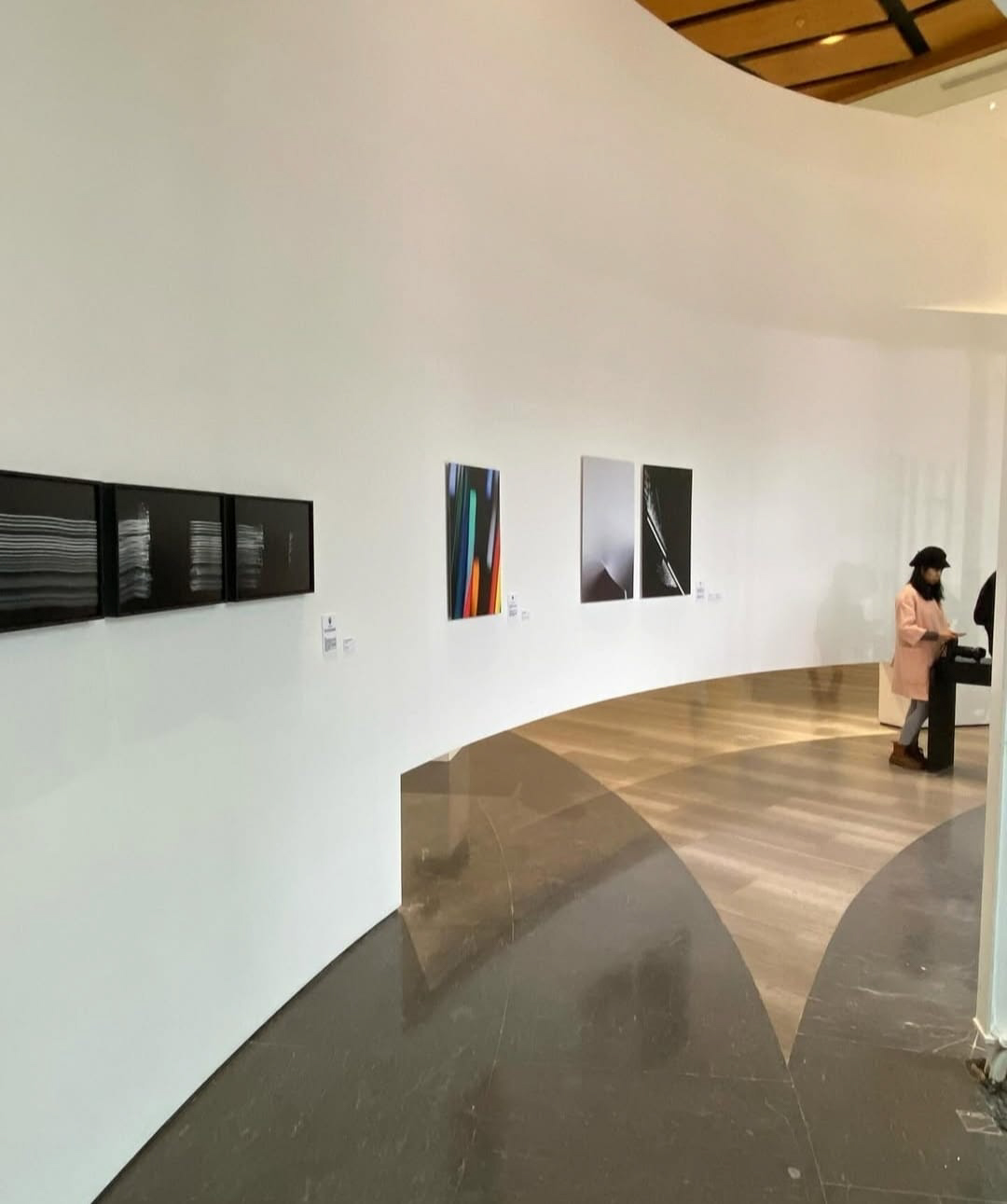
Images and architectural presentation of the Guihu Art Museum

www.gooood.cn/g-lake-art-gallery-by-vhd-design-group.htm

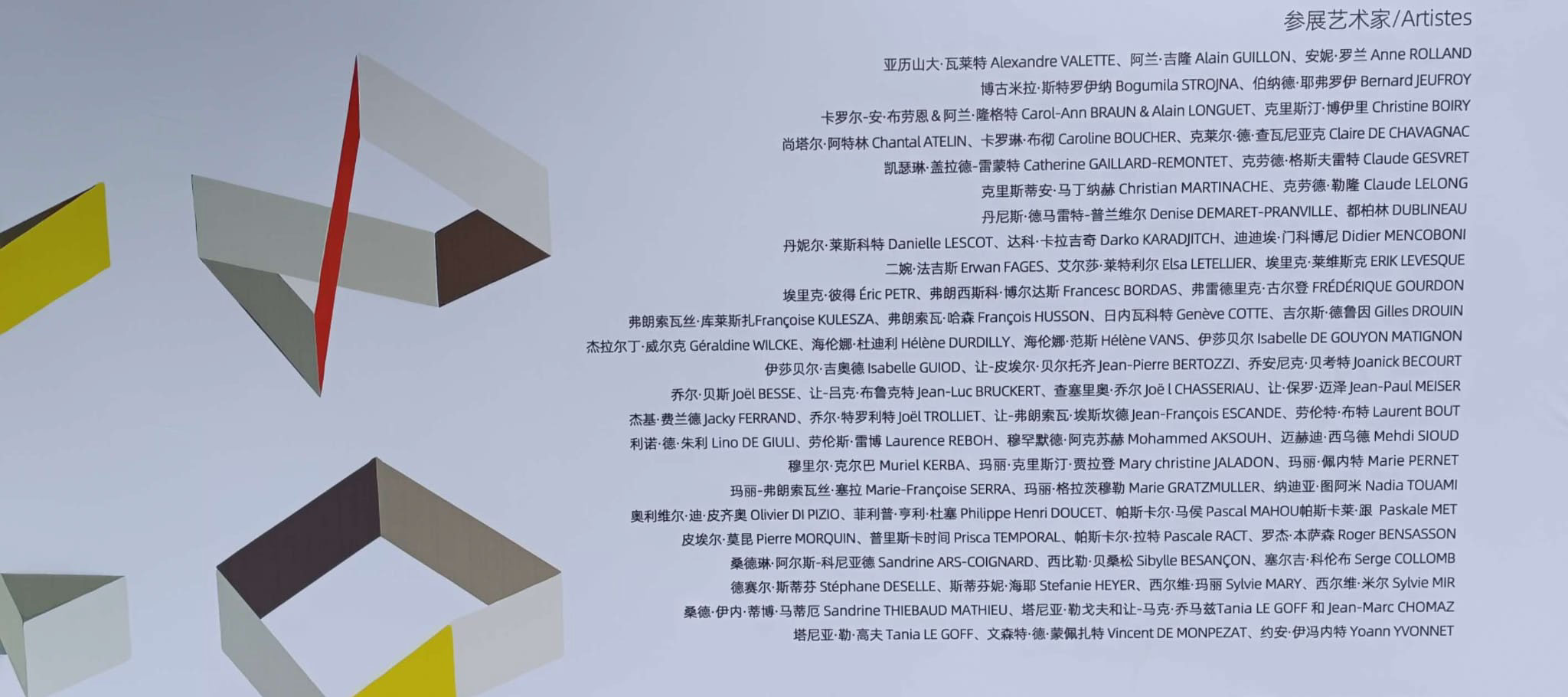
Participating Artists・参展艺术家

Click on images to enlarge

ABOUT MY ARTWORK

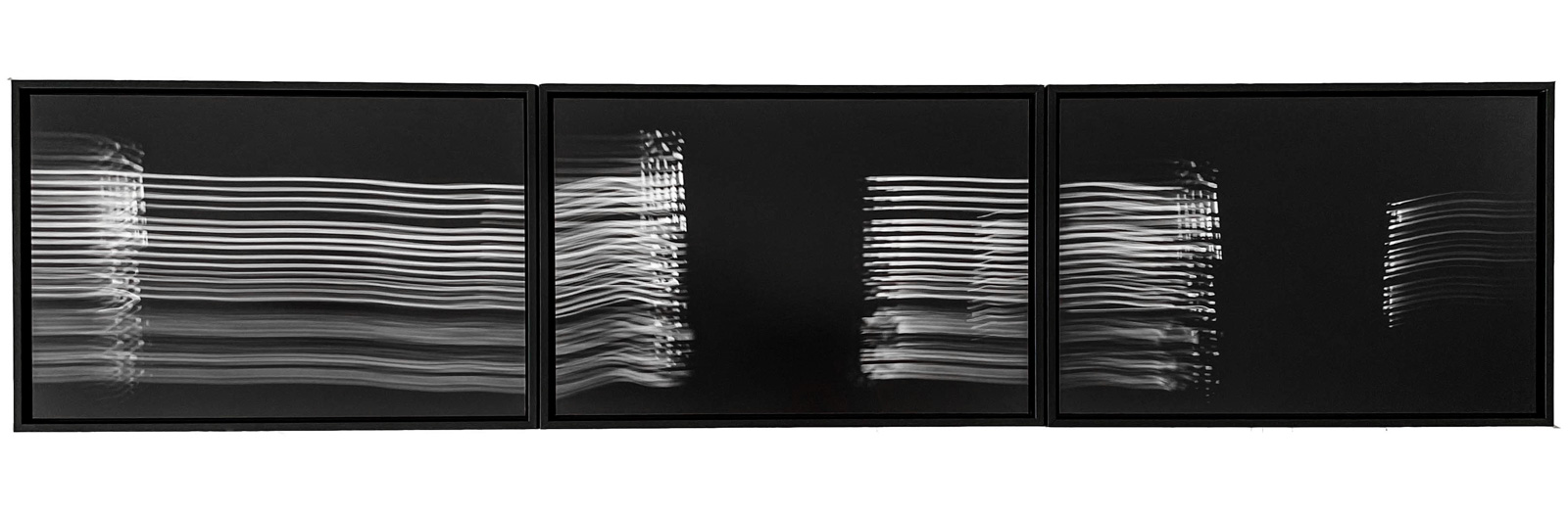
VARIATIONS DE LUMIÈRE OPUS 5
Photographic triptych 2021 (33x150cm)
Copy #2/3 (+1 EA)

This opus is a continuation of a reflection on the essence of light and its effect on the perception of Being in its immediate or cosmic environment.

Light fascinates me by the duality of its state, at once  corpuscular and undulatory, but also for everything that makes it our perception of the world.

My ” Variations de Lumière “, arranged by opus, present images born of my observation of light, revealing the gap in perception between the photographed reality and the photographic record.

It’s a metaphor, but I’d say that the medium of photography is particularly well-suited to this study, because the photons that strike my negative, materialized by impact points on the emulsion layer of silver halide crystals, or on the low-pass filter of a sensor, describe the corpuscular nature of light during the shooting phase.

Similarly, this material, used as a material, underlines the wave-like nature of light, when these impacts on the negative become oscillations on the paper.

From this observation of photons recorded at a moment ” T ” in their infinite course through the cosmos, at a precise point in the universe, comes this writing of light.

INSITU KINETIC PHOTOGRAPHY BY MARIA HÉMÉRÉ

Spiritual Odysseys 0x80532E01 ©️ Éric Petr
Photography 2020, very long exposure in situ with different shooting angles #insitukineticphotography

「 Éric PETR, born in the 60s, worked in the 80s, and later, in the early 2000s, on the image set in motion with an artistic intention using a camera.

This technique was named several years later “Intentional Camera Movement”, taken up by the hashtags #icm or #icmphotography and is today widely taken up by many talented young photographers.

Following the dynamics of several photographers and visual artists who preceded him, such as Kōtarō Tanaka (1905-1995), Ernst Haas (1921-1986), and Alexey Titarenko (born in 1962) of his generation and a few other experimentalists, PETR in turn experimented with this artistic path mainly between 2003 and 2015. Unlike his peers, he made it the heart of his photographic work.

For about ten years, PETR has created a movement and a technique that allow him to serve his intention and his research work on light. This technique, which he calls [Insitu Kinetic Photography], is the basis of his work, and has allowed him to set up many works that he has experimented with, particularly in abstract photography or subjective abstraction photography.

PETR began his career as a professional photographer in 2013 after 20 years of photographic research. After having caught the attention of some contemporary art players, between 2011 and 2014 where he assembled a synthesis of his work on light on his Blog and Instagram, he began in 2016 to be revealed in some prestigious magazines, such as L’OEIL DE LA PHOTOGRAPHIE, to be exhibited at the SALON DES RÉALITÉS NOUVELLES and to be published by Éditions CORRIDOR ÉLÉPHANT with his first monograph “SPIRITUELLES ODYSSÉES”. Since then, PETR has chained publications and exhibitions in Paris, and in the World. 」

© Maria Héméré, art critic

FROM “ICM” TO “IN SITU KINETIC PHOTOGRAPHY”

Bangkok 2oo4 © Éric Petr [Intentional Camera Movement]

“in situ kinetic photography”
first principle of a manifesto

I started practicing photography in 1983, and for ten years I had this idea of developing a research and aesthetic based on light, and the impact that light can have on our mind, our thoughts, and our perception of the universe.

I resumed this work in 2003, after taking a break from photography between 1993 and 2003.
Nevertheless, my reflection on the image nourished this period of inactivity, which subsequently proved very rich and constructive for my photographic work.

Ten years later, in 2003, after thinking long and hard about the image, its role and its power, I continued my photographic work on light, as plastic or matter, with a fresh eye.

“Bangkok 2oo4” and other works from the same period show a body of work that drew inspiration from this time of reflection, introspection and maturation.

In this new era of digital imaging, this style of photography was not yet precisely named, but a decade later it was, under the name ICM (Intentional Camera Movement).

光 0x1853AC © Éric Petr, 2020 [in situ kinetic photography]

In the 20th century, some photographers devoted part of their work to this technical aspect of motion photography, such as, to name but a few, Kōtarō Tanaka (1905-1995), Ernst Haas (1921-1986), and Alexey Titarenko (b. 1962), who worked specifically on moving crowds.

In the early 2000s, my work on the moving image, with the idea of painting with light on my film or sensor, is very contemporary in approach, and remains on the bangs.

My work, which is based on the principle of intentional movement, has now evolved to bring a broader field to the ICM, which I call “in situ kinetic photography”.
“In situ kinetic photography” brings a wider field to the “intentional camera movement” and takes into account different axes and planes, in situ, for the same exposure that oscillates from a few seconds to a few minutes.

“In situ kinetic photography” is similar to the ultrasound of a place that is produced like a micro-film, but which is recorded on a single image. It is therefore neither multiple exposures nor post-processing work. Its photography is part of the field of abstraction, or subjective abstraction. Its writing is done with light and photons constitute its alphabet. Its language is cosmic, its style dreamlike and its aesthetic plastic. This photography is similar to painting in the sense that it is constructed on site by composing the elements that are added to the image.

The brush or pencil is the light ray that contains the matter and energy of electromagnetic waves, while the canvas or paper is the film or the camera sensor. Unlike the painter or the calligrapher, it is not the brush that moves, but the support, that is to say the camera.
It is also, in this sense, that the intention of “in situ kinetic photography” is in no way that of “light painting”, even if we can observe certain common points.

For this photograph, composed in situ, elements very dispersed on the site are carefully chosen to compose a photographic painting. After an analysis of the times allowing the addition of the elements to be photographed, the photographer will have to determine precisely the speed of the shutter, the aperture of the focal length, and the sensitivity of the film, according to any filters added.

For “in situ kinetic photography”, the intention is no longer movement, as in “intentional camera movement”, but that of constructing an abstract image with a plastic density that will suggest the superposition of quantum states of a geographical point that light crosses during its infinite odyssey.

Éric Petr | 0xB09FE203
The fight of the Amazons | Metamorphoses 0xB09FE203 © Éric Petr, 2019 [in situ kinetic photography]
Éric Petr | 0x480DF803
光 0x480DF803 © Éric Petr, 2014 [in situ kinetic photography]
Éric Petr | 0x7077 Variations of Light opus 0 (Nikon F3) Le Lavandou 1980's
Variations of Light opus 0, Le Lavandou 1980’s © Éric Petr | Nikon F3, film Kodak
Variations of Light opus 5 [Triptyk 2021] 65x300cm © Éric Petr [in situ kinetic photography]

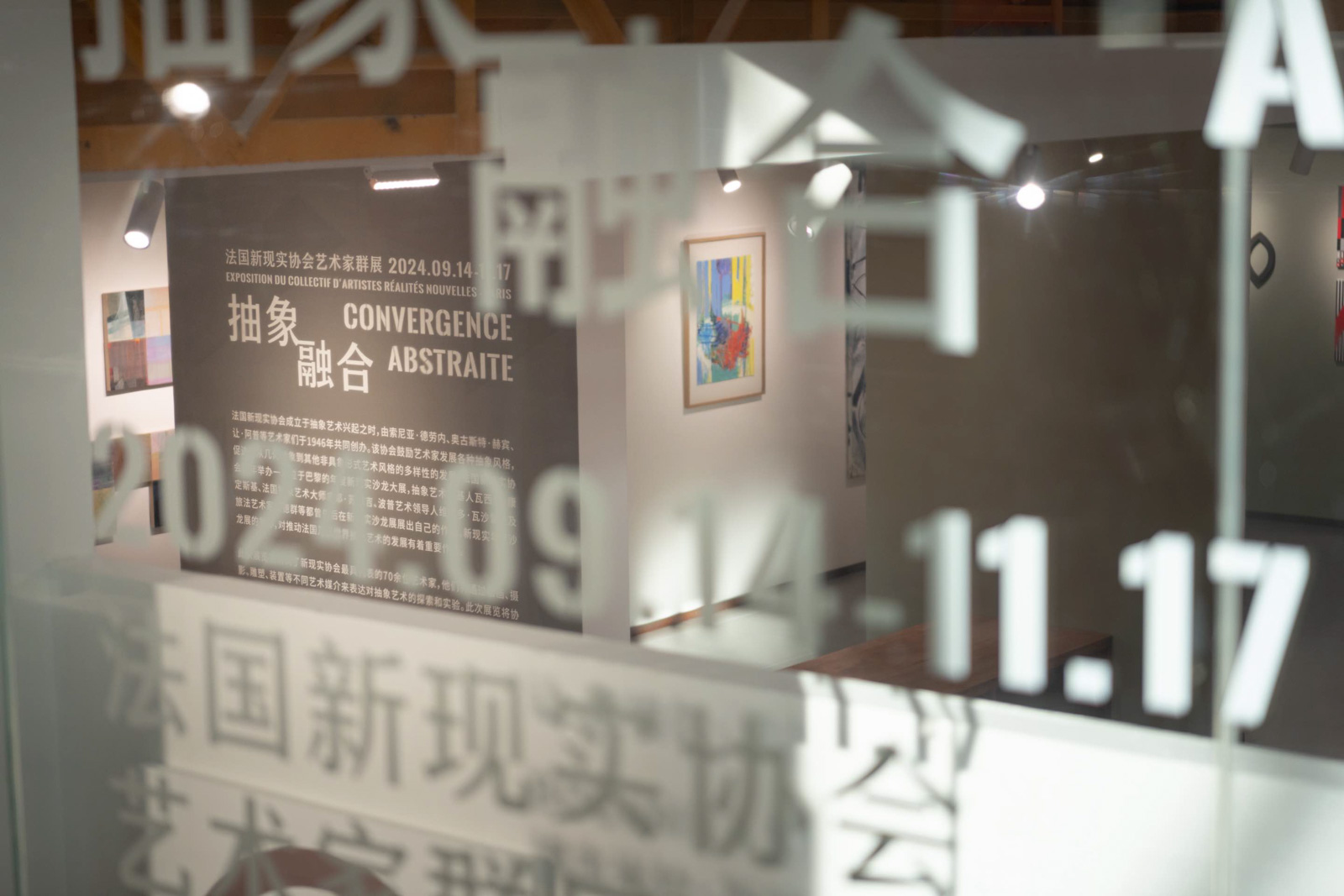
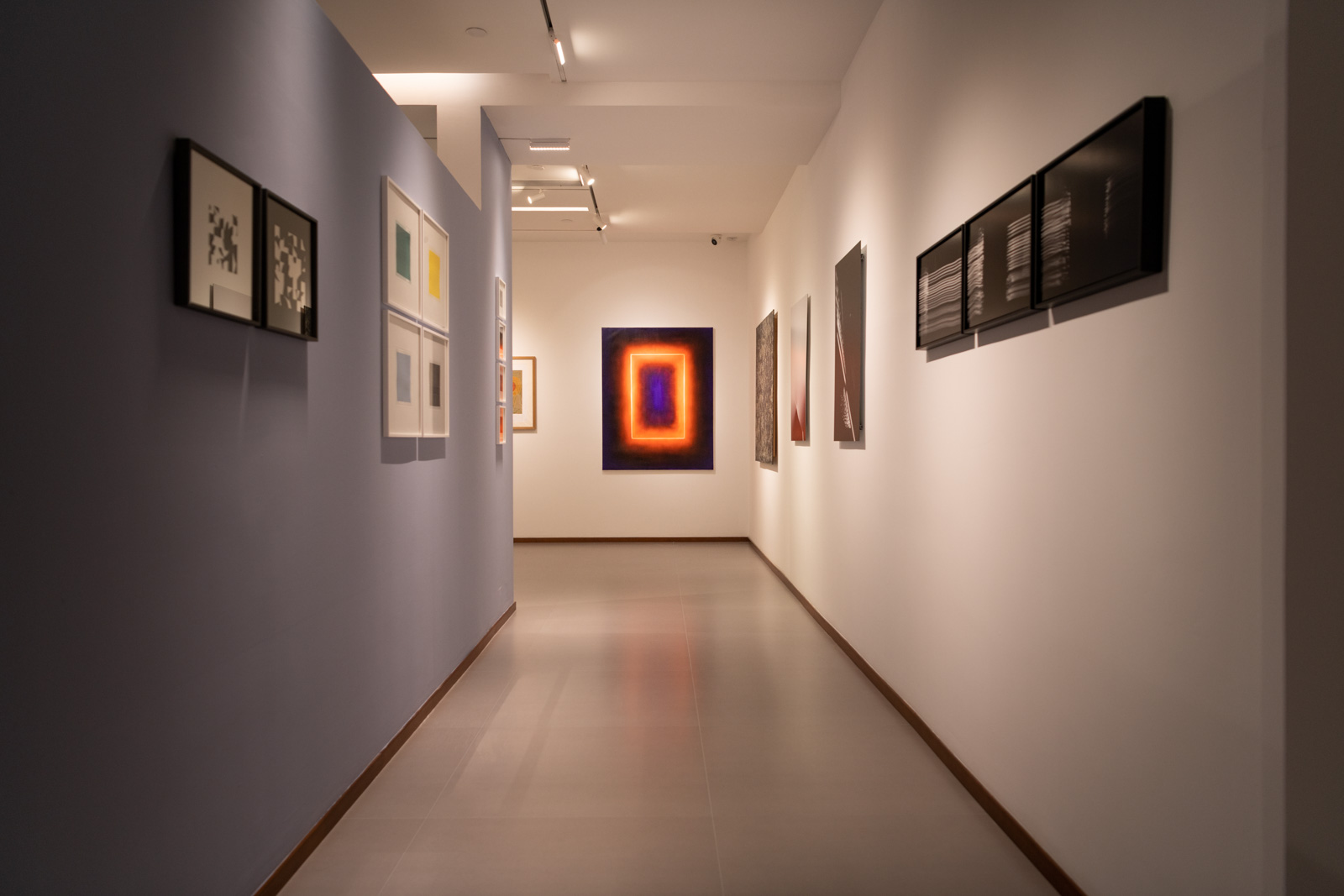
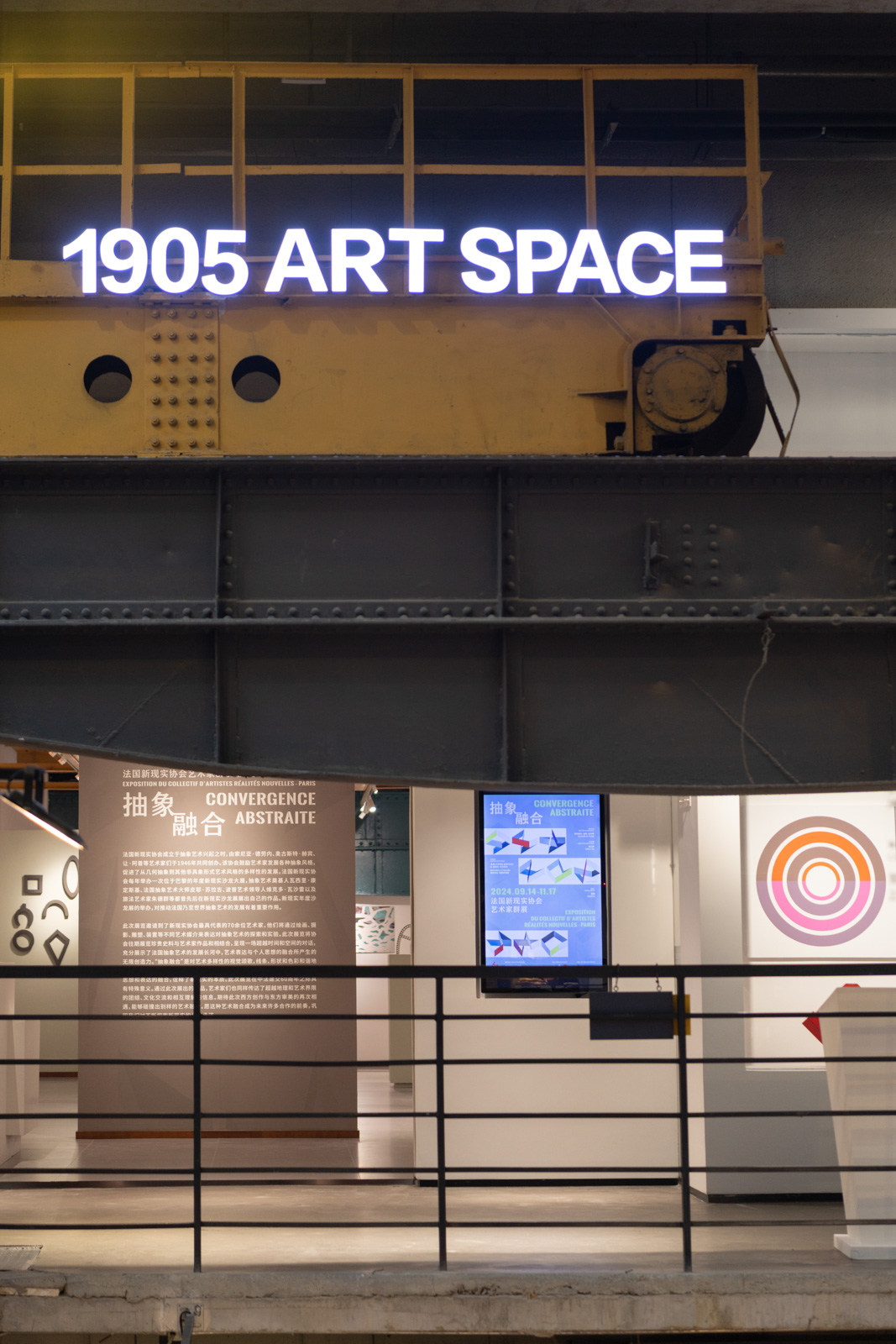
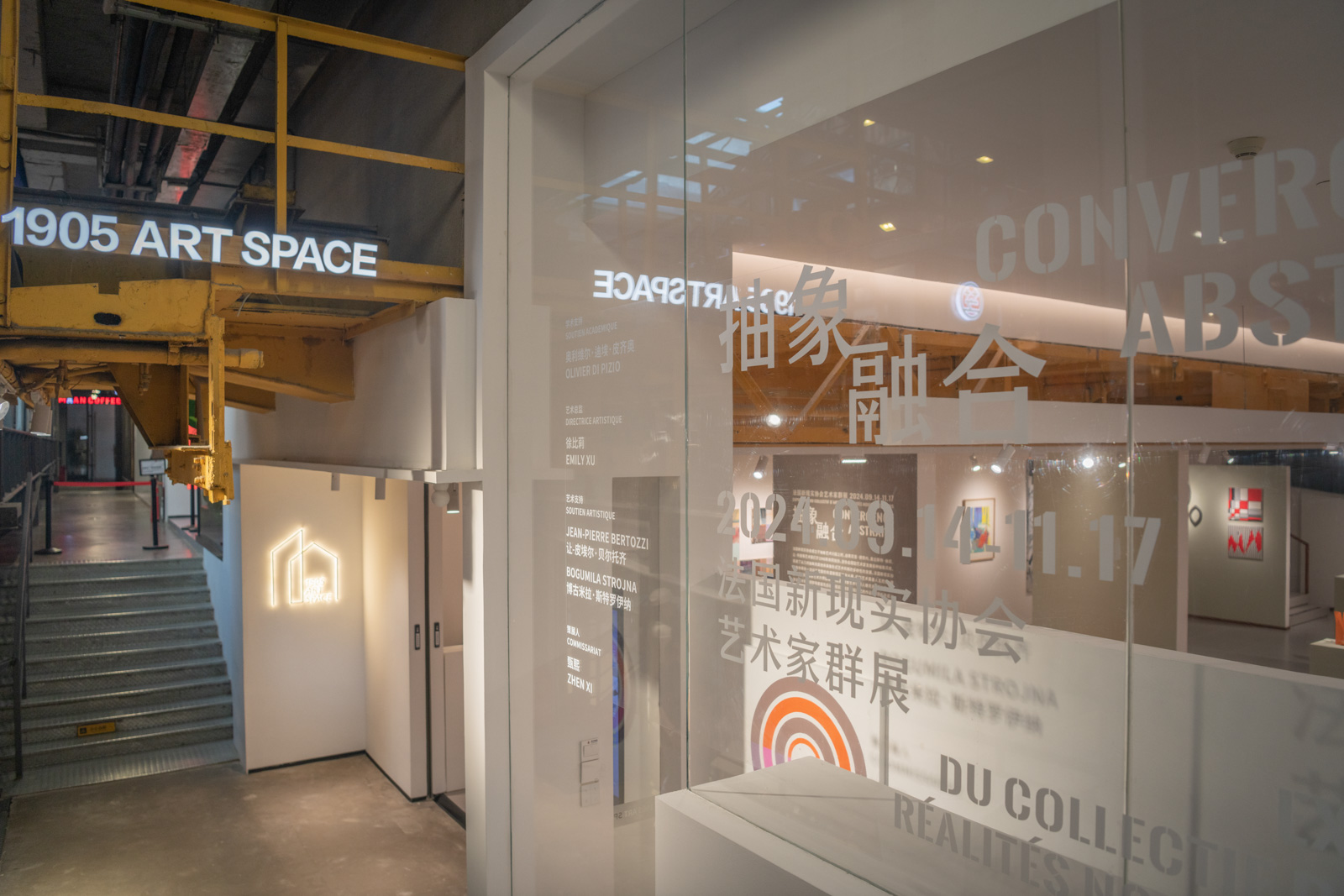
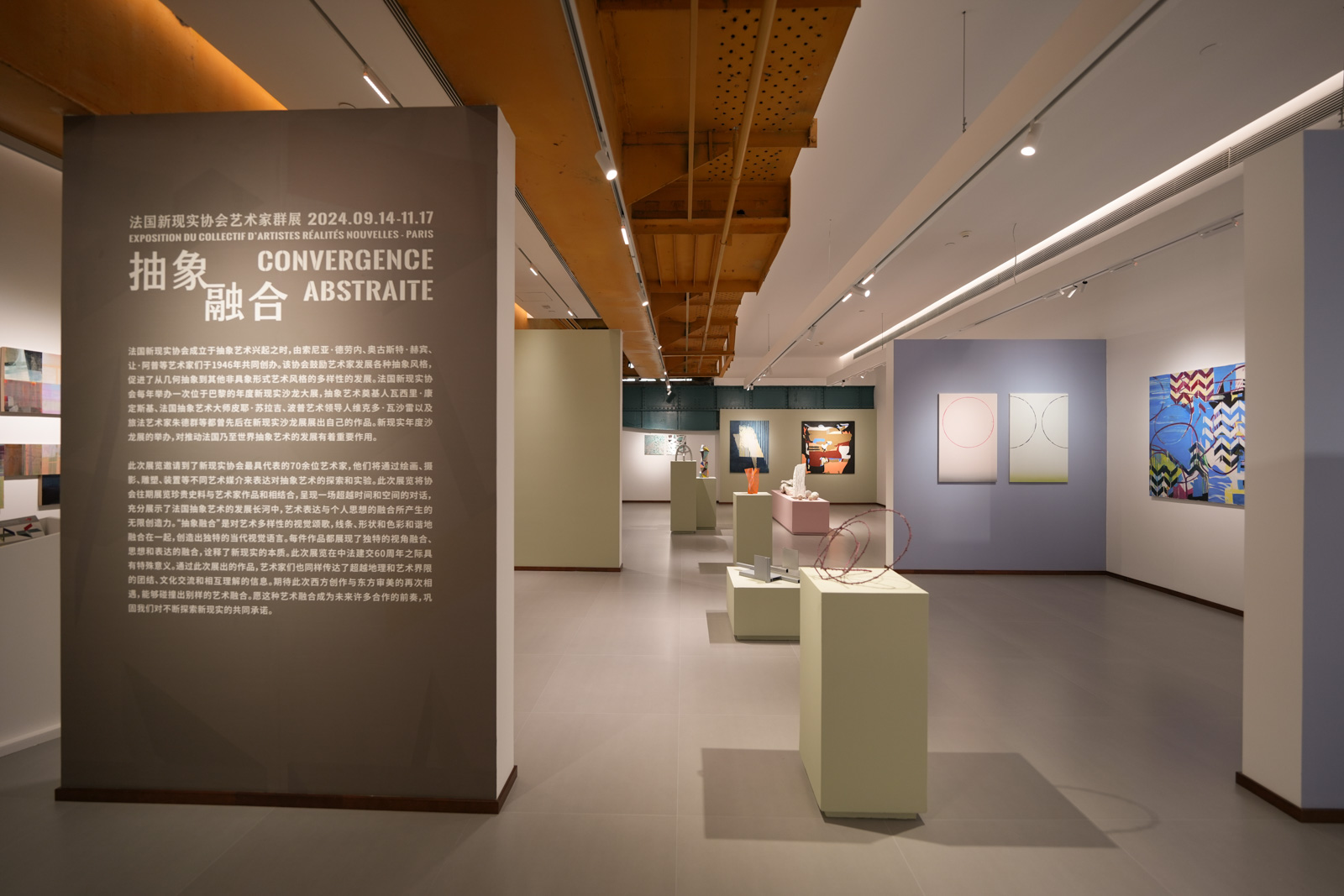
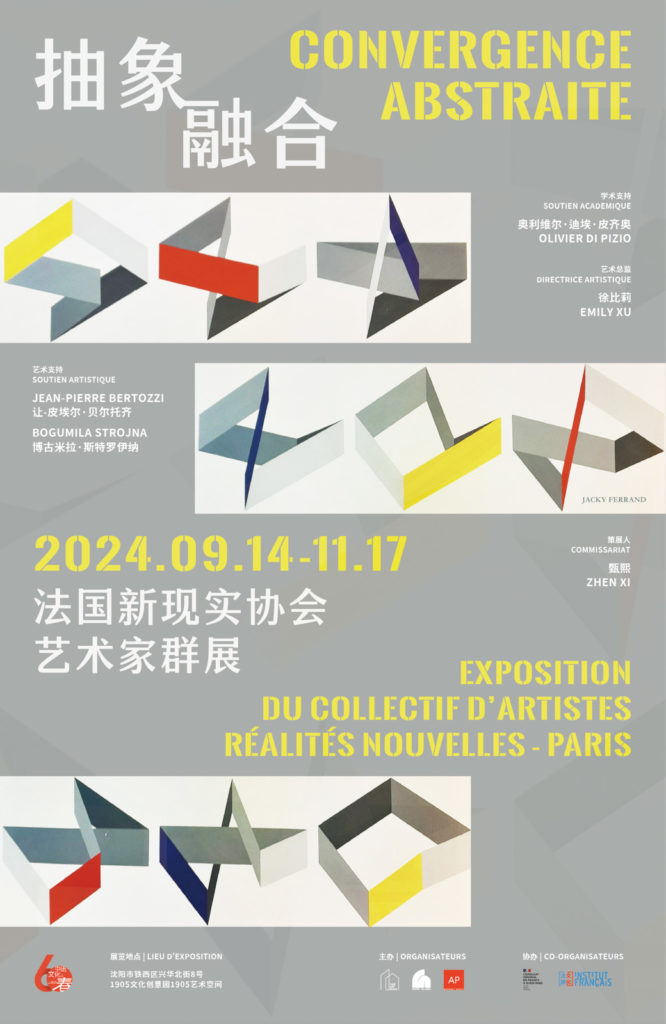
ABSTRACT CONVERGENCE | SHENYANG 2024

Variations of Light opus 5 [click on the image to enlarge it]

I’m delighted to announce my participation in the Réalités Nouvelles Hors les Murs exhibition in Shenyang, China!

§ – § – §

抽象融合 – ABSTRACT CONVERGENCE

学米支持
ACADEMIC SUPPORT
奥利维尔 -迪埃-皮齐奥
OLIVIER DI PIZIO
艺未总临
ARTISTIC DIRECTOR
徐比莉
EMILY XU

策展人:甄熙
COMMISSARIAT:ZHENXI

14.09 〜 17.11.2024

法国新现实协会
艺术家群展
EXHIBITION BY ARTIST COLLECTIVE
RÉALITÉS NOUVELLES – PARIS

展覧地点|SHOWROOM
沈阳市铁西区兴华北街8号
1905文化创意园1905艺术空间

Click on each image to enlarge

ABOUT MY ARTWORK

VARIATIONS DE LUMIÈRE OPUS 5
Photographic triptych 2021 (33x150cm)
Copy #2/3 (+1 EA)

This opus is a continuation of a reflection on the essence of light and its effect on the perception of Being in its immediate or cosmic environment.

Light fascinates me by the duality of its state, at once  corpuscular and wave-like, but also for everything that makes it our perception of the world.

My “Variations de Lumière” (Variations of Light), arranged by opus, are images born of my observation of light, revealing the gap in perception between photographed reality and the photographic record.

It is a metaphor, but I would say that the medium of photography is particularly well-suited to this study, because the photons that strike my negative, materialized by impact points on the emulsion layer of silver halide crystals, or on the low-pass filter of a sensor, describe the corpuscular nature of light during the shooting phase.

Similarly, this material, used as a material, underlines the wave-like nature of light, when these impacts on the negative become oscillations on the paper.

From this observation of photons recorded at a moment “T” in their infinite course through the cosmos, at a precise point in the universe, comes this writing of light.

A LONG-TERM CURRICULUM…

Le Lavandou 1980’s © Éric Petr | Nikon F3, film Kodak

These photographs, taken with a Nikon F3, mounted with a Nikkor 50mm f1.4 or 105mm f2.5 lens and Kodak film, bear witness to my highly creative period in the ’80s.
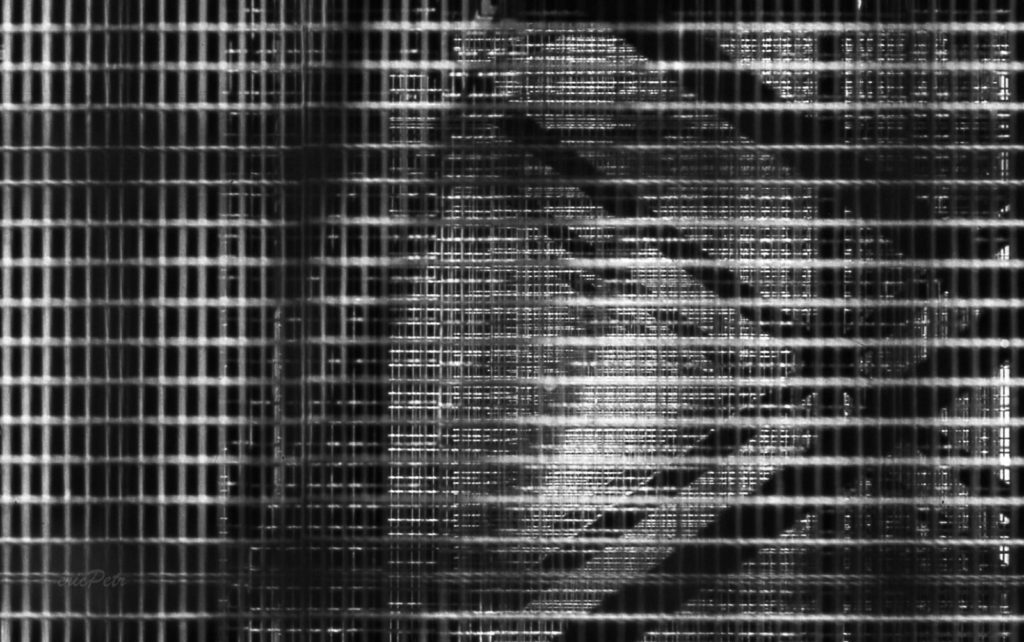
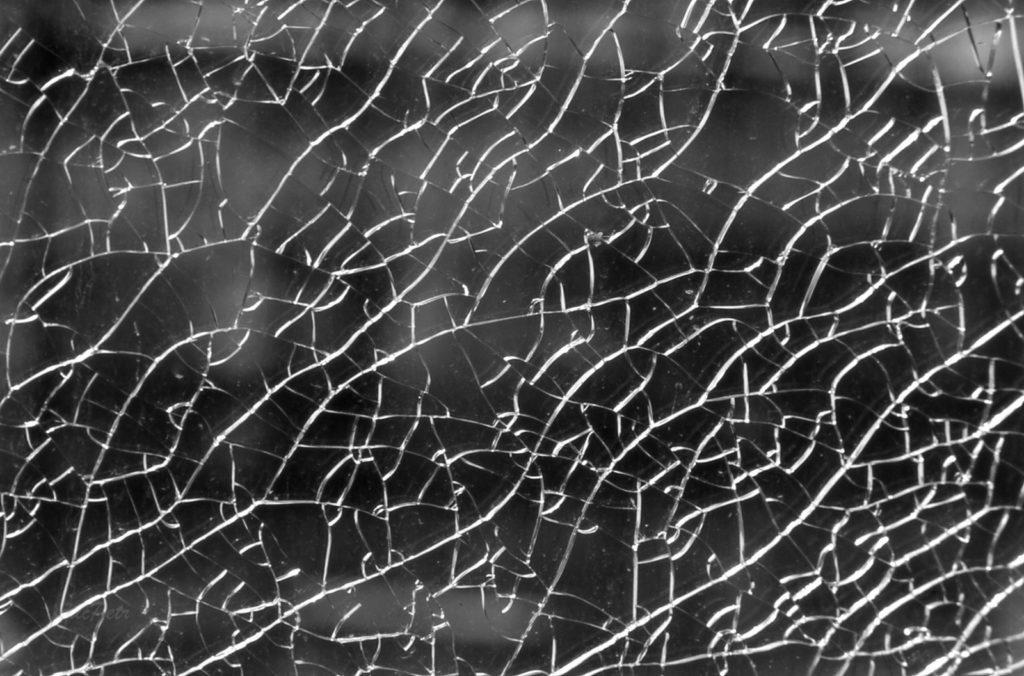
They show, in successive order: the beach at Le Lavandou, the outside fire escape at the Centre Georges Pompidou in Paris, and a broken window in the former wasteland of Les Halles de la Villette in Paris.

The first silver photograph was a precursor to the work I’m still doing today.
Taken at night, on the beach at Le Lavandou, with an exposure time of around 15 minutes, and shot at 720°, it recreates the electromagnetic atmosphere of a vacation and party spot, its beach, the black reflections of the sea and the rolling of the waves, the lights of boats, stars, the moon, coastal lighthouses and bars still barely lit.

A LONG-TERM COURSE… “who goes slowly, goes healthily”!

I took up photography in 1983, and spent ten passionate years with the idea of developing research and aesthetics based on “pure” light, and the impact it can have on our mind, our thoughts, or our perception of the universe.

The research I had begun on this subject was halted in 1993 by the upheaval caused by  the arrival of digital technology in the world of photography.

It wasn’t until 10 years later, in 2003, after giving a great deal of thought to the image, its role and its power, that I took up this reflection and work again, using two media: digital and film photography.

In 2013, I opted to set up a company to develop this work over the long term.

Today, I exhibit and show my work in Paris, Europe and abroad.

Are you interested in following my work, discovering my new creations, and receiving invitations to my openings?
You can register at this link: https: //www.ericpetr.net/contact/

Les Halles de la Villette Paris 1980’s © Éric Petr | Nikon F3, film Kodak

ABSTRACT PROPOSALS | PHOTOGRAPHY

zz Blog Abstract Project Paris exhibition January 2024 Comm banner

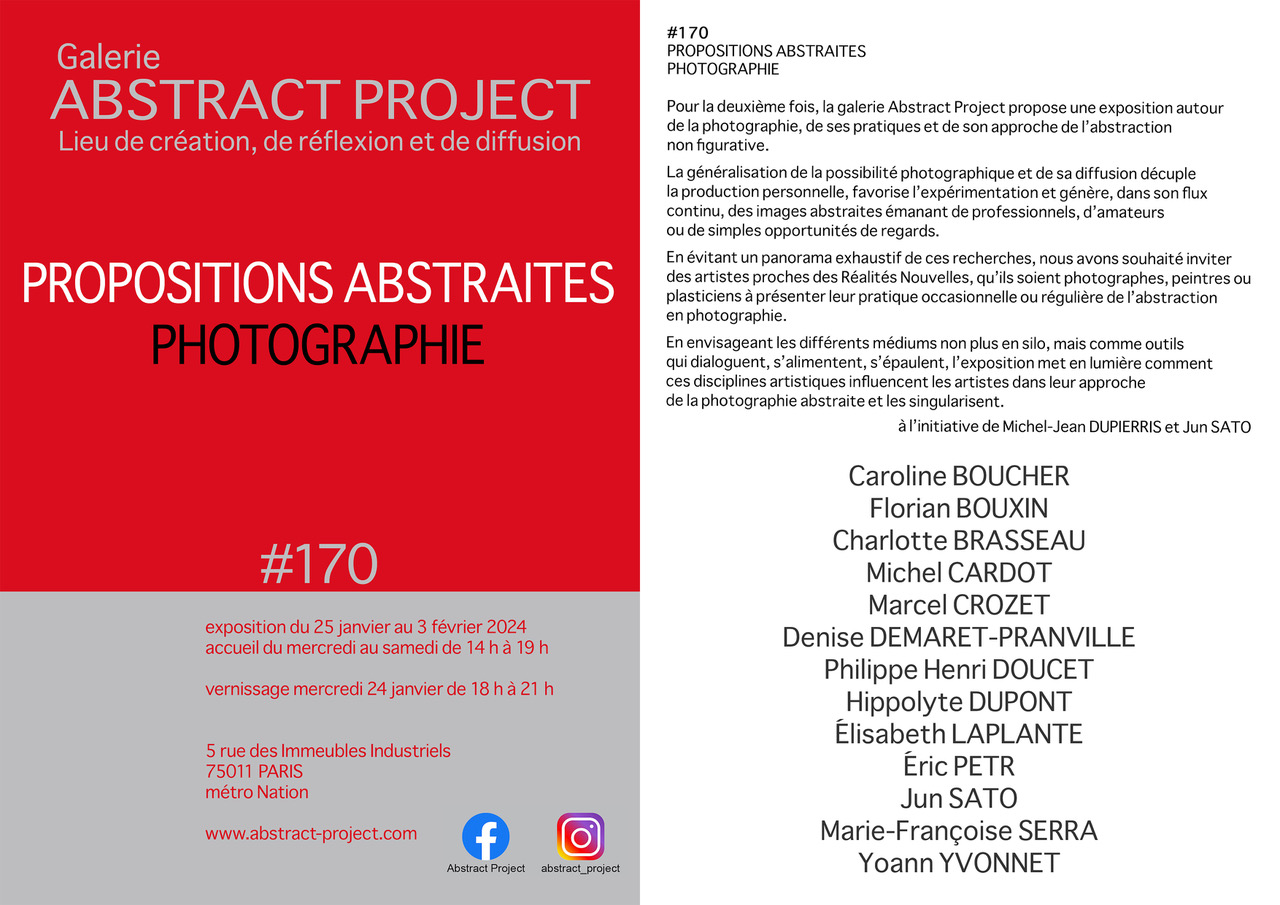
I’m pleased to invite you to the opening of the “Propositions Abstraites” photography exhibition, Wednesday January 24, 6-9pm.

EXHIBITION
January 25 to February 3, 2024
open Wednesday to Saturday, 2 to 7 p.m.

ABSTRACT PROJECT GALLERY
5 rue des Immeubles Industriels
75011 PARIS metro Nation
www.abstract-project.com

#170

ABSTRACT PROPOSALS
PHOTOGRAPHY
For the second time, Abstract Project gallery presents an exhibition focusing on photography, its practices and its approach to non-figurative abstraction.
The widespread availability and distribution of photographic possibilities has increased personal production tenfold, fostering experimentation and generating, in its continuous flow, abstract images from professionals, amateurs or simple opportunities to look.
Avoiding an exhaustive panorama of this research, we wanted to invite artists close to the Réalités Nouvelles movement, whether photographers, painters or visual artists, to present their occasional or regular practice of abstraction in photography.
By looking at the various media not in silos, but as tools that interact, feed off and support each other, the exhibition highlights how these artistic disciplines influence artists in their approach to abstract photography, and set them apart.

Exhibition initiated by Michel-Jean DUPIERRIS and Jun SATO with…

Caroline BOUCHER
Florian BOUXIN
Charlotte BRASSEAU
Michel CARDOT
Marcel CROZET
Denise DEMARET-PRANVILLE
Philippe Henri DOUCET
Hippolyte DUPONT
Elisabeth LAPLANTE
Éric PETR
Jun SATO
Marie-Françoise SERRA
Yoann YVONNET

zz 光 0x308518BF Éric Petr | Blog Abstract Project Exhibition Paris January 2024
Click on image to enlarge

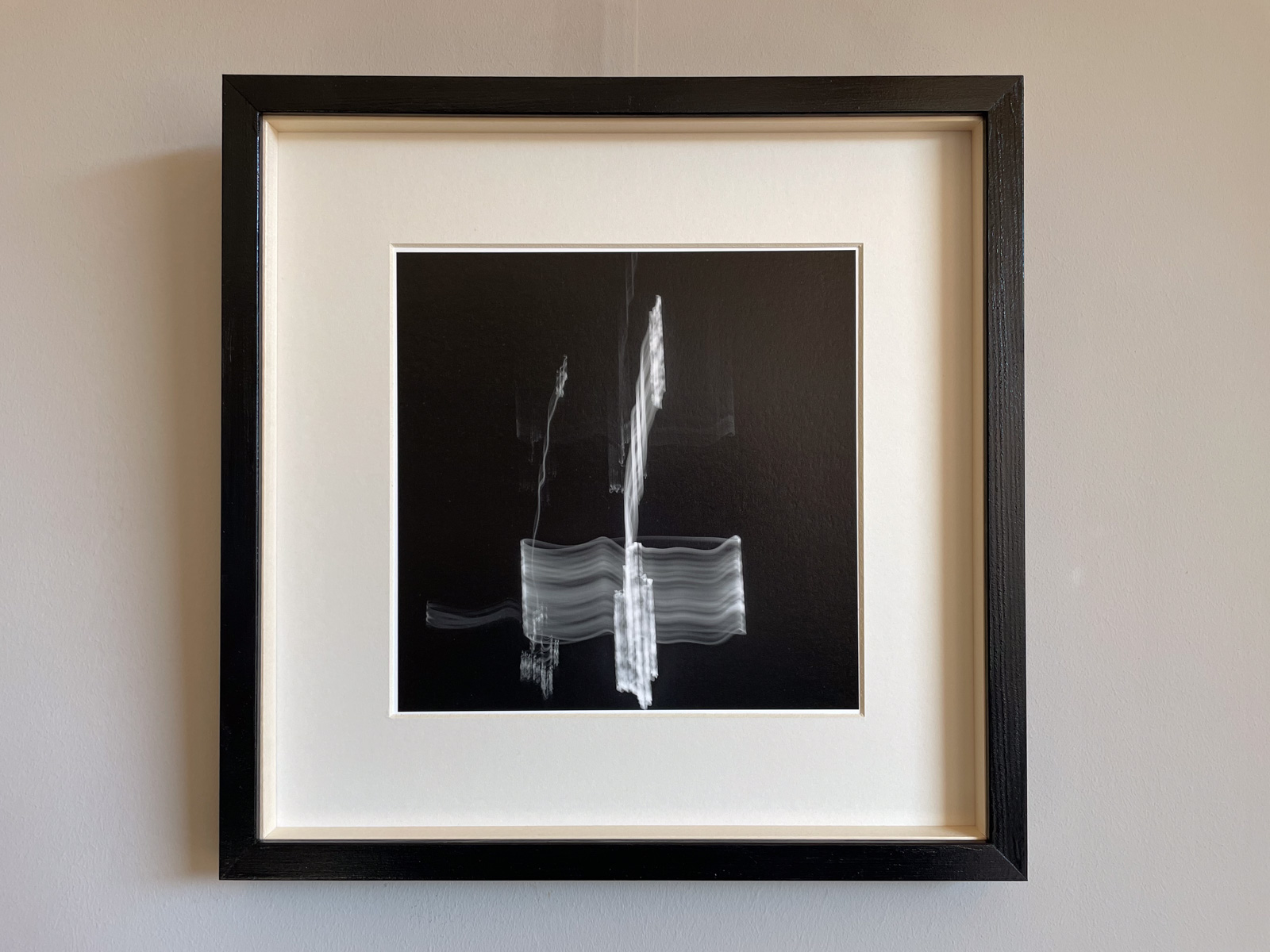
Title: Hikari 0x308518BF
Year: 2023
Copy: #1/3
Size: 19 x 19 cm [Cadre 32 x 32 cm]
Technique: Digital photography in situ Nikon DF, Nikkor Q135. Lucia Pro pigment inks on Hahnemühle Fine Art Pearl 285g paper.
Print made at Éric Petr Studio inspiration

zz Blog Abstract Project Exhibition Paris January 2024
Click on the image to display the Flyer