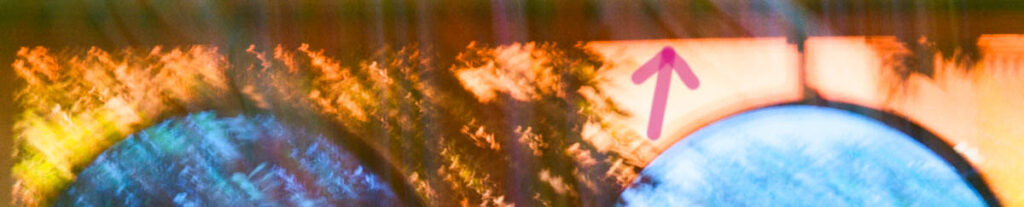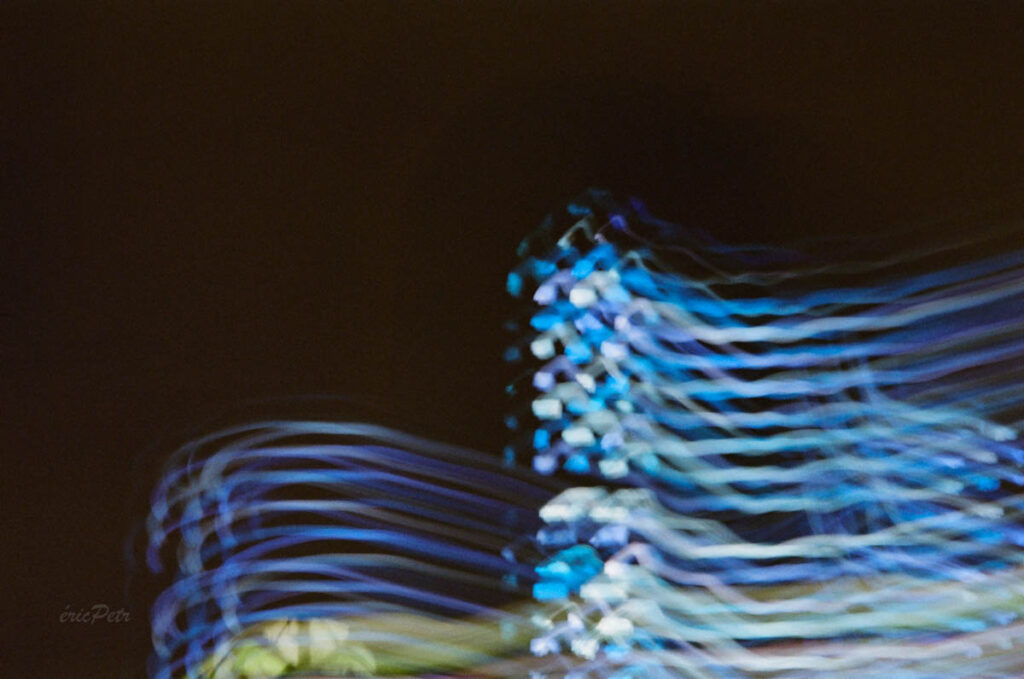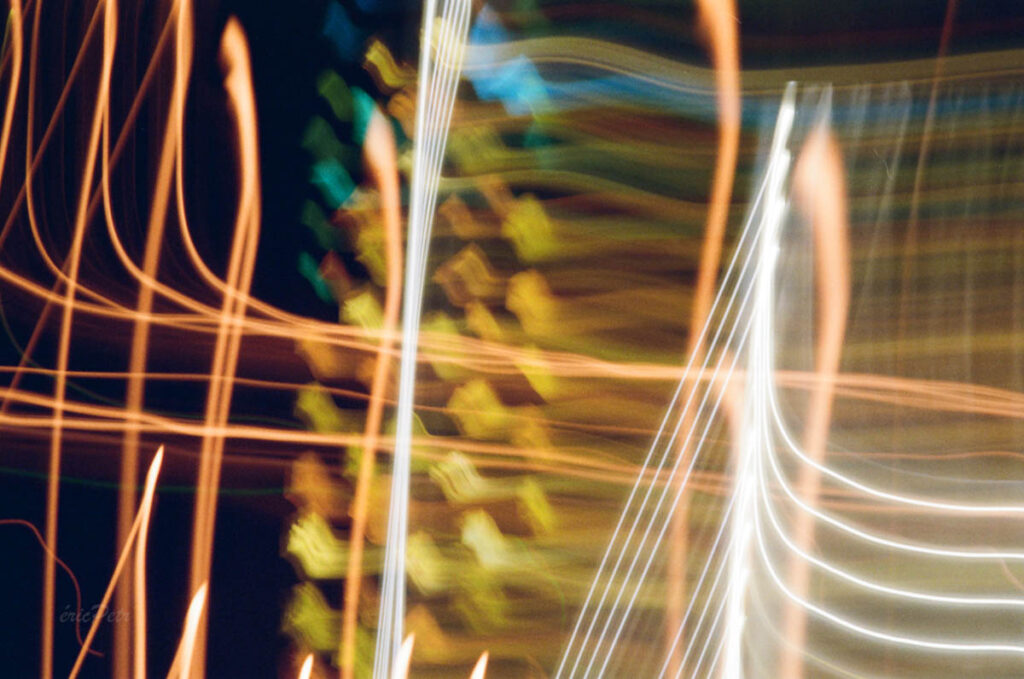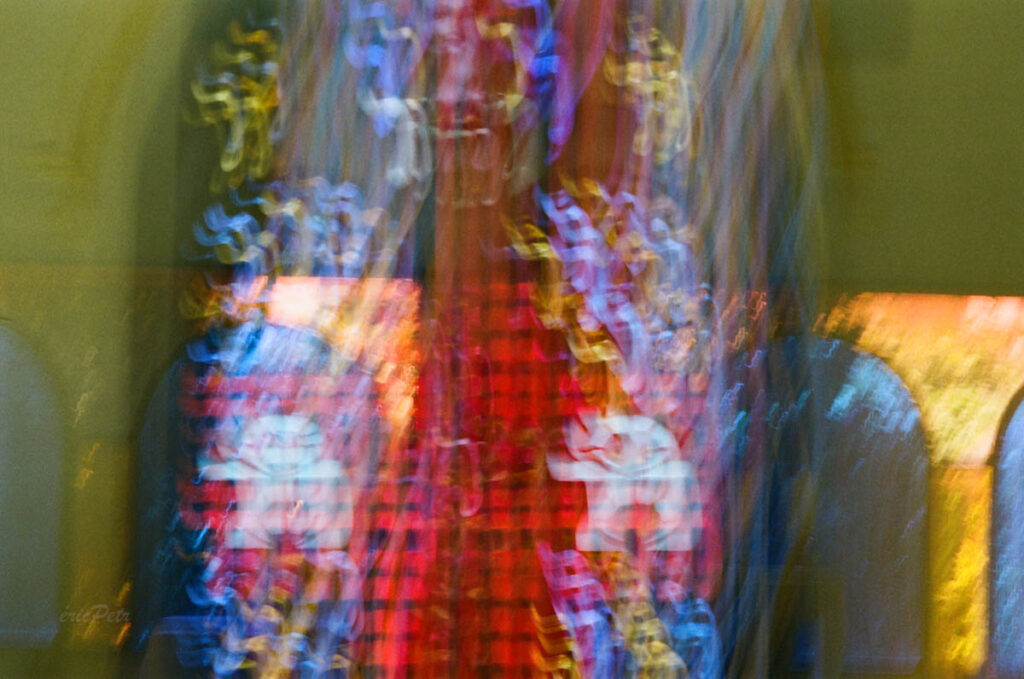
IN SITU KINETIC PHOTOGRAPHY: AN APPROACH TO LONG-EXPOSURE

In situ kinetic photography, long exposure in photography
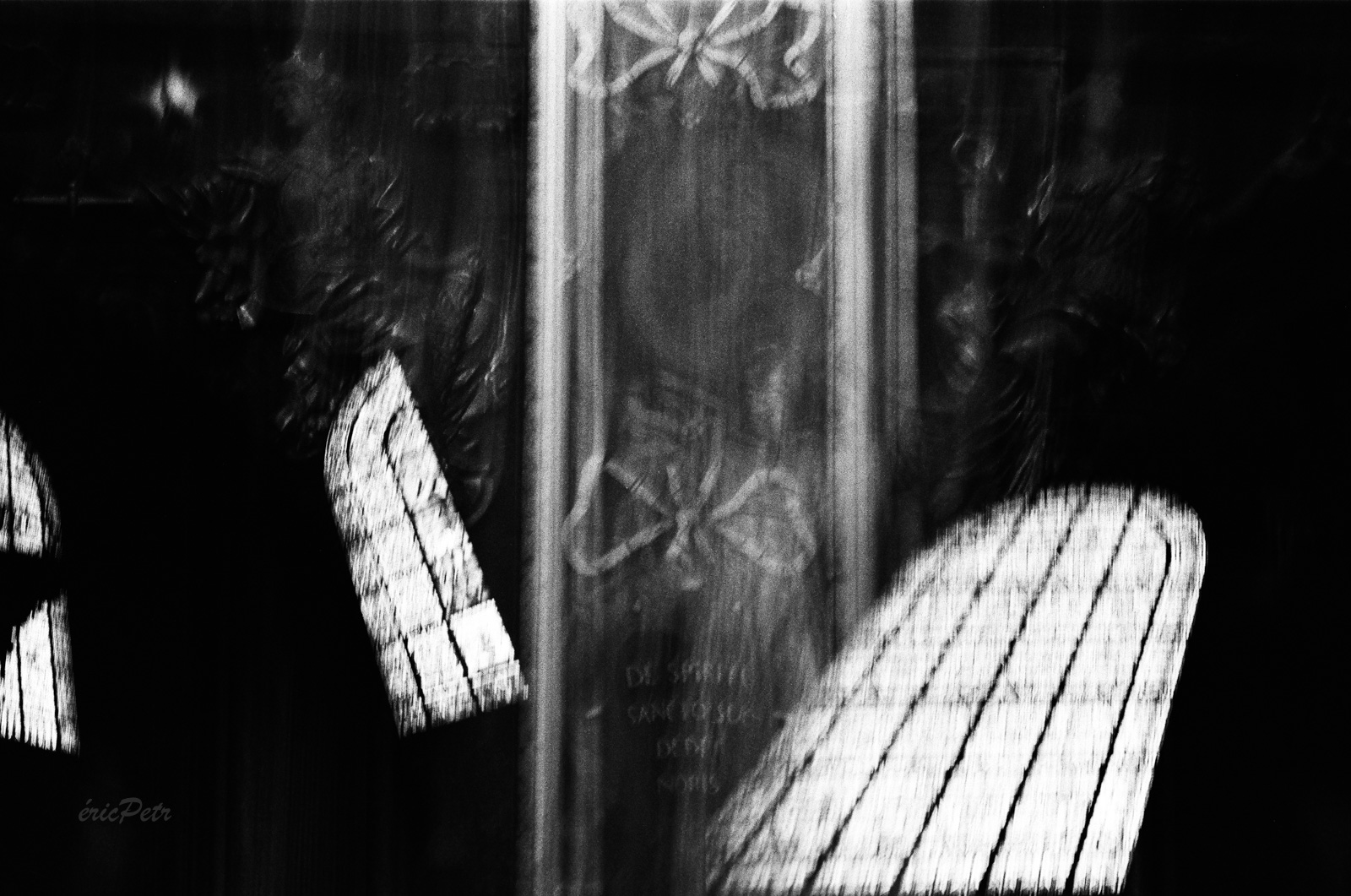
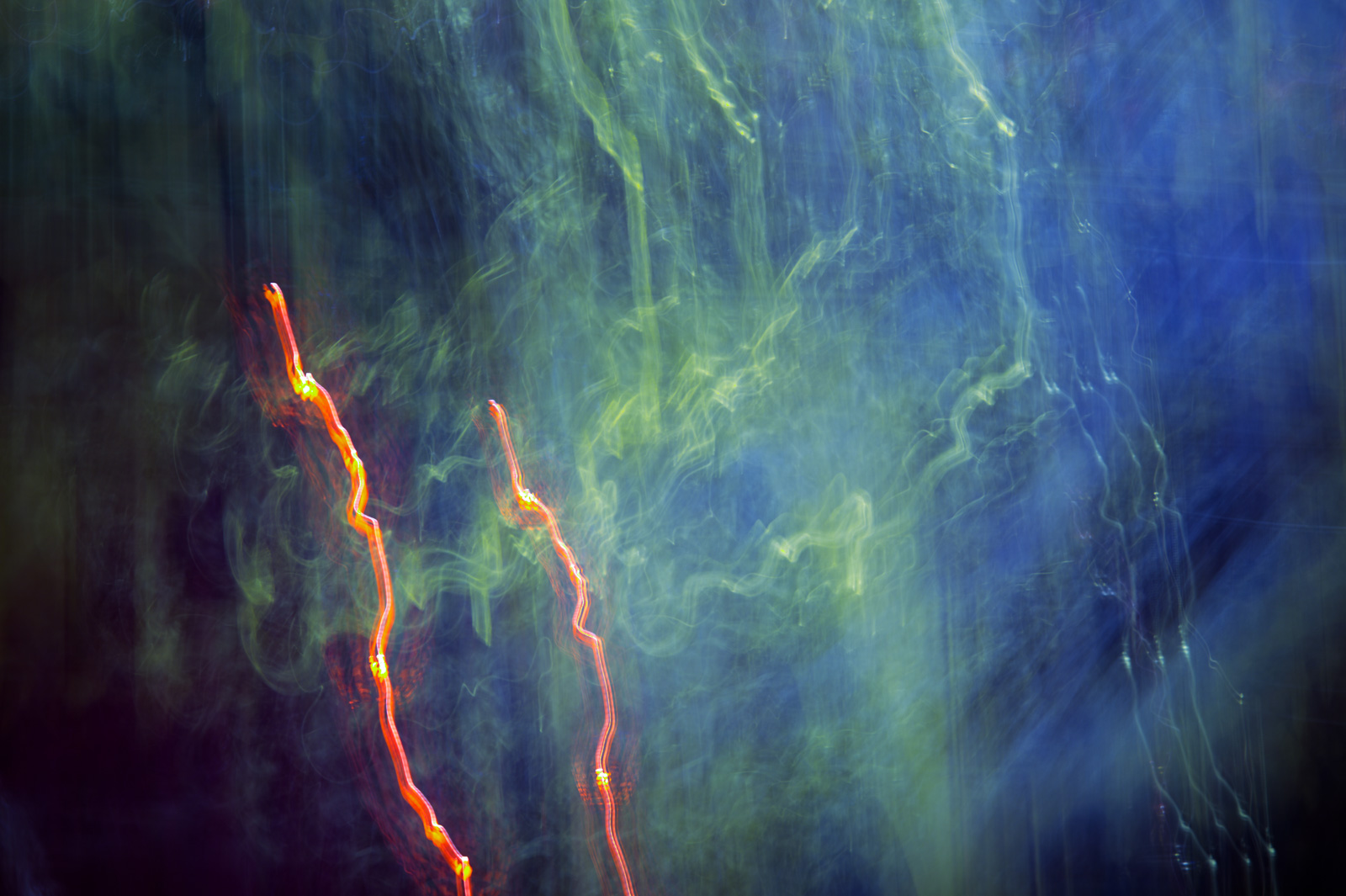
Matter © Éric Petr, 2018 | Nikon F3, Ilford FP4 film

What is « In situ kinetic photography », « Photographie cinétique in situ » or « ISK photo » ?
More than a concept, “In Situ Kinetic Photography” is a photographic language developed in the early 2000s.

The intention is to explore the recording of light as photographic material and to develop a body of work in which the references of time and space are profoundly altered.

This approach was based on the intention to:

・to work with a single exposure, without post-processing or multiple exposure, in order to remain as close as possible to the recorded subjective experience,
・to use relatively long exposure times and, depending on the composition, ranging from a few seconds to several minutes, in order to allow for a condensation of emotions, light and matter,
・to intentionally move the camera during the recording of the image, in order to recontextualise the scene according to another order, that of an aesthetic and inner experience,
・to allow, during the recording process, subtle variations through which the experience may unfold into unforeseen possibilities,
・and to construct the image on site, “in situ”, so that this encounter between the observer (the photographer) and the place, along with what emanates from it, is not disrupted by external factors unrelated to the scene and the experience.

The intention is therefore no longer simply to show movement, as in the classical principle of long exposure — “I move the camera to create blur” — but rather to compose an image as a temporal condensation of a place.
JI could even compare this to a kind of “micro-film recorded on a single image”, or to a form of “echography of a place”.

Through this process, I aim to explore the gap that emerges between:

・the observation of a scene “in situ”, using a camera as a measuring instrument,
・and the recording of this scene as obtained by the observer (the photographer), who takes as reference both his feelings at the precise moment of taking the photographs and external elements such as light, matter and the energy of the place.

This gap reflects an introspection produced by an unconscious form of reflection carried out by the observer (the photographer), in resonance with the surrounding elements. The resulting recording reveals an image that expresses the inner gaze of a scene experienced from the outside.

In situ kinetic photography, long exposure in photography
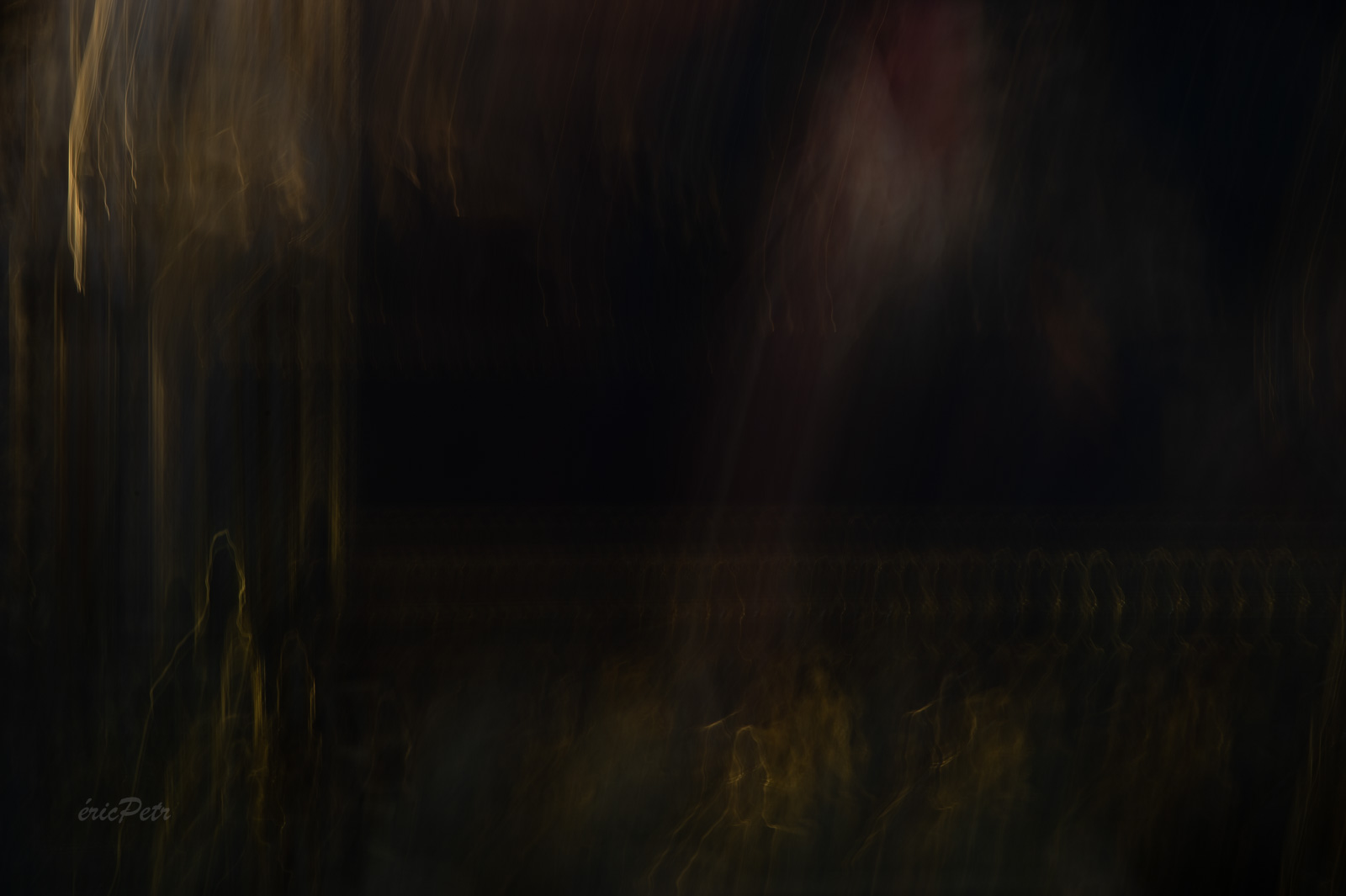
Spiritual Odysseys © Éric Petr, 2025

What does the concept “In situ kinetic photography” refer to?

This concept is based on the principle of long exposure and, although I have devoted much of my reflection to it as a visual artist photographer, long exposure is also a subject on which many other artists and photographers have worked.

Among them, I will mention in a non-exhaustive way some of the most well-known, such as Gustave Le Gray (1820–1884), painter and photographer, Alfred Stieglitz (1864–1946), Man Ray (1890–1976), experimental photographer, László Moholy-Nagy (1895–1946), Josef Sudek (1896–1976), Brassaï (1899–1984), Ernst Haas (1921–1986), Barbara Kasten (1936), Michael Wesely (1945), Eric Staller (1947), Hiroshi Sugimoto (1948), Abelardo Morell (1948), Uta Barth (1956), Mitch Dobrowner (1956), Michael Kenna (1957), Francesca Woodman (1958–1981), Tokihiro Sato (1957), and among my contemporaries Adam Fuss (1961), Alexey Titarenko (1962), Thierry Cohen (1963), and Rut Blees Luxemburg (1967).

What is interesting to observe here is that, beyond long exposure, each artist has appropriated this shooting technique to create very different worlds.
However, while writing this article and revisiting each artist’s work, I can see emerging from these long exposures a genuine, lasting visual language, rather than a mere effect, which I could map as a kind of cartography of the different currents or aesthetics that have been created.

1. The pioneers of photographic time

Reveal
Long exposure conceived as a technical necessity, as photography at the time required it. It becomes a visual language identifiable within its own chronology.

Gustave Le Gray (1820–1884)
Alfred Stieglitz (1864–1946)
Brassaï (1899–1984)

Here, long exposure first emerges from a material constraint, before becoming a visual vocabulary.
Le Gray quickly understands that exposure is not merely a form of recording, but a construction of the visible.
Stieglitz transforms atmosphere and weather into expressive matter.
Brassaï reveals the city as a nocturnal theatre.

2. Experimenters of light

To experiment
Long exposure conceived as a laboratory of the medium, with all its possible axes of experimentation.

Man Ray (1890–1976)
László Moholy-Nagy (1895–1946)
Barbara Kasten (1936)
Adam Fuss (1961)
Eric Staller (1947)

Here, we are no longer simply photographing the world: we are photographing the very conditions of vision itself. Duration becomes a luminous experience.

3. The contemplatives of landscape and extended time

Contemplate
Long exposure as a temporal condensation of the real.

Josef Sudek (1896–1976)
Hiroshi Sugimoto (1948)
Michael Kenna (1957)
Mitch Dobrowner (1956)

The subject becomes less the place than the duration of the place.
Sugimoto pushes this to a quasi-metaphysics of time.
Kenna transforms the landscape into silent memory.

4. The architects of accumulated time

Accumulate
Photography as a temporal accumulation.

Michael Wesely (1945)
Abelardo Morell (1948)
Thierry Cohen (1963)

Here, the image is no longer an instant but a temporal construction.
In Wesely’s work, time becomes almost a building material.
In Morell’s work, place and its projection merge.
In Cohen’s work, multiple temporalities come together.

In situ kinetic photography, long exposure in photography
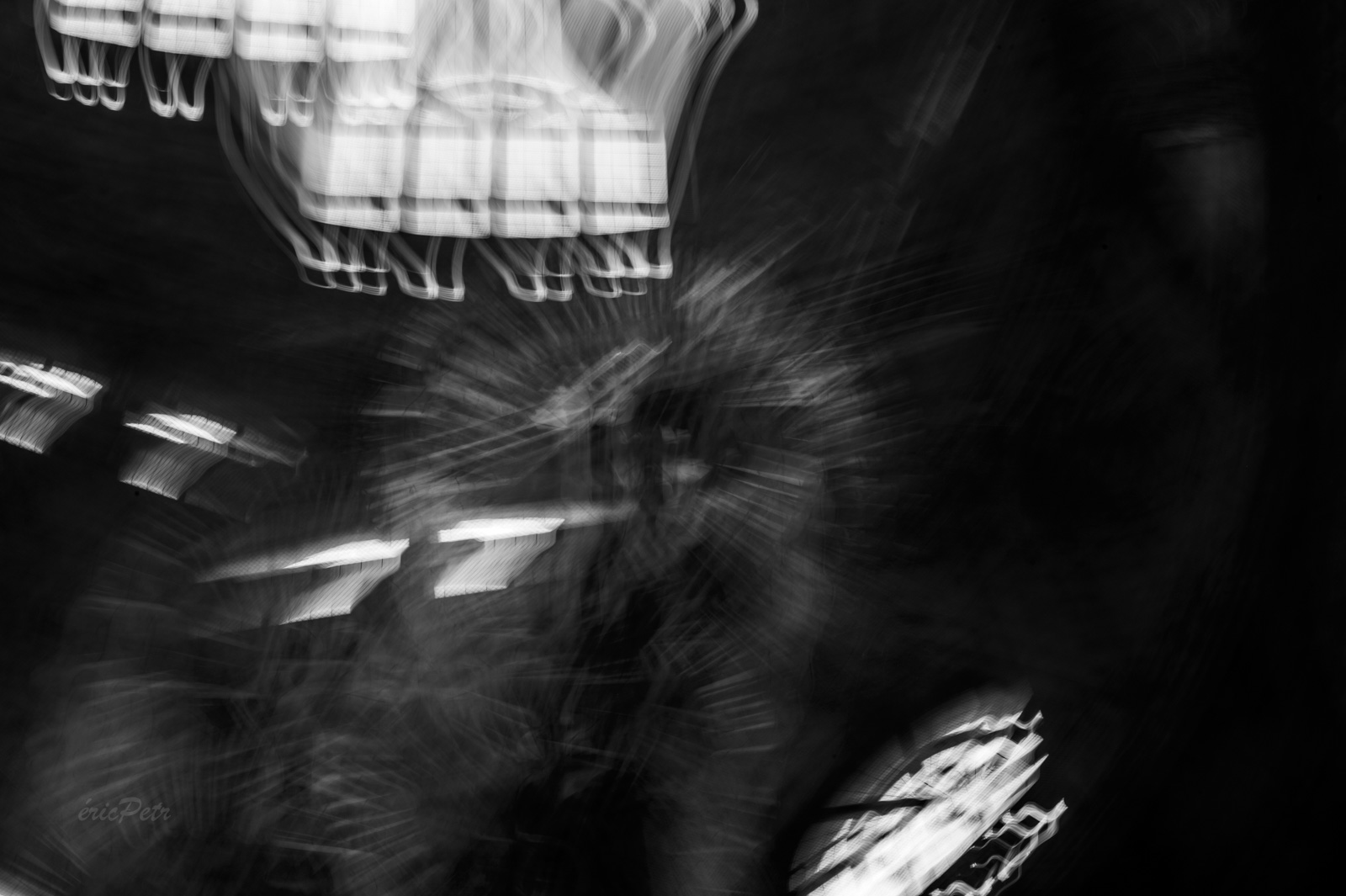
Hikari © Éric Petr, 2025

5. The photographers of absent presence

Transform
Long exposure as a human trace.

Francesca Woodman (1958–1981)
Alexey Titarenko (1962)
Rut Blees Luxemburg (1967)

Time does not erase: it transforms presence.
Woodman works on the disappearance of the body.
Titarenko focuses on social dissolution.
Rut Blees Luxemburg explores urban memory.

6. Phenomenologists of gesture and space

Move
Long exposure as a lived experience of vision.

Ernst Haas (1921–1986)
Tokihiro Sato (1957)
Uta Barth (1956)

Here, we no longer simply record what is seen: we photograph the act of seeing itself.
Time becomes perception.

Where does the concept of “in situ kinetic photography” fit?

I did not list these aesthetic trends in order to put artists into categories, something I myself tend to avoid.

However, it does allow for a methodical approach to understanding how, through the history of photography, long exposure, initially a technical constraint, has become an aesthetic intention in its own right.

As for me, if I had to define myself within these trends, I would find it difficult. First, because it is always hard to judge oneself, and secondly because I do not identify with any of the six chapters outlined.

In situ kinetic photography, long exposure in photography
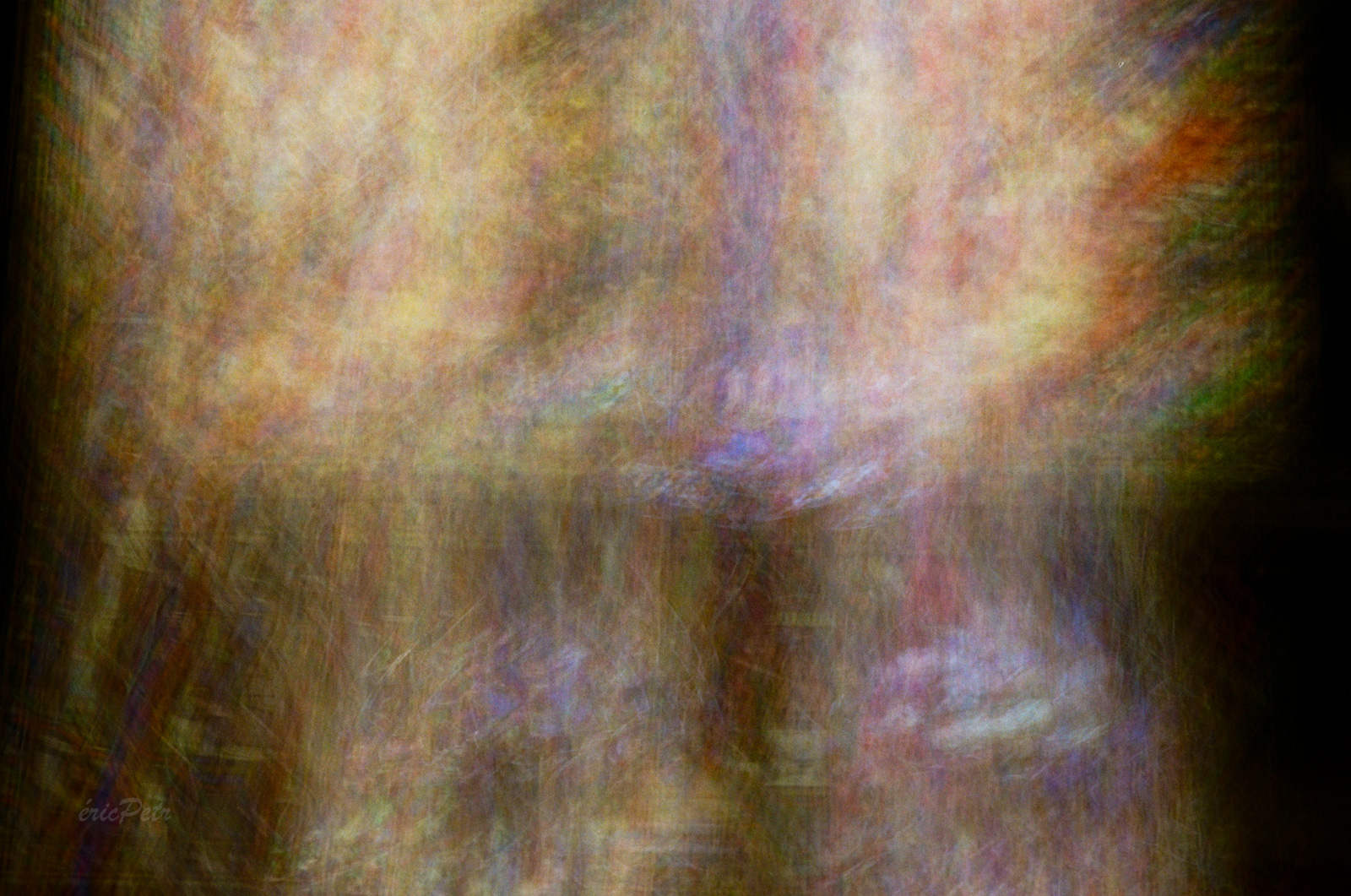
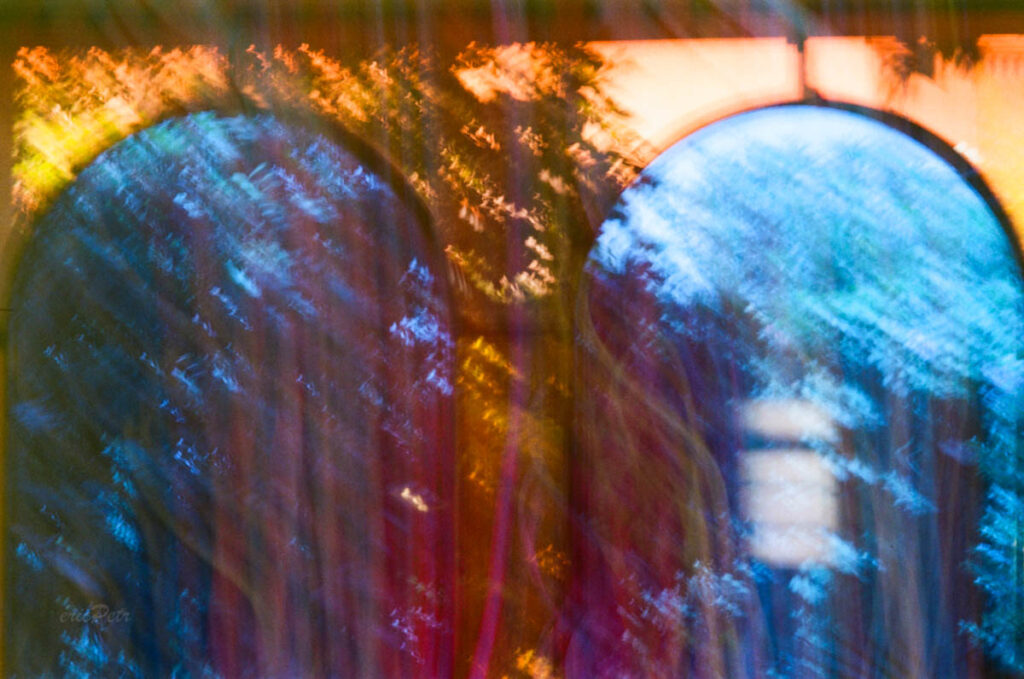
Spiritual Odysseys © Éric Petr, 2026 | Nikon F3, Kodak ColorPlus 200 film

Perhaps this is why I felt the need to name this territory of visual exploration rather than situate myself within an existing movement, such as “long exposure with intention”, which was only later, in the late 2010s, referred to as “ICM (Intentional Camera Movement)”.

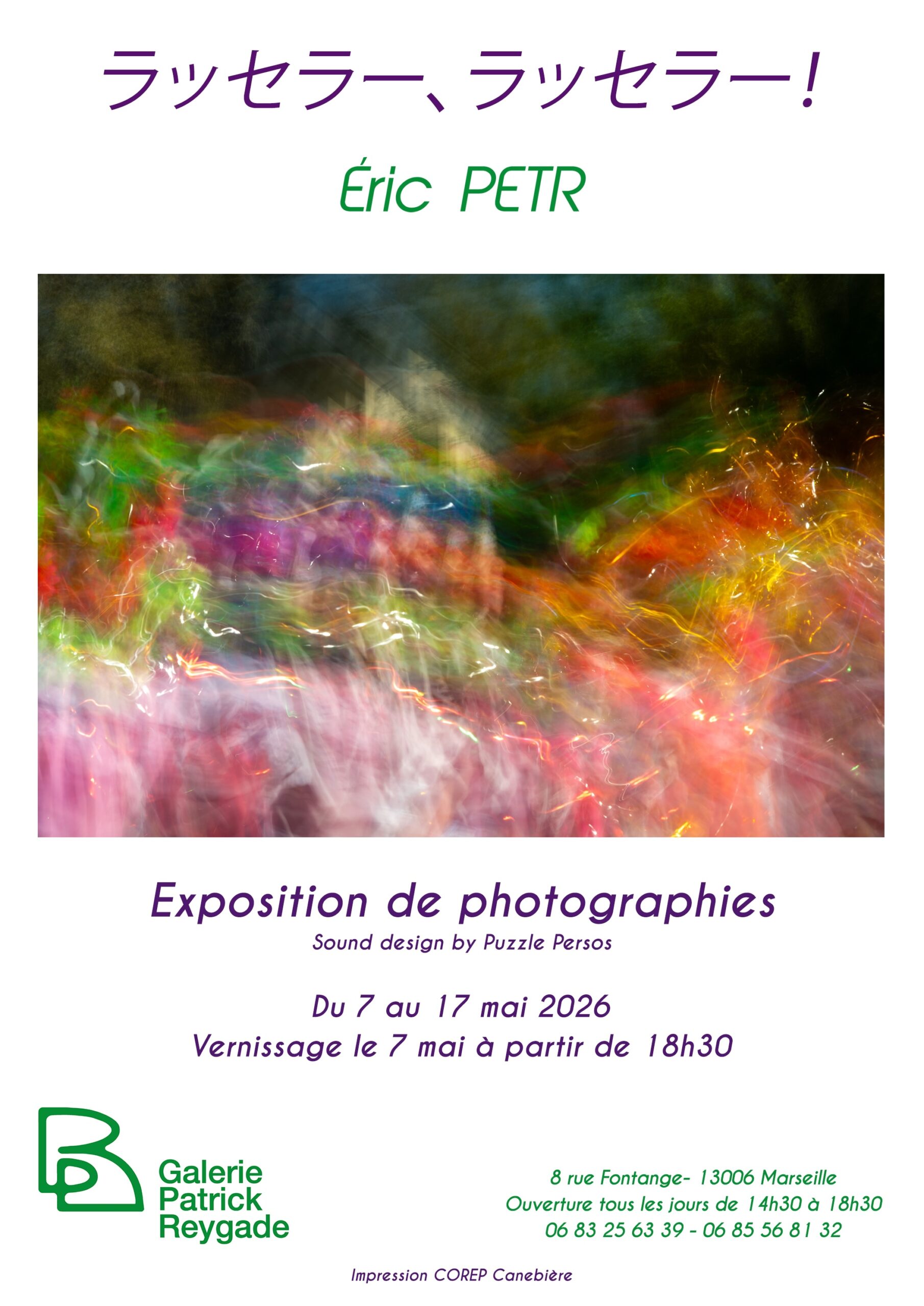
ラッセラー、ラッセラー!SOLO EXHIBITION MARSEILLE

ラッセラー、ラッセラー! Photo story from Nebuta to Tōkyō 2023

ラッセラー、ラッセラー!

E X P O S I T I O N   S O L O

7 〜 MAY 17, 2026

I’m delighted to invite you to this solo exhibition at Galerie Patrick Reygade in Marseille, opening on Thursday May 7 at 6.30pm.

The photographic story [ラッセラー、ラッセラー!], shot in Tōkyō in October 2023, will be presented for the first time.

In the basement of the gallery, my work on light writing will also be exhibited, along with a photographic installation and a Sound design by Puzzle Persos, for an immersive experience.

Nearly eighty photographs, including some in large portfolios, will be unveiled for this major event in my career as a photographer.

Galerie Patrick Reygade
8 rue Fontange, Marseille 6°

🚃 Métro Notre-Dame-du-Mont
🪐 Instagram
🧭 Google Maps 

ラッセラー、ラッセラー!

Pronounce: Lassèlaa, Lassèlaa! 

This cry repeated in unison ラッセラー、ラッセラー! by the costumed dancers (haneto 跳人), who march to the rhythm of the drummers (taiko 太鼓) and those huge, shimmering floats, sustains the momentum, brings the bodies together, and lifts the voices. 

It belongs to the very breath of the Nebuta Matsuri ねぶた祭, where clamor accompanies the movement of luminous figures in the night. 

Derived from the Tsugaru dialect 津軽弁, it is said to mean “Give, Give 出せ、出せ” to request candles, sake and other provisions from the chariot bearers (hikite 曳き手) of Nebuta.

The song and rhythm have preserved the trace of an ancient exhortation; an invitation to join in the enthusiasm of the Nebuta festival, uniting dancers and spectators in a common celebration.

Other hypotheses are also likely, but over time the literal meaning has faded, leaving only the collective pulse.

In these photographs, this rhythm becomes image. Shapes unfold, fragment and recompose themselves in the flow of gesture and light. 

The title, written in Japanese, retains an element of mystery for this exhibition, like a distant echo of the festival. 

It’s not so much a question of translating the oral expression as of feeling the vibration that emanates from it.

ラッセラー、ラッセラー thus evokes shared energy, the repetition that carries movement, the presence of a living memory transmitted through the voice. A simple exclamation turned cadenza, where tradition is transformed into sensitive, playful choreography.

About this photo story

These images were born in the heart of Nakano’s Nebuta Matsuri, in Tōkyō, in October 2023.

Aomori Nebuta Matsuri is a major festival in the Tōhoku region, designated as UNESCO Intangible Cultural Heritage.  
As a sign of support for this region of northeastern Japan, which was devastated by the great earthquake of 2011, Nakano City Hall has organized its own festival since 2012 under the name “Nakano Festival to Support Tōhoku”, where the Nebuta Matsuri takes place every October.

UJI INTERNATIONAL ART EXCHANGE EXHIBITION

From 18 to 22 March 2026,
the “Uji International Art Exchange Exhibition” will be held at Manpuku-ji, a temple designated as a National Treasure of Japan, at the foot of Mount Ōbaku, from twenty-five minutes from Kyōto.

This short filmed presentation highlights this exceptional site, which will host the artistic event and herald the arrival of spring. It also sheds light on the work of painter Shigē Tonomura, artist and curator of the exhibition, as well as his commitment to supporting and teaching visual arts to people with disabilities.

Manpuku-ji, a National Treasure of Japan

Manpuku-ji is the head temple of the Ōbaku school, the smallest of the three major Zen Buddhist schools in Japan, alongside Rinzai and Sōtō. Founded by the Chinese monk Yinyuan Longqi (known in Japanese as Ingen Ryūki, 1592–1673), the school took root when Ingen arrived in Nagasaki in 1654, invited by the local Chinese community, at the beginning of the Edo period (1603–1868).

Covering an area of approximately 30 hectares, the temple strongly preserves the architectural style of China’s Ming dynasty. The buildings are arranged symmetrically along straight axes and connected by covered corridors.

This spring, from 18 to 22 March, the site will host this major International Art Exchange Exhibition.

At the origin of the project is painter Shigē Tonomura, based in Uji.
Self-taught, he has become known for his distinctive style and vivid colours, and is active both in Japan and abroad.

He is also deeply committed to art education for people with disabilities.

In this film, Shigē Tonomura speaks about the exhibition and its purpose.


SUMMARY OF THE ARTIST’S STATEMENT

“Art is often perceived as something difficult to access.
Many people feel they are not capable of it.
But for me, art is about expressing what one carries within.

It can be freedom, sadness, or joy.
Expressing one’s emotions at a given moment and sharing them, that is the true richness of art.

For people with disabilities as well, painting and exhibiting their works creates a connection with society.
It gives them great self-confidence, and you can see their faces light up.

We have previously exhibited works by people with disabilities in Italy.
Even while wondering ‘where exactly is Italy?’, their joy and pride filled the exhibition space.
I hope these experiences become a source of confidence and joy for their future.

Manpuku-ji, which has long been a place for the transmission of culture, gastronomy and the arts, is now designated as a National Treasure of Japan.
From this emblematic site, we wish to share art and culture widely.

It is in this spirit that we decided to organise this international art exhibition in Uji, with Manpuku-ji as its starting point.”

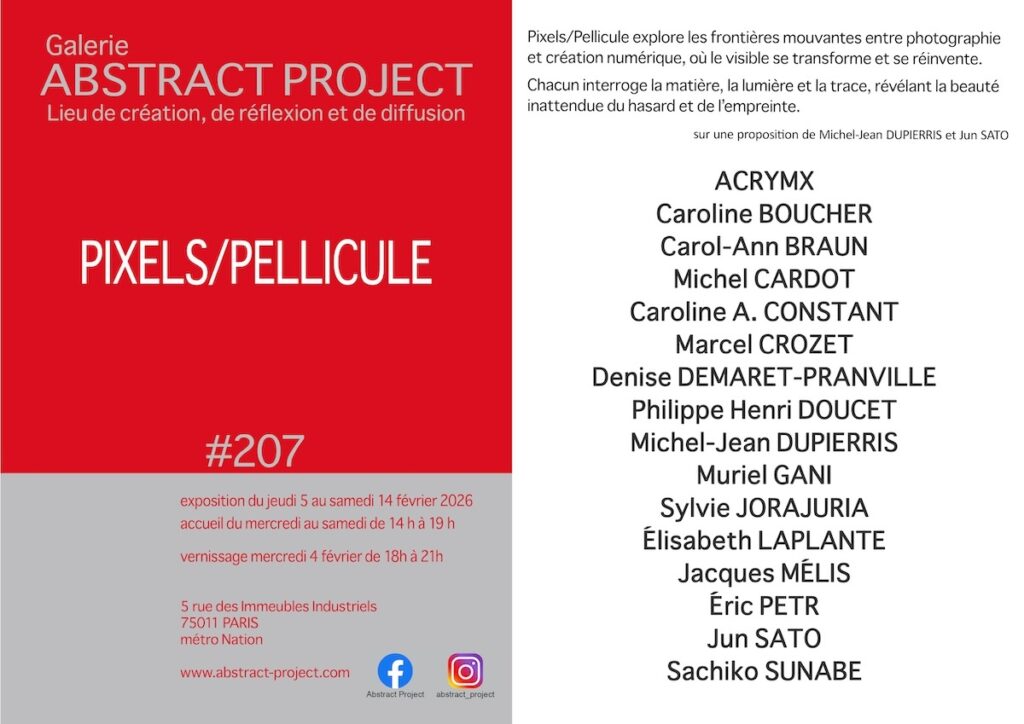
PIXELS/PELLICULE – PHOTOGRAPHY & DIGITAL CREATION at ABSTRACT PROJECT Gallery

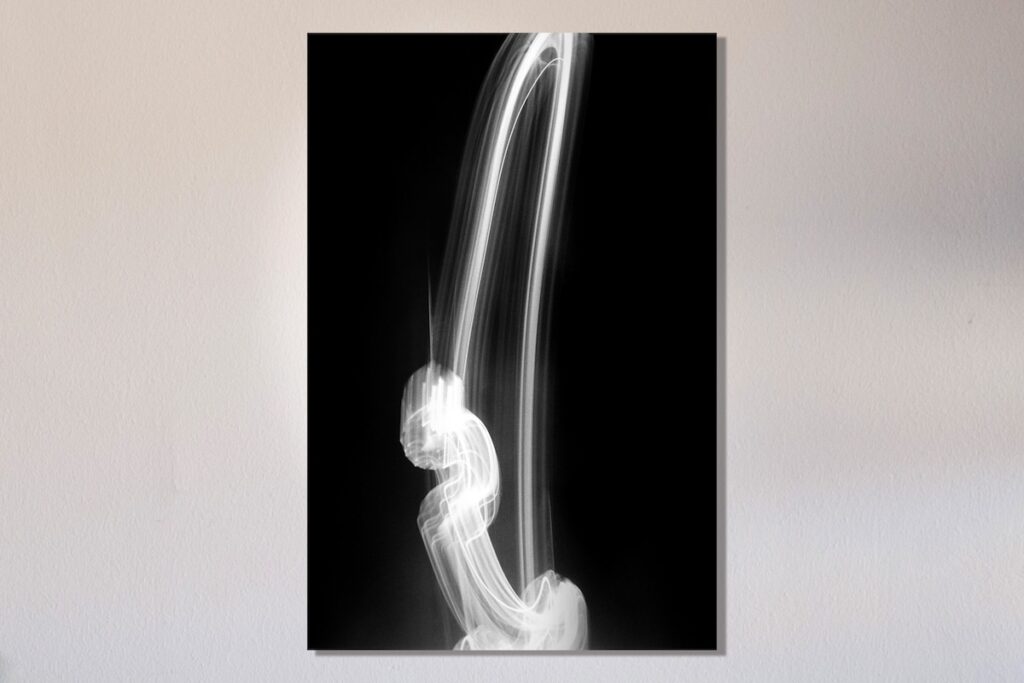
光 0xB9CD0582F Silver photograph 24x36cm [2025] presented at the exhibition Pixel/Pellicule Feb. 2026

Pixels/Pellicule explores the shifting boundaries between photography and digital creation, where the visible is transformed and reinvented.
Each artist questions matter, light, and trace, revealing the unexpected beauty of chance and imprint.

The ABSTRACT PROJECT Gallery exhibition, on view from 5.02 to 14.02.2026, proposes an original approach that questions photography in its experimental retrenchments, where the image ceases to be a simple recording of reality to become a veritable territory of experimentation.

At the crossroads of silver film and pixels, the visible is transformed, fragmented and recomposed. What seemed stable becomes uncertain, what was given is reinvented. The image is no longer simply a reflection of the world, but the site of a metamorphosis.

Each approach questions the very material of photography. Light, sometimes controlled, sometimes left to chance, reveals unexpected forms. Surfaces blur, contours shift, accidents become language. Traces, whether chemical or digital, are never neutral. It carries the memory of the gesture, the process, the time inscribed in the image.

In this hybrid space, “controlled” chance plays an essential role. It is not a flaw to be corrected, but a creative force capable of bringing out unexpected beauty. Errors, alterations and technical shifts open up new readings and shift our gaze. The image becomes an imprint, both fragile and persistent, oscillating between disappearance and revelation.

Pixels/Pellicule offers a reflection on our contemporary relationship with images. Between materiality and immateriality, between control and letting go, these works invite us to slow down, to observe differently, and to accept that photography is no longer a certainty, but an experience in perpetual transformation.

ABSTRACT PROJECT exhibition
5.02 ~ 14.02.2026

on a proposal by
Michel-Jean DUPIERRIS and Jun SATO

A place for creation, reflection and dissemination
5 rue des Immeubles Industriels – 75011 Paris
Métro Nation
Open Wednesday to Saturday from 14:00 to 19:00

“À FLEUR DE LUMIÈRE” CONTRIBUTE TO ÉRIC PETR’S BOOK

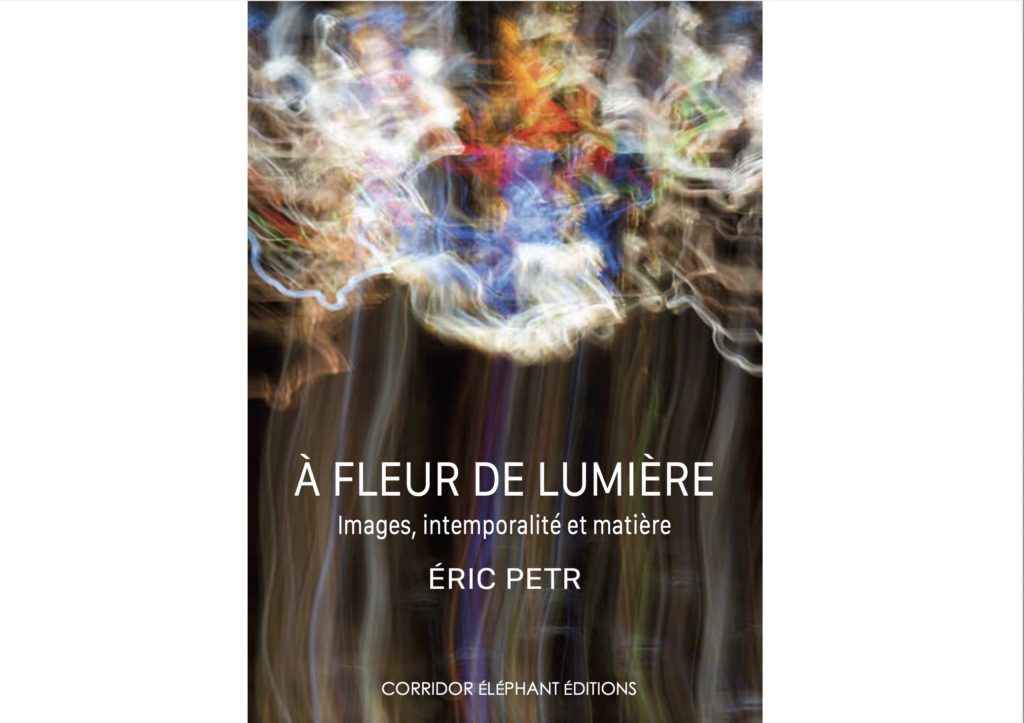
À FLEUR DE LUMIÈRE

a book by Éric PETR
published by Éditions Corridor Éléphant

À Fleur de Lumière is a limited-edition monograph, numbered, signed by the artist, and certified with an embossed seal from Corridor Éléphant publishing house.

Its crowdfunding campaign is carried out through pre-orders on HelloAsso.com, a French social enterprise founded in 2009.

The step-by-step contribution guide: PDF

ABOUT THE BOOK

This book will be printed in January 2026 and shipped in early February.
The printing will be done on 170 g semi-matte paper, with a 400 g soft matte-laminated cover. The chosen format, 21×15 cm in landscape orientation, offers a comfortable hold for the 152 pages and 108 photographs presented by the author.

The book offers an insight into four decades of photographic exploration, and I’m delighted to share them with you through this beautiful edition.

A word from the editor

Éric Petr’s photography is neither conventional nor what one expects photography to be. It defies meaning, disregards rules, and plays with shadows. It tells nothing or almost nothing. It ridicules overly long sentences, wandering descriptions, and confusing variations. It shows what one dares not look at: time. And with it, the multitude of dimensions that intertwine.
Éric Petr’s work does not simply show; it captures. More than geometric figures or overlapping traces of light, the artist freezes that tangible invisibility, that “abstract, constant and present”.

ÉRIC PETR MAINTAINS A DYNAMIC RELATIONSHIP WITH LIGHT

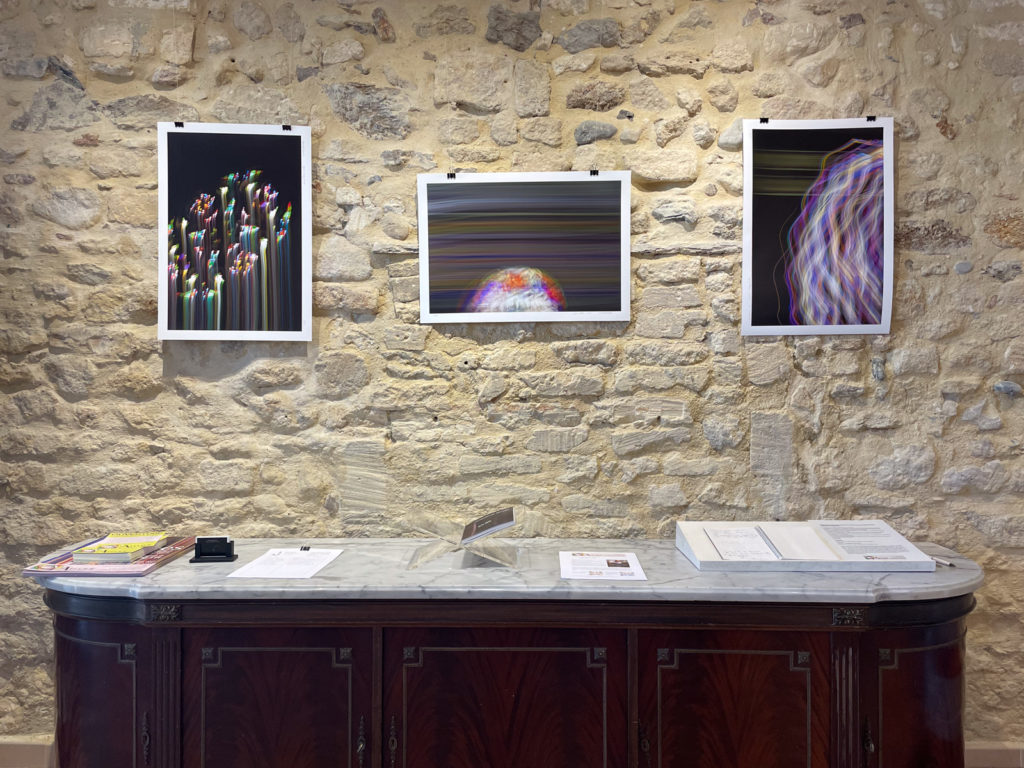
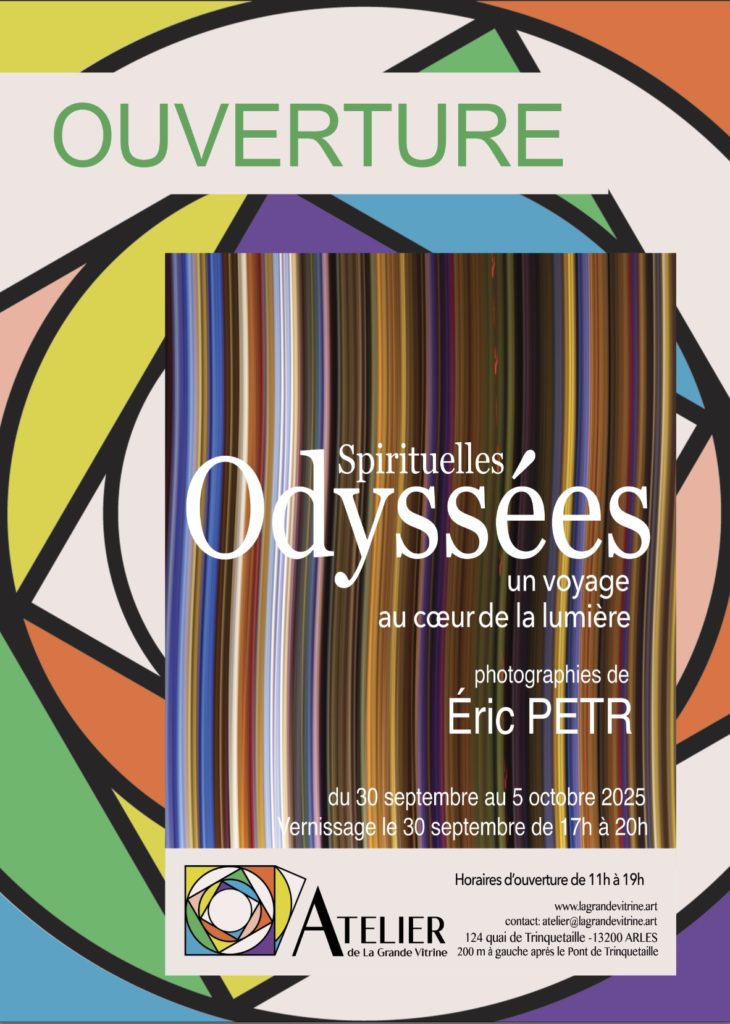
Spirituelles Odyssées” exhibition for the opening of the Atelier de La Grande Vitrine in Arles on Sept. 30. 2025

Éric Petr maintains a dynamic relationship with light

The subtlety of his shots generates a kind of dramatic intensity that is both intangible and elusive, bringing to the image an aura of mystery and strangeness — like a spiritual illumination emerging from the night of time.

He treats apparition as an inner space, challenging the viewer to make the necessary effort to grasp it.

The immaterial sensation of his images carries us into an infinite space without spatial or temporal reference points, which, like his apparitions, produce a perceptual experience that overwhelms us.

He materialises a distortion of time that traverses space — a radiance emanating outward, and a sensation of transcendence.

His experiments question the conditioning of the gaze toward form, as well as its approach to reality and abstraction alike.

Ana Sartori

Text presented for the exhibition “Spiritual Odysseys” at the opening of L’Atelier de La Grande Vitrine in Arles, on 30 September 2025.

Atelier de La Grande Vitrine

124 Quai de Trinquetaille, Arles

OPENING OF THE GRANDE VITRINE WORKSHOP IN ARLES

OPENING & VERNISSAGE
Tuesday, September 30 [17h 〜 20h]

EXHIBITION
SPIRITUAL ODYSSEYS BY ÉRIC PETR

september 30 > october 5 2025
[11am 〜 7pm]

Patrick Searle, Ana Sartori and Éric Petr, founders, are delighted to announce the opening of a new space at 124 Quai Trinquetaille in Arles:

l’Atelier de La Grande Vitrine

A cultural and creative venue dedicated to ART, with multidisciplinary programming, a space for exchange and transmission.

On the occasion of this event, I will have the pleasure of presenting, with the support of the Atelier de La Grande Vitrine, the monograph À Fleur de Lumière, in a limited edition. An invitation to subscribe in advance to the very first copies of this work and to take part in laying the foundations of this edition.

To mark the occasion, I’m delighted to present a limited-edition monograph entitled À Fleur de Lumière. An invitation to subscribe, in advance, to the first copies of this book and to participate in the foundations of this edition.

WHY IS PHOTOGRAPHY SO MUCH MORE THAN JUST A SNAPSHOT?

Photography is more than just taking pictures

When it’s exhibited, edited or published, it’s the result of a lot of hard work, a lot of passion and a real human, temporal and financial investment.

If photography exists, it’s also thanks to those who support it: amateurs, enthusiasts, collectors, professionals, but also the photographers and artists themselves who defend it on a daily basis.

However, to ensure that all these beautiful images discovered free of charge on social networks can continue to exist, it’s essential to support photographers in your own way. Buying a postcard, a book, a small limited-edition photo or a work of art of your own means contributing to the survival of art photography in a world where we’re getting used to “seeing without paying”.

There’s no such thing as a small contribution: even 5 euros invested in a participatory edition to encourage an artist is already a strong, committed gesture.

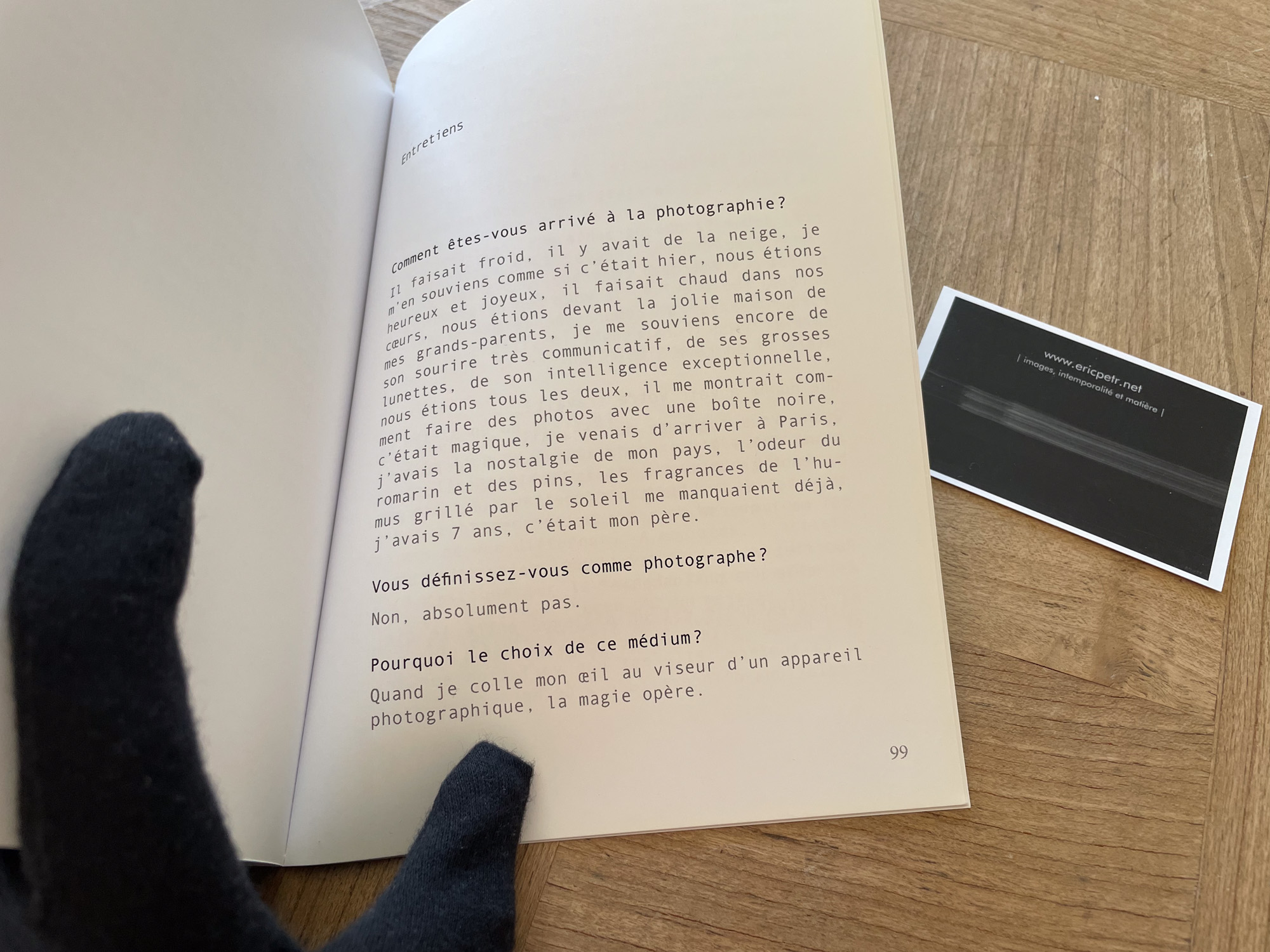
I sincerely thank you, who bought or invested 5 euros in my book SPIRITUELLES ODYSSÉES, published in February 2017 by Éditions Corridor Éléphant introduced by a magnificent seven-page text by Jean-Paul Gavard-Perret.

Your support has deeply helped and accompanied me on my journey as an emerging photographer. Thank you!!!

About the monograph
SPIRITUELLES ODYSSÉES

Click on the image to enlarge and make the text easier to read

There are still a few copies available, before the final end of stock.
Purchases can be made directly on my website, at the price of 42 €.

AMOUR AVAILABLE ON ARTMAJEUR GALLERY

Photographic narrative AMOUR © Éric Petr

I’m pleased to offer a limited edition of emblematic photographs from my photographic narrative AMOUR, captured in the deep night of the Sainte-Baume during the Christmas procession.

These images, somewhere between abstraction and impressionism, bear witness to the collective energy of a moment of faith and silence, where walking bodies melt into the shadows and light of the forest.

You can acquire these photographs on my official gallery hosted by Artmajeur Gallery, an international platform dedicated to contemporary art.

Among these, I now offer this work, which is sold unframed, to give everyone the freedom to integrate it into their own space, according to their taste and sensibility. The print is made on high-quality art paper, in keeping with my artistic approach: respect for the material, the light and the moment captured.

Artmajeur Gallery | Amour 0xB0DD1301

WHAT COULD HAVE BEEN AN EXHIBITION IN NITERÓI, BRAZIL

Arc-en-Ciel 0xD81EFD44 (2022) | Print on Dibond (60x90cm) #5/5
[click to view image]

Dialogues on abstract art
Hors les Murs ]RN structure[

This July 5, 2025 should have been the opening of ]RN structure[‘s Hors les Murs exhibition at the “Espaço Cultural Niterói”, in the sumptuous Palácio dos Correios overlooking the Bay of Rio de Janeiro.

Unfortunately, due to administrative complications beyond even the most sincere motivations, this project had to be cancelled, despite the enthusiasm, perseverance and tenacity deployed to bring such a wonderful and prestigious exhibition to fruition.

When the wheels of bureaucracy fail to vibrate in unison with the noble idea that art knows no borders, we reach what I would call a form of state sclerosis.

We should have been 51 New Realities visual artists exhibiting from July 5 to August 16, 2025 in Brazil, in front of Christ the Redeemer, around the inspiring theme: “Dialogues on abstract art”. But it was not to be.

However, I’m happy to share with you the two photographic works I had prepared for this exhibition, which also failed to cross borders.

They have now joined the Artmajeur gallery, and I invite you to discover them in detail by clicking on each image.
Artmajeur gallery | Éric Petr

I wish you a wonderful summer or winter for those of you in the southern hemisphere. 

Abstract Angel 0x3866AD02 (2024) | Print on Dibond (23x15cm) #1/5
[click to view image]

Espaço Cultural Correios Niterói

Located in the heart of Niterói, overlooking the bay of Rio de Janeiro, the Espace Culturel Correios is one of the most emblematic venues on the Brazilian art scene. 

Dedicated to the promotion of contemporary creation, this space actively supports emerging and established artists, both local and international. It is part of a dynamic of openness, intercultural dialogue and the dissemination of visual arts in all their forms.  

By hosting ambitious exhibitions, residencies and off-site projects, the Centro Cultural dos Correios affirms its commitment to a lively, accessible and forward-looking culture.