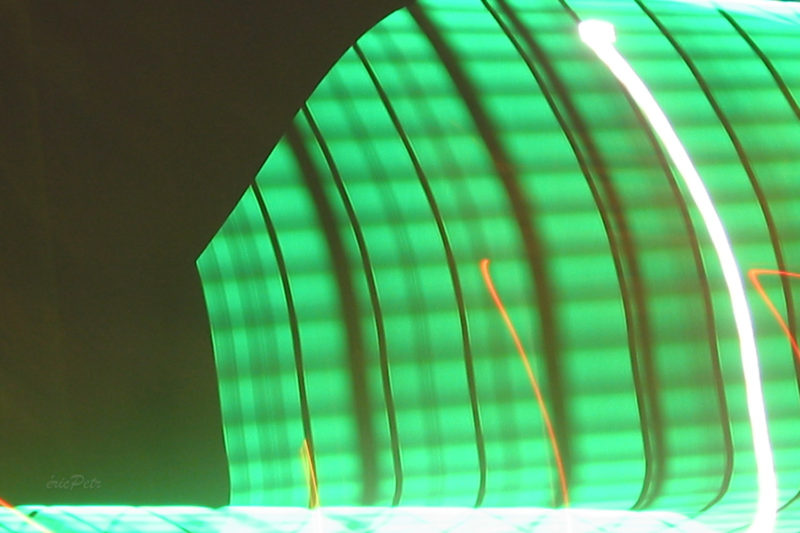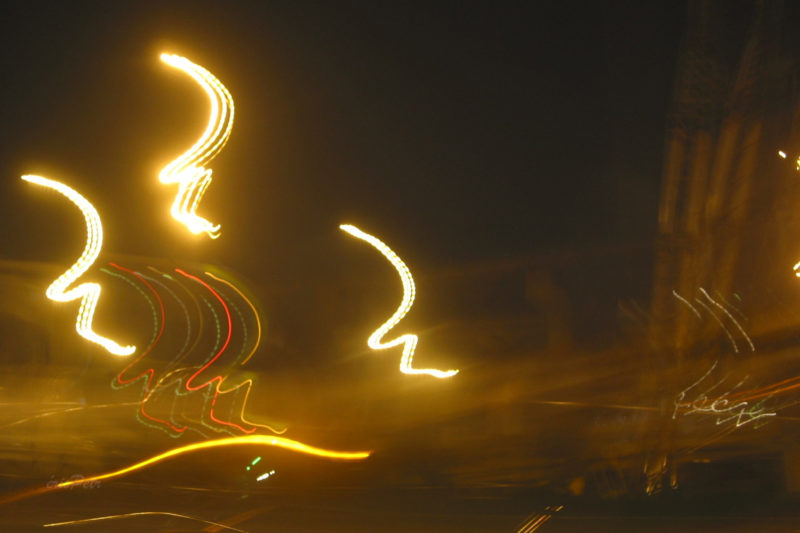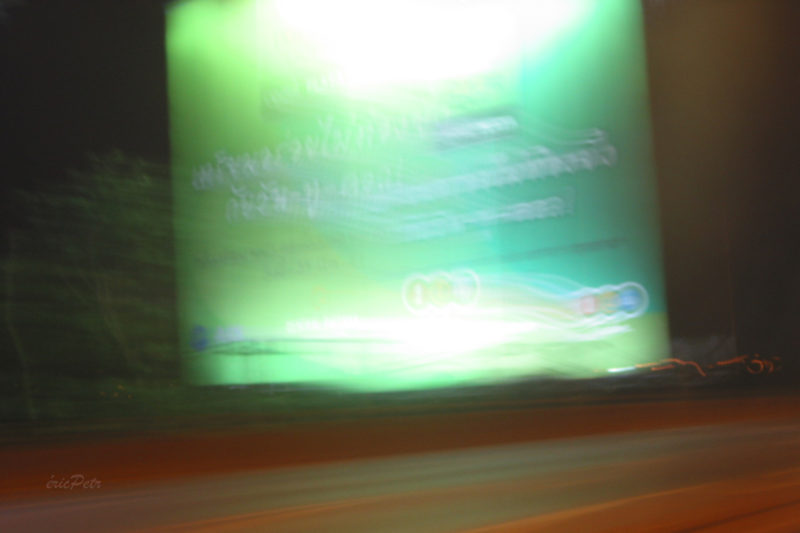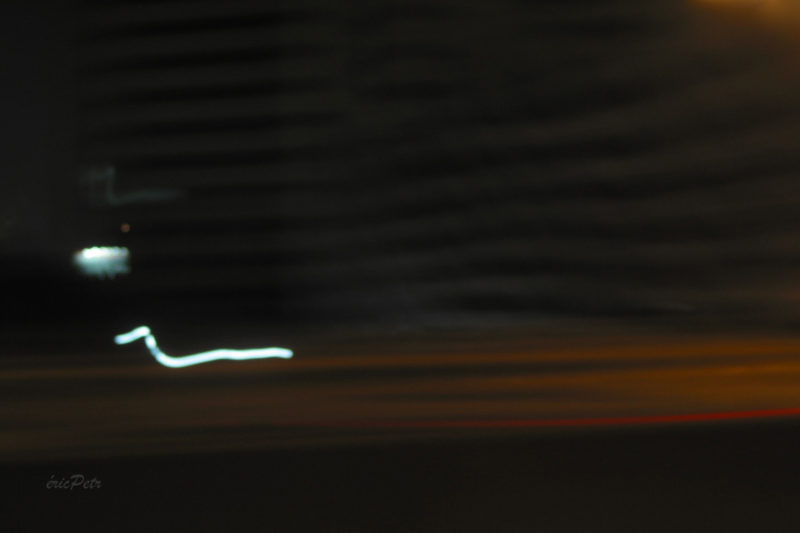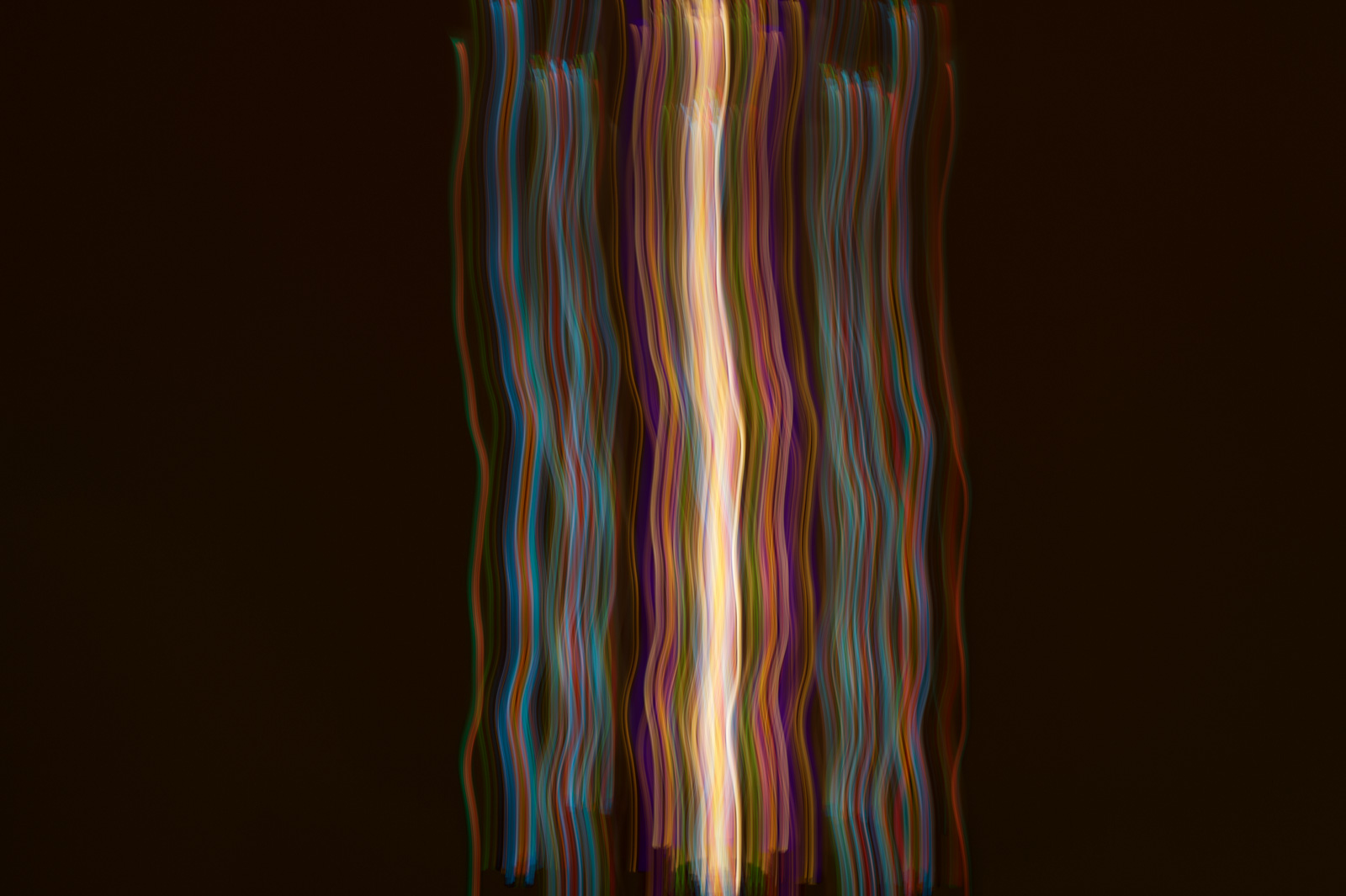
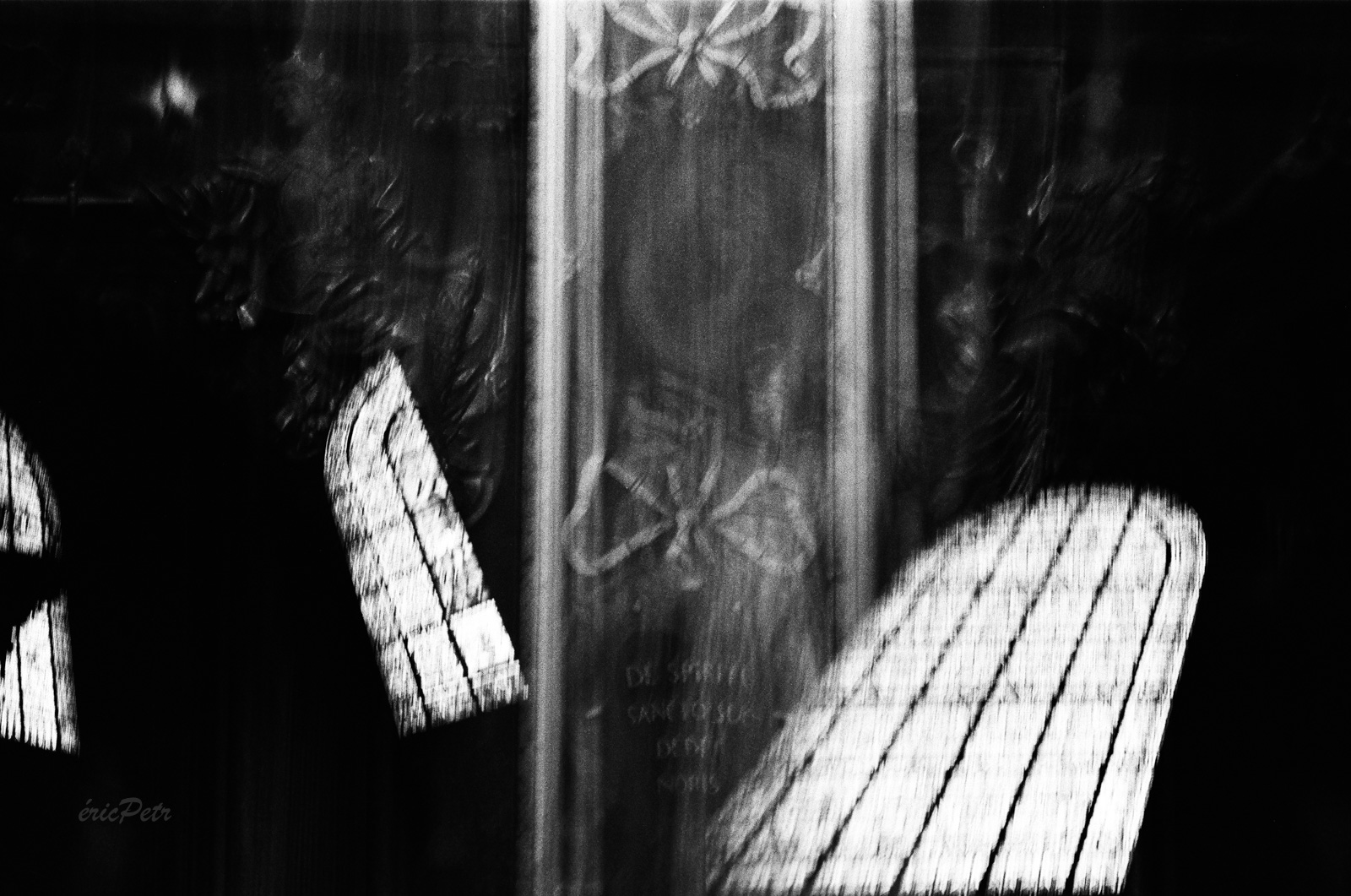
IN SITU KINETIC PHOTOGRAPHY: AN APPROACH TO LONG-EXPOSURE

In situ kinetic photography, long exposure in photography
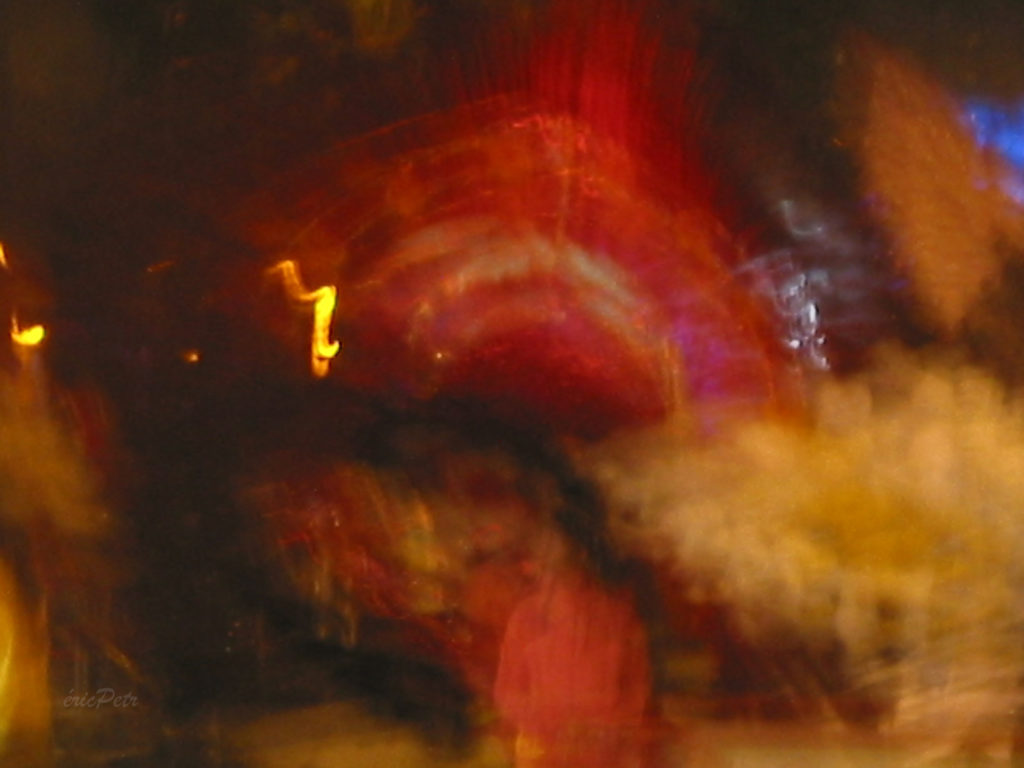
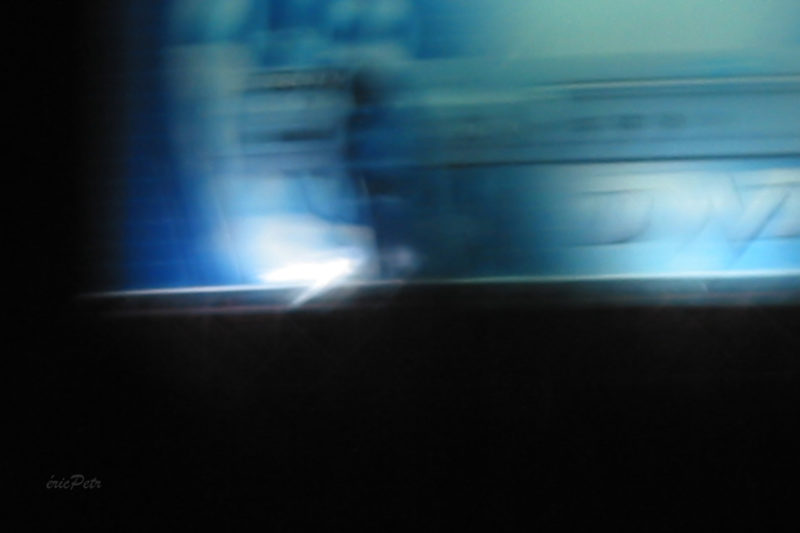
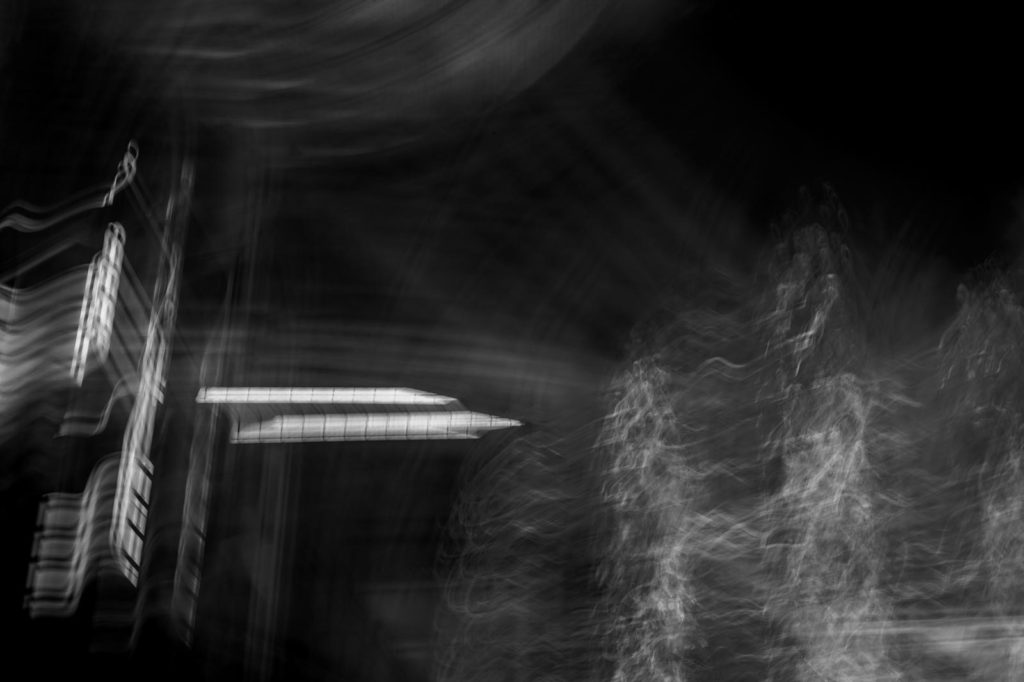
Matter © Éric Petr, 2018 | Nikon F3, Ilford FP4 film

What is « In situ kinetic photography », « Photographie cinétique in situ » or « ISK photo » ?
More than a concept, “In Situ Kinetic Photography” is a photographic language developed in the early 2000s.

The intention is to explore the recording of light as photographic material and to develop a body of work in which the references of time and space are profoundly altered.

This approach was based on the intention to:

・to work with a single exposure, without post-processing or multiple exposure, in order to remain as close as possible to the recorded subjective experience,
・to use relatively long exposure times and, depending on the composition, ranging from a few seconds to several minutes, in order to allow for a condensation of emotions, light and matter,
・to intentionally move the camera during the recording of the image, in order to recontextualise the scene according to another order, that of an aesthetic and inner experience,
・to allow, during the recording process, subtle variations through which the experience may unfold into unforeseen possibilities,
・and to construct the image on site, “in situ”, so that this encounter between the observer (the photographer) and the place, along with what emanates from it, is not disrupted by external factors unrelated to the scene and the experience.

The intention is therefore no longer simply to show movement, as in the classical principle of long exposure — “I move the camera to create blur” — but rather to compose an image as a temporal condensation of a place.
JI could even compare this to a kind of “micro-film recorded on a single image”, or to a form of “echography of a place”.

Through this process, I aim to explore the gap that emerges between:

・the observation of a scene “in situ”, using a camera as a measuring instrument,
・and the recording of this scene as obtained by the observer (the photographer), who takes as reference both his feelings at the precise moment of taking the photographs and external elements such as light, matter and the energy of the place.

This gap reflects an introspection produced by an unconscious form of reflection carried out by the observer (the photographer), in resonance with the surrounding elements. The resulting recording reveals an image that expresses the inner gaze of a scene experienced from the outside.
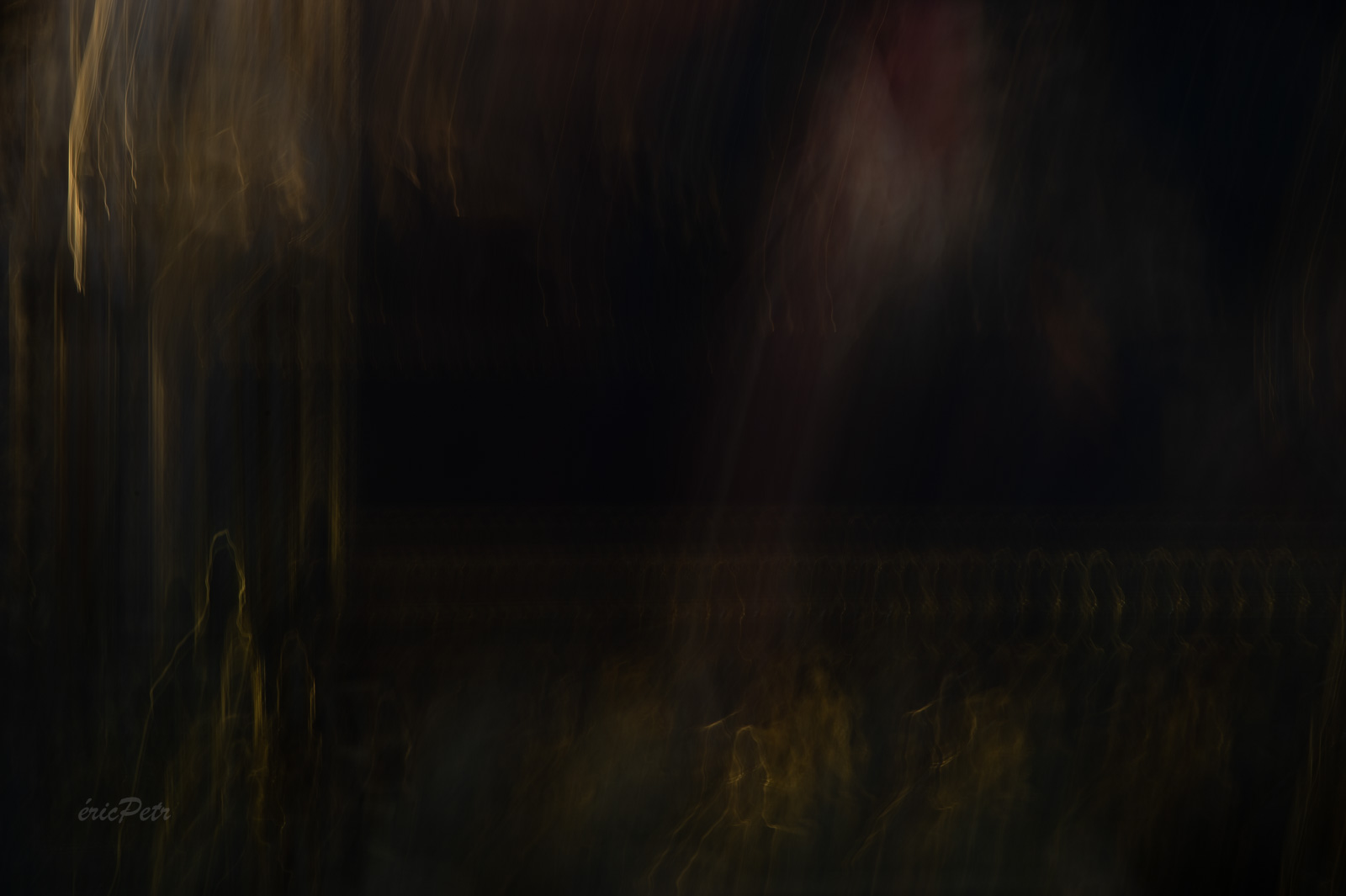
In situ kinetic photography, long exposure in photography
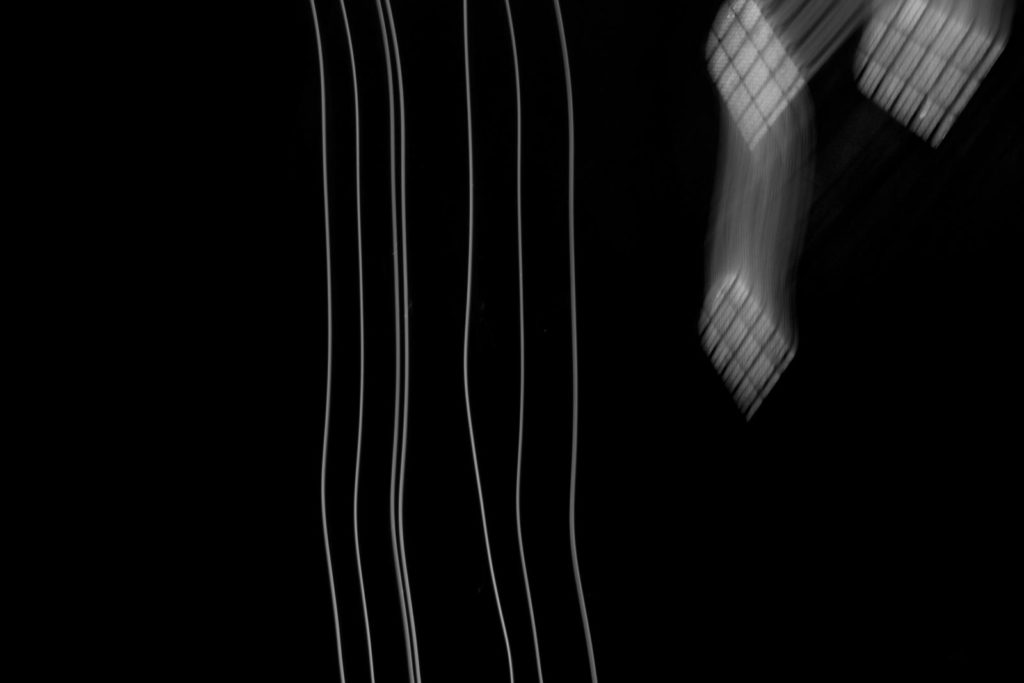
Spiritual Odysseys © Éric Petr, 2025

What does the concept “In situ kinetic photography” refer to?

This concept is based on the principle of long exposure and, although I have devoted much of my reflection to it as a visual artist photographer, long exposure is also a subject on which many other artists and photographers have worked.

Among them, I will mention in a non-exhaustive way some of the most well-known, such as Gustave Le Gray (1820–1884), painter and photographer, Alfred Stieglitz (1864–1946), Man Ray (1890–1976), experimental photographer, László Moholy-Nagy (1895–1946), Josef Sudek (1896–1976), Brassaï (1899–1984), Ernst Haas (1921–1986), Barbara Kasten (1936), Michael Wesely (1945), Eric Staller (1947), Hiroshi Sugimoto (1948), Abelardo Morell (1948), Uta Barth (1956), Mitch Dobrowner (1956), Michael Kenna (1957), Francesca Woodman (1958–1981), Tokihiro Sato (1957), and among my contemporaries Adam Fuss (1961), Alexey Titarenko (1962), Thierry Cohen (1963), and Rut Blees Luxemburg (1967).

What is interesting to observe here is that, beyond long exposure, each artist has appropriated this shooting technique to create very different worlds.
However, while writing this article and revisiting each artist’s work, I can see emerging from these long exposures a genuine, lasting visual language, rather than a mere effect, which I could map as a kind of cartography of the different currents or aesthetics that have been created.

1. The pioneers of photographic time

Reveal
Long exposure conceived as a technical necessity, as photography at the time required it. It becomes a visual language identifiable within its own chronology.

Gustave Le Gray (1820–1884)
Alfred Stieglitz (1864–1946)
Brassaï (1899–1984)

Here, long exposure first emerges from a material constraint, before becoming a visual vocabulary.
Le Gray quickly understands that exposure is not merely a form of recording, but a construction of the visible.
Stieglitz transforms atmosphere and weather into expressive matter.
Brassaï reveals the city as a nocturnal theatre.

2. Experimenters of light

To experiment
Long exposure conceived as a laboratory of the medium, with all its possible axes of experimentation.

Man Ray (1890–1976)
László Moholy-Nagy (1895–1946)
Barbara Kasten (1936)
Adam Fuss (1961)
Eric Staller (1947)

Here, we are no longer simply photographing the world: we are photographing the very conditions of vision itself. Duration becomes a luminous experience.

3. The contemplatives of landscape and extended time

Contemplate
Long exposure as a temporal condensation of the real.

Josef Sudek (1896–1976)
Hiroshi Sugimoto (1948)
Michael Kenna (1957)
Mitch Dobrowner (1956)

The subject becomes less the place than the duration of the place.
Sugimoto pushes this to a quasi-metaphysics of time.
Kenna transforms the landscape into silent memory.

4. The architects of accumulated time

Accumulate
Photography as a temporal accumulation.

Michael Wesely (1945)
Abelardo Morell (1948)
Thierry Cohen (1963)

Here, the image is no longer an instant but a temporal construction.
In Wesely’s work, time becomes almost a building material.
In Morell’s work, place and its projection merge.
In Cohen’s work, multiple temporalities come together.
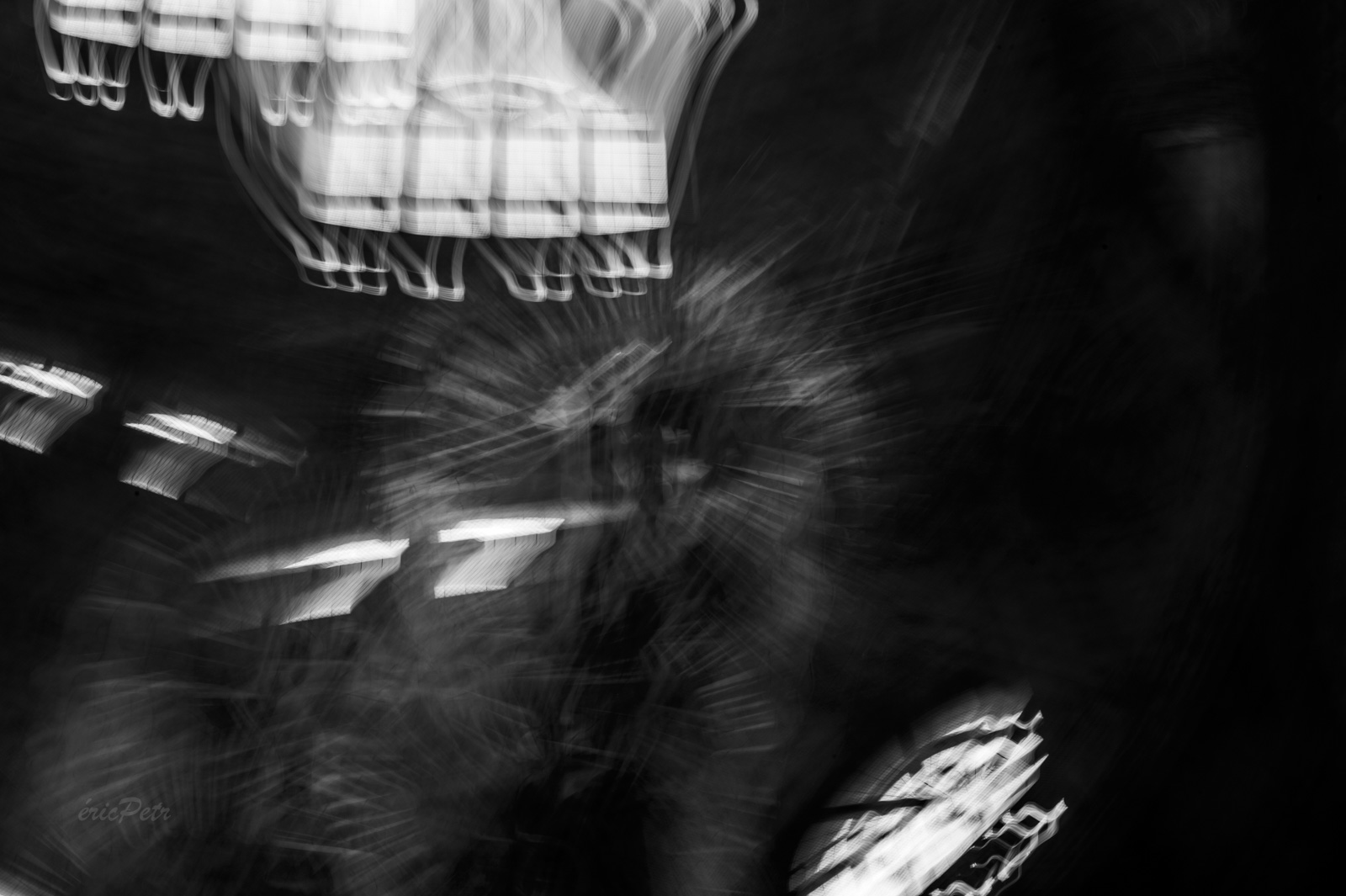
In situ kinetic photography, long exposure in photography
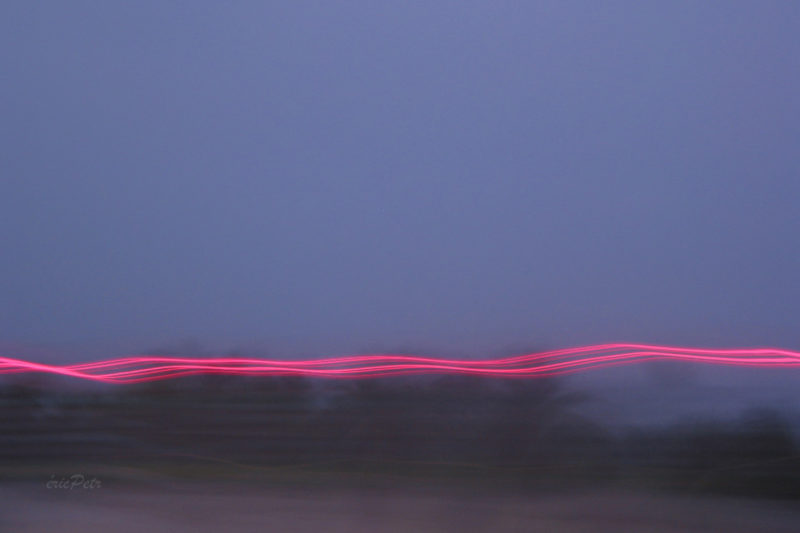
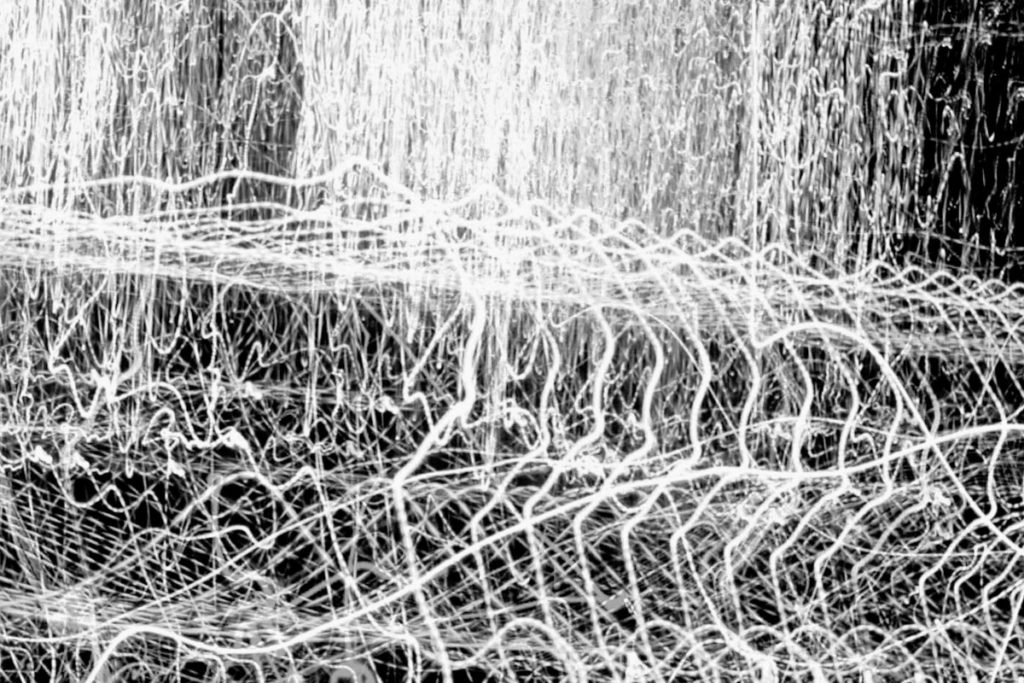
Hikari © Éric Petr, 2025

5. The photographers of absent presence

Transform
Long exposure as a human trace.

Francesca Woodman (1958–1981)
Alexey Titarenko (1962)
Rut Blees Luxemburg (1967)

Time does not erase: it transforms presence.
Woodman works on the disappearance of the body.
Titarenko focuses on social dissolution.
Rut Blees Luxemburg explores urban memory.

6. Phenomenologists of gesture and space

Move
Long exposure as a lived experience of vision.

Ernst Haas (1921–1986)
Tokihiro Sato (1957)
Uta Barth (1956)

Here, we no longer simply record what is seen: we photograph the act of seeing itself.
Time becomes perception.

Where does the concept of “in situ kinetic photography” fit?

I did not list these aesthetic trends in order to put artists into categories, something I myself tend to avoid.

However, it does allow for a methodical approach to understanding how, through the history of photography, long exposure, initially a technical constraint, has become an aesthetic intention in its own right.

As for me, if I had to define myself within these trends, I would find it difficult. First, because it is always hard to judge oneself, and secondly because I do not identify with any of the six chapters outlined.
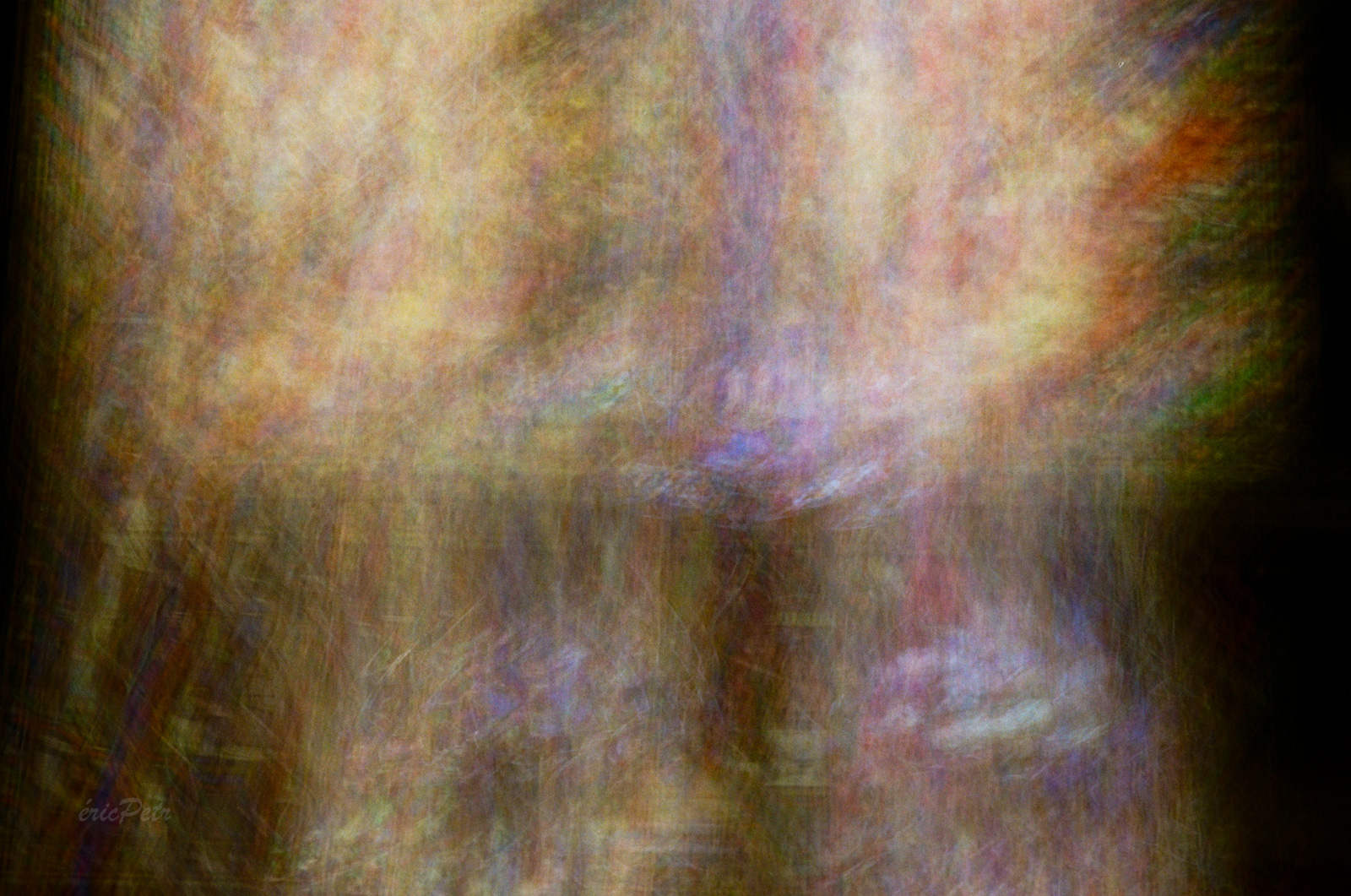
In situ kinetic photography, long exposure in photography
Spiritual Odysseys © Éric Petr, 2025 | Nikon F3, Kodak ColorPlus 200 film

Perhaps this is why I felt the need to name this territory of visual exploration rather than situate myself within an existing movement, such as “long exposure with intention”, which was only later, in the late 2010s, referred to as “ICM (Intentional Camera Movement)”.

THE MOVING IMAGE OR PHOTOGRAPHY AND AIKIDŌ

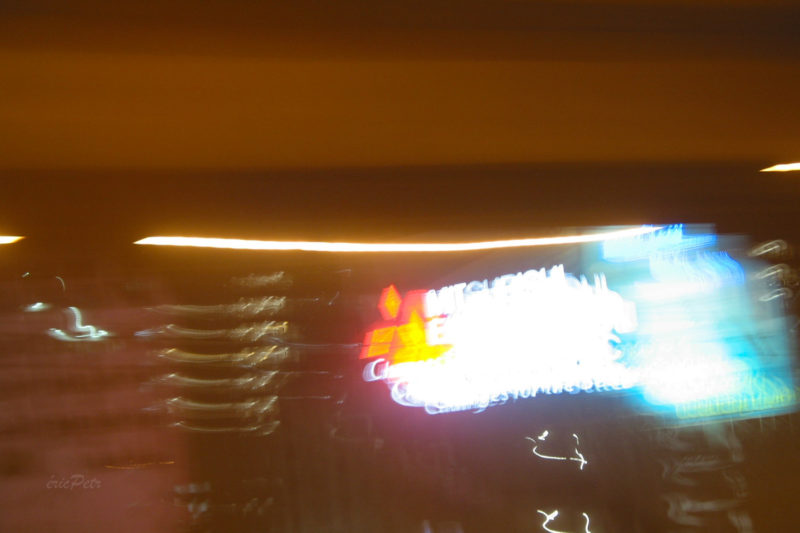
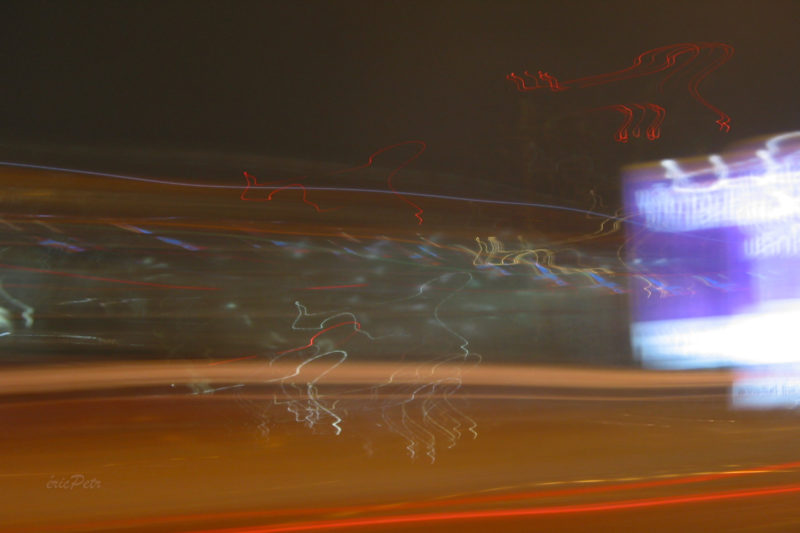
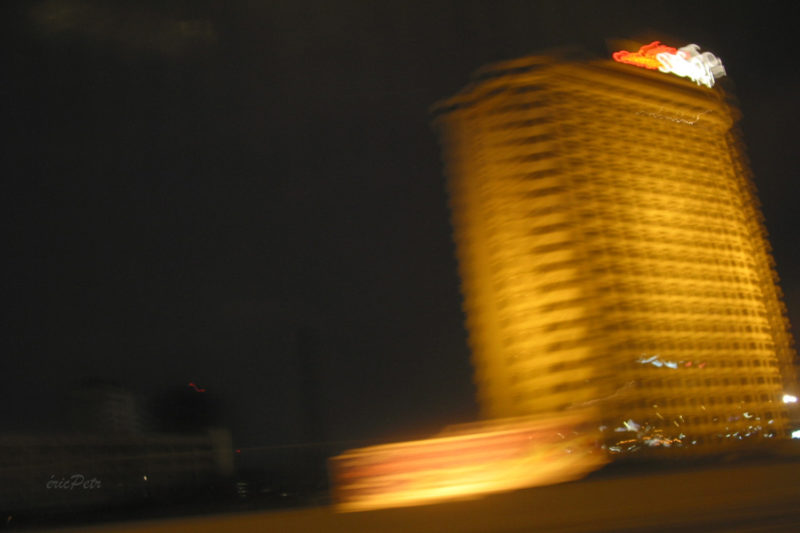
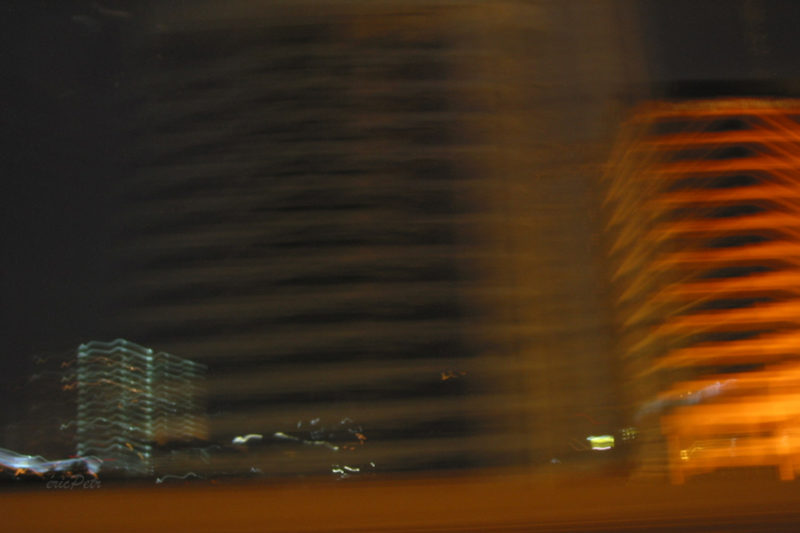
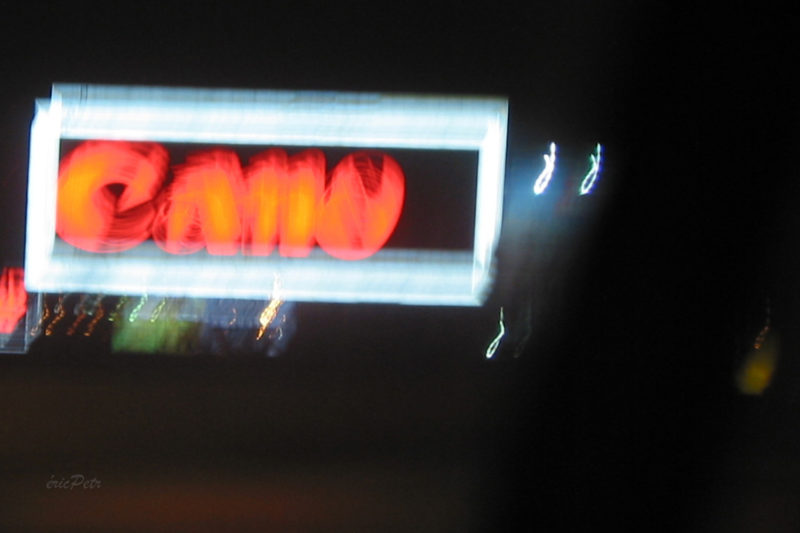
Hong Kong by night, February 2005 © Éric Petr

My path, in my reflection on the moving image

I was a passionate film photographer from 1983 to 1993. I developed my films and printed my photographs in a photo lab I borrowed from the Paris Airport.
Then I suddenly stopped photography. At that precise moment in its history, I undoubtedly felt that an earthquake had occurred, and that I no longer had a place in it. The digital world was emerging.

And so went the years without taking a single photograph and without touching a camera in the decade that followed.

When I look at my photo albums, I see a gaping hole of a decade’s worth of unprinted memories, some of which have disappeared into the depths of my subconscious.
The first lesson I learned from this deprivation of images is that photography, drawing and travel journals, beyond their beauty, are first and foremost an indispensable and necessary tool for memory.

But I had to step back from my obsessive and sickly relationship with the camera, and the ten years I’d been away from it made me aware of this, and gave me the distance I needed to reflect freely and without constraint on the power of the image, its role, its power, and above all, the way in which the photographic image could touch on the immaterial, the metaphysical, and express unspeakable emotions of the spiritual or invisible order.

And so it was that this decade of gestation, which was accompanied by an intense practice of uncompromising Aikidō, changed my view of the world, or rather, brought to it an acuity that until then had met with some difficulty in expressing itself clearly within me.

It’s also undeniable that Aikidō, in its pure practice, traditional approach, intensive training and regular meditation, provides access to a wider field of spiritual knowledge and our relationship with the universe.
This is how Aikidō has helped me so much and continues to bring me this depth in the conception of my photography.

I would like to express my gratitude to Armand Mamy-Rahaga and Michel Kovaleff who, through their practice of a fair and uncompromising martial art, have helped me to find a path in my reflection, and to resume my photographic work with the strength that Aiki gives us.

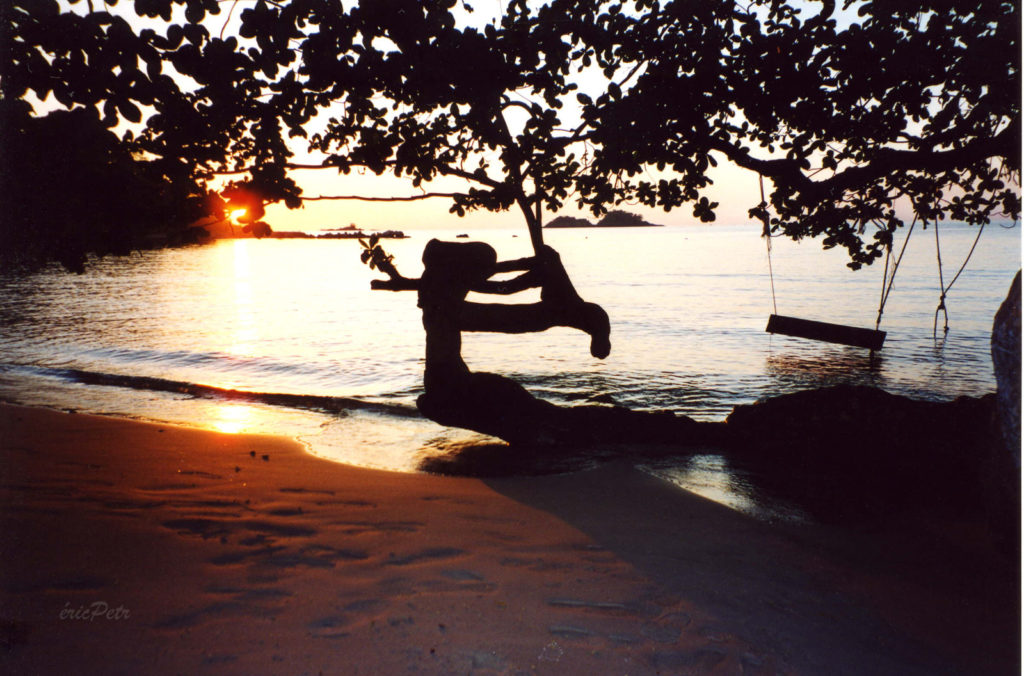
Koh Chang 2002 © Éric Petr
Twelfth exposure of a first-ever photo film made after a ten-year hiatus from photography.

So in December 2002, after a ten-year hiatus, I took up photography again, where I had left off in 1993, but with a more structured coherence than my work of the 80s had produced.
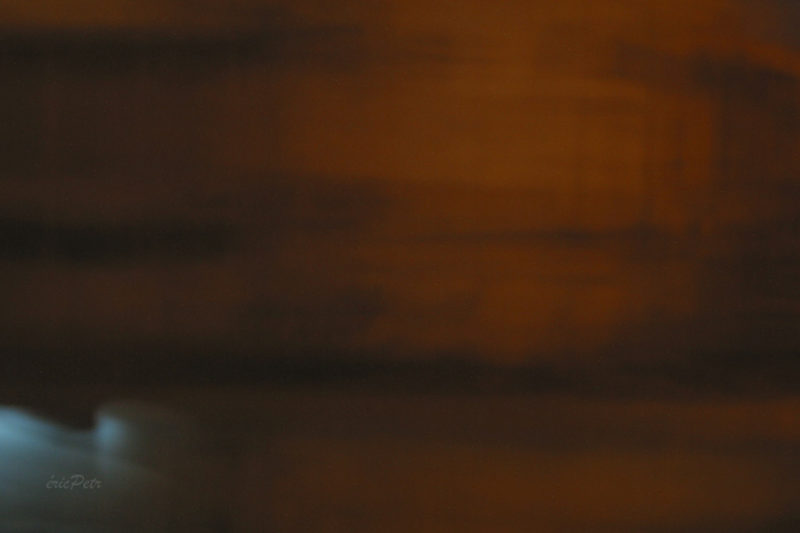
It was a chance encounter with a 12-exposure disposable Pocket Instamatic Kodak, initiated by a trip from Thailand to Cambodia. 
Twelve great moments of emotion!
Just twelve photos taken during a trip to the ends of the earth is like holding your breath until the end.
On this trip, I learned to take my time, to search my subconscious for the triggering breath of the photographic click, the pleasure of the release.
I realized that photography is, above all, about listening to our universe.

The first photographic works I produced from 2003 onwards (Tōkyō under the rain_2oo3, Bangkok_2oo4, TrAveRséE2nUiT_2oo4, Windows_2oo5, and others), constitute the foundations and underpinnings of a knowledge acquired during this decade of interruption in photographic practice.

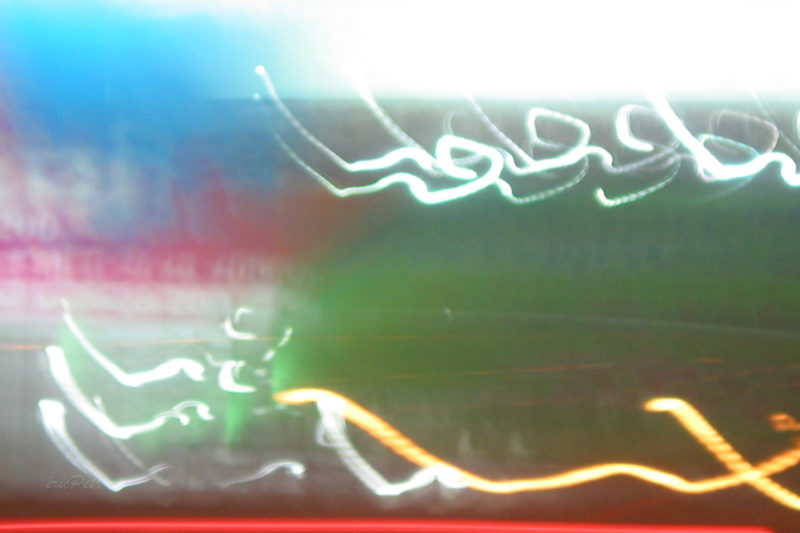
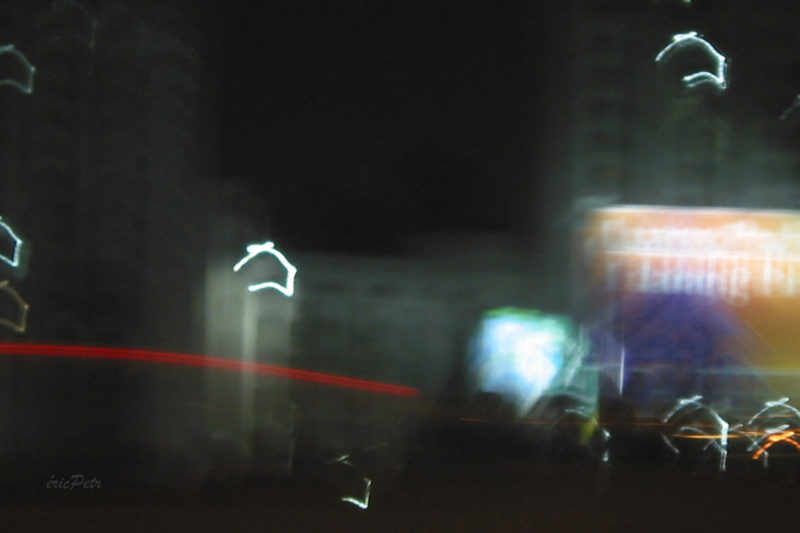
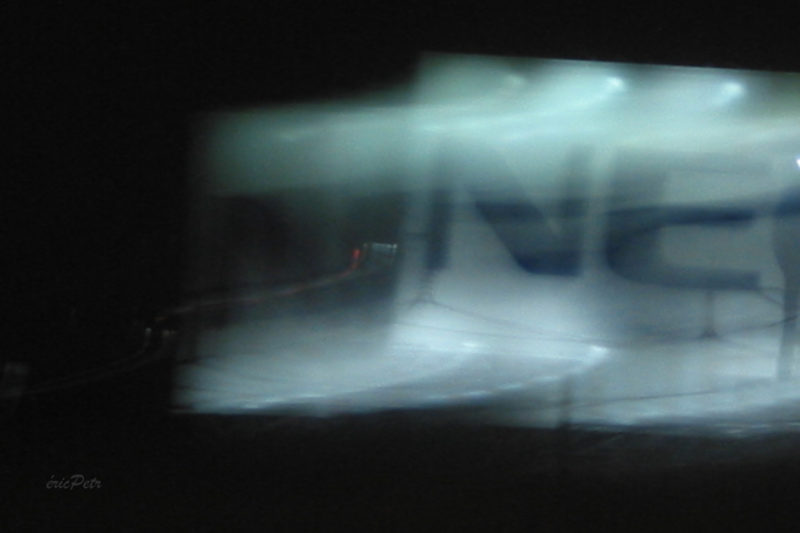
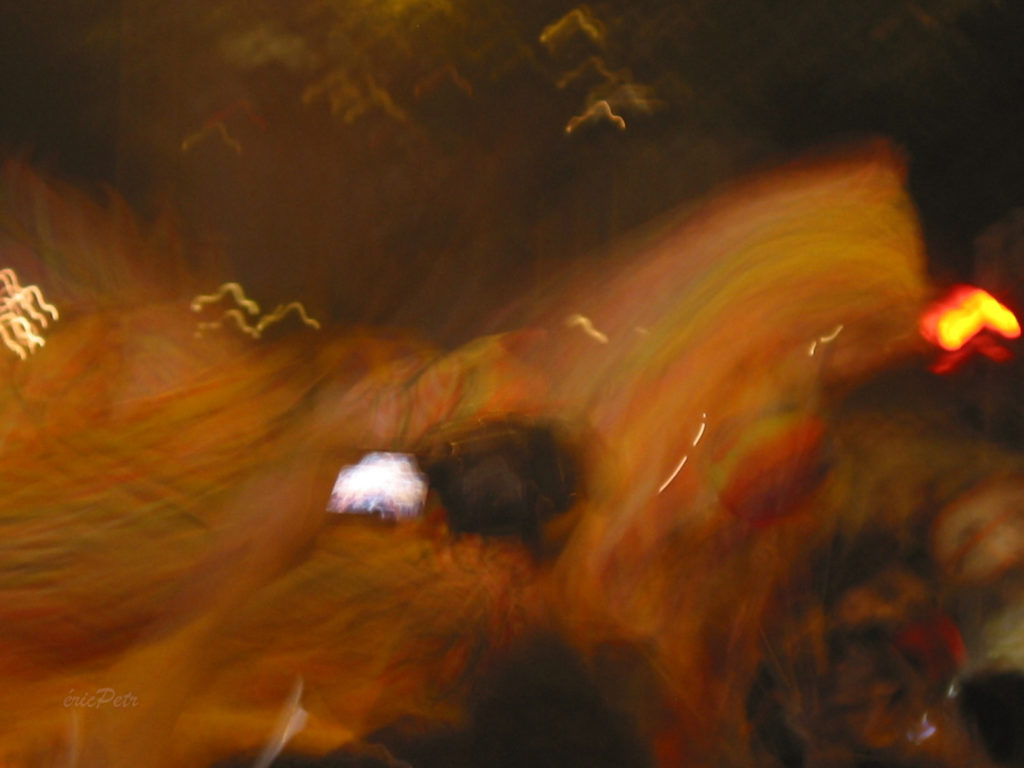
The three images I’m presenting today from 2005 are highly representative of my style. My photography not only uses light as the primary constituent of the work, but is also distinguished by its ability to capture the subtlest details of a scene or place, transforming visible objects and magnifying their secret perception. Through this gaze, each image becomes a kind of visual poem, where the invisible takes shape, and the viewer is invited to discover a world all his or her own, while remaining connected to the universal human experience.

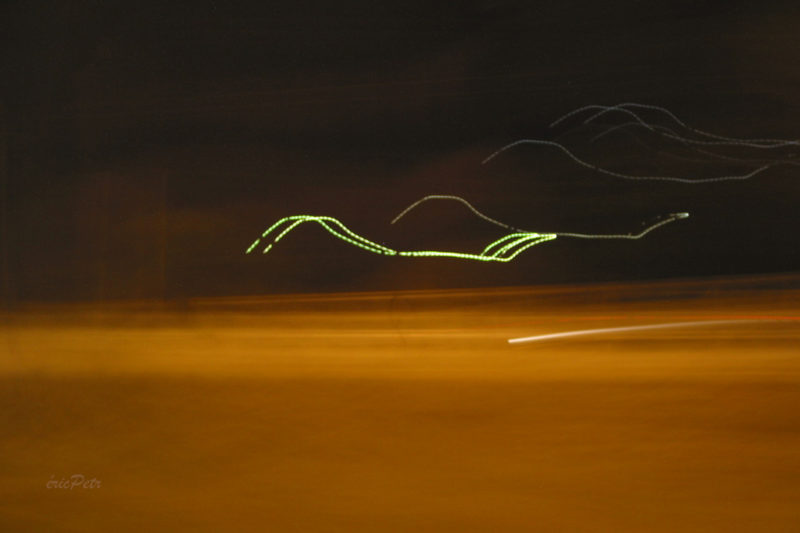
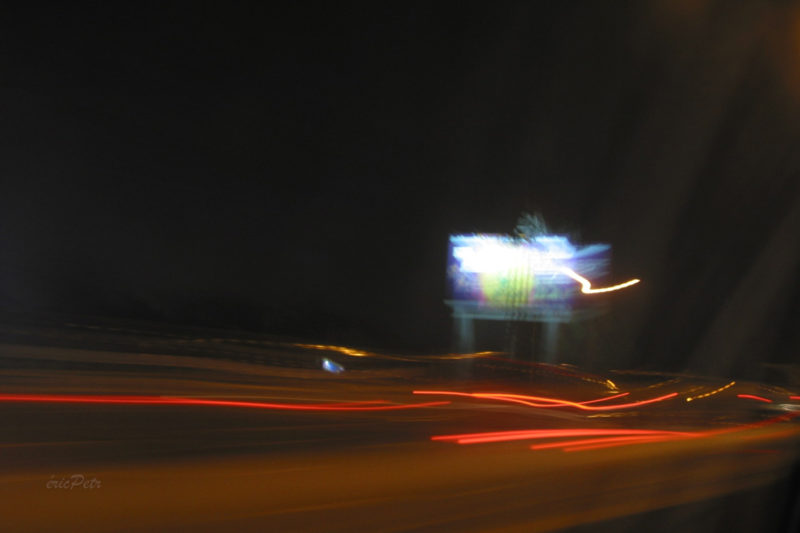
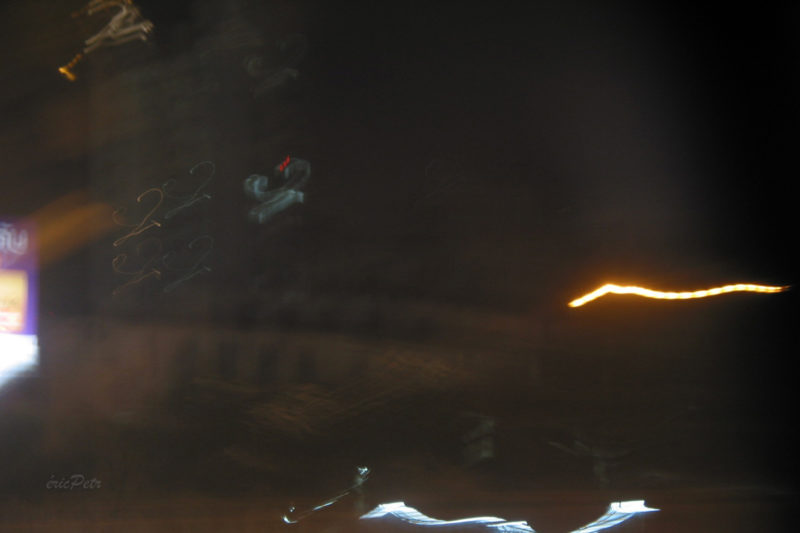
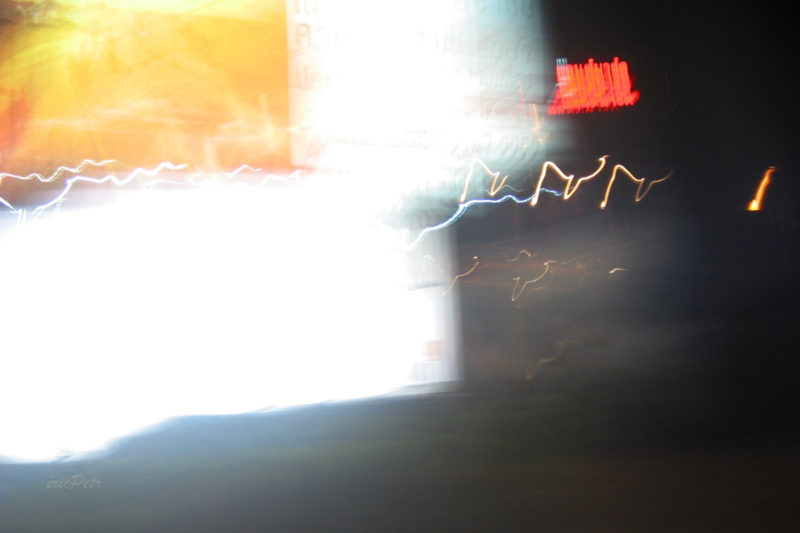
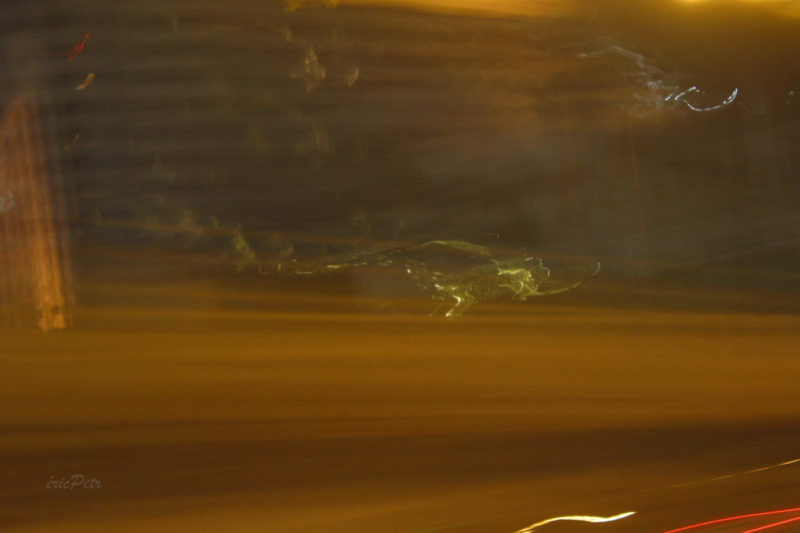
These images from my Hong Kong by night series, taken in February 2005, attempt to reproduce the ineffable atmosphere of Asian cities, bringing with them what will become my signature as a photographer, that aspect of dense, poetic luminous matter, that dreamlike atmosphere and that feeling of timelessness.
Although these images were taken twenty years ago, their power makes us forget the poor quality of the digital camera used at the time, which remains a feat.

Hong Kong by night, February 2005 © Éric Petr

My photographic work will continue uninterrupted within the framework of this reflection on light, movement, space and time.
I have named this photographic process to define it: “in situ kinetic photography” or “photographie cinétique in situ”.

This work continues today with my Variations de Lumière but also, and always, with 光 (Hikari), Métamorphoses or my Spirituelles Odyssées which gave rise to the publication of a numbered and signed book in 2016, by Corridor Éléphant, Éditeur de photographies contemporaines.

This work on light and movement, which I began to disseminate on social networks in 2010, remained largely unknown to photographers and the general public. My numerous publications gave way, little by little, to a photographic trend that other photographers, in turn, took up and developed on their own, then named in the years 2015 “Intentional Camera Movement”.

I’m happy to be one of the very first investigators of this photographic movement, and to name but a few who preceded me, Kōtarō Tanaka (1905-1995), Ernst Haas (1921-1986), and also my contemporary Alexey Titarenko (b. 1962), who for his part worked specifically on crowds in motion.

I personally see myself as a photographer who has concentrated all my work and efforts over the course of my life on this principal reflection of the moving image, creating a totally unique style.

Hong Kong by night, February 2005 © Éric Petr

FROM “ICM” TO “IN SITU KINETIC PHOTOGRAPHY”

Bangkok 2oo4 © Éric Petr [Intentional Camera Movement]

“in situ kinetic photography”
first principle of a manifesto

I started practicing photography in 1983, and for ten years I had this idea of developing a research and aesthetic based on light, and the impact that light can have on our mind, our thoughts, and our perception of the universe.

I resumed this work in 2003, after taking a break from photography between 1993 and 2003.
Nevertheless, my reflection on the image nourished this period of inactivity, which subsequently proved very rich and constructive for my photographic work.

Ten years later, in 2003, after thinking long and hard about the image, its role and its power, I continued my photographic work on light, as plastic or matter, with a fresh eye.

“Bangkok 2oo4” and other works from the same period show a body of work that drew inspiration from this time of reflection, introspection and maturation.

In this new era of digital imaging, this style of photography was not yet precisely named, but a decade later it was, under the name ICM (Intentional Camera Movement).

光 0x1853AC © Éric Petr, 2020 [in situ kinetic photography]

In the 20th century, some photographers devoted part of their work to this technical aspect of motion photography, such as, to name but a few, Kōtarō Tanaka (1905-1995), Ernst Haas (1921-1986), and Alexey Titarenko (b. 1962), who worked specifically on moving crowds.

In the early 2000s, my work on the moving image, with the idea of painting with light on my film or sensor, is very contemporary in approach, and remains on the bangs.

My work, which is based on the principle of intentional movement, has now evolved to bring a broader field to the ICM, which I call “in situ kinetic photography”.
“In situ kinetic photography” brings a wider field to the “intentional camera movement” and takes into account different axes and planes, in situ, for the same exposure that oscillates from a few seconds to a few minutes.

“In situ kinetic photography” is similar to the ultrasound of a place that is produced like a micro-film, but which is recorded on a single image. It is therefore neither multiple exposures nor post-processing work. Its photography is part of the field of abstraction, or subjective abstraction. Its writing is done with light and photons constitute its alphabet. Its language is cosmic, its style dreamlike and its aesthetic plastic. This photography is similar to painting in the sense that it is constructed on site by composing the elements that are added to the image.

The brush or pencil is the light ray that contains the matter and energy of electromagnetic waves, while the canvas or paper is the film or the camera sensor. Unlike the painter or the calligrapher, it is not the brush that moves, but the support, that is to say the camera.
It is also, in this sense, that the intention of “in situ kinetic photography” is in no way that of “light painting”, even if we can observe certain common points.

For this photograph, composed in situ, elements very dispersed on the site are carefully chosen to compose a photographic painting. After an analysis of the times allowing the addition of the elements to be photographed, the photographer will have to determine precisely the speed of the shutter, the aperture of the focal length, and the sensitivity of the film, according to any filters added.

For “in situ kinetic photography”, the intention is no longer movement, as in “intentional camera movement”, but that of constructing an abstract image with a plastic density that will suggest the superposition of quantum states of a geographical point that light crosses during its infinite odyssey.

Éric Petr | 0xB09FE203
The fight of the Amazons | Metamorphoses 0xB09FE203 © Éric Petr, 2019 [in situ kinetic photography]
Éric Petr | 0x480DF803
光 0x480DF803 © Éric Petr, 2014 [in situ kinetic photography]
Éric Petr | 0x7077 Variations of Light opus 0 (Nikon F3) Le Lavandou 1980's
Variations of Light opus 0, Le Lavandou 1980’s © Éric Petr | Nikon F3, film Kodak
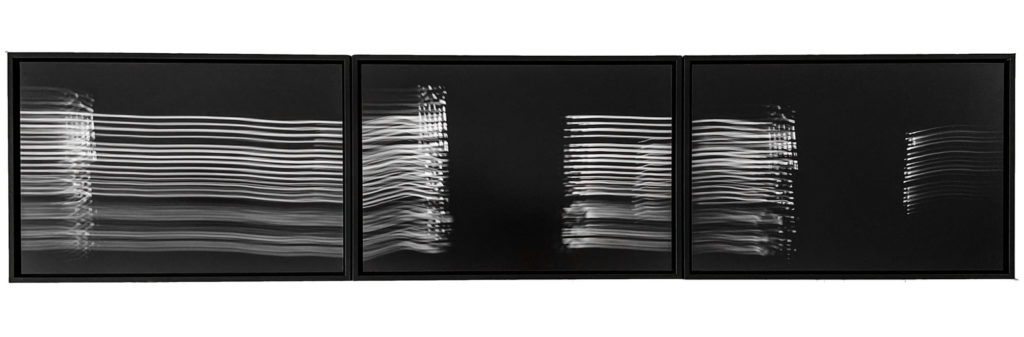
Variations of Light opus 5 [Triptyk 2021] 65x300cm © Éric Petr [in situ kinetic photography]