WHEN FILM PHOTOGRAPHS ITSELF: INVESTIGATING A PHANTOM ANALOGUE IMAGE

A ghost image on film: reflection, light piping, or an optical phenomenon?

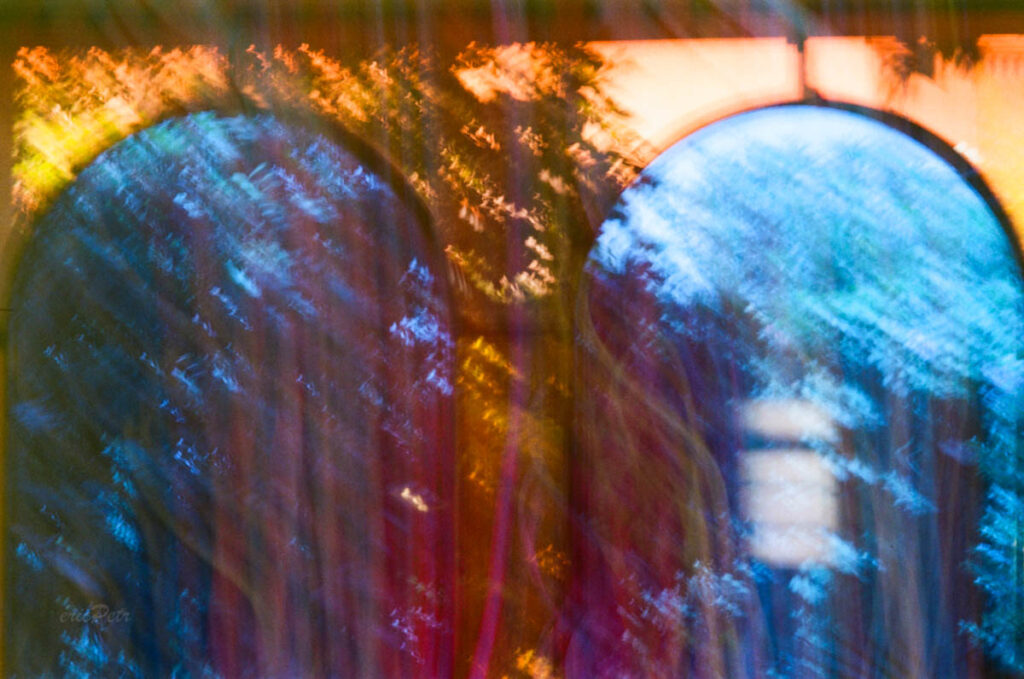
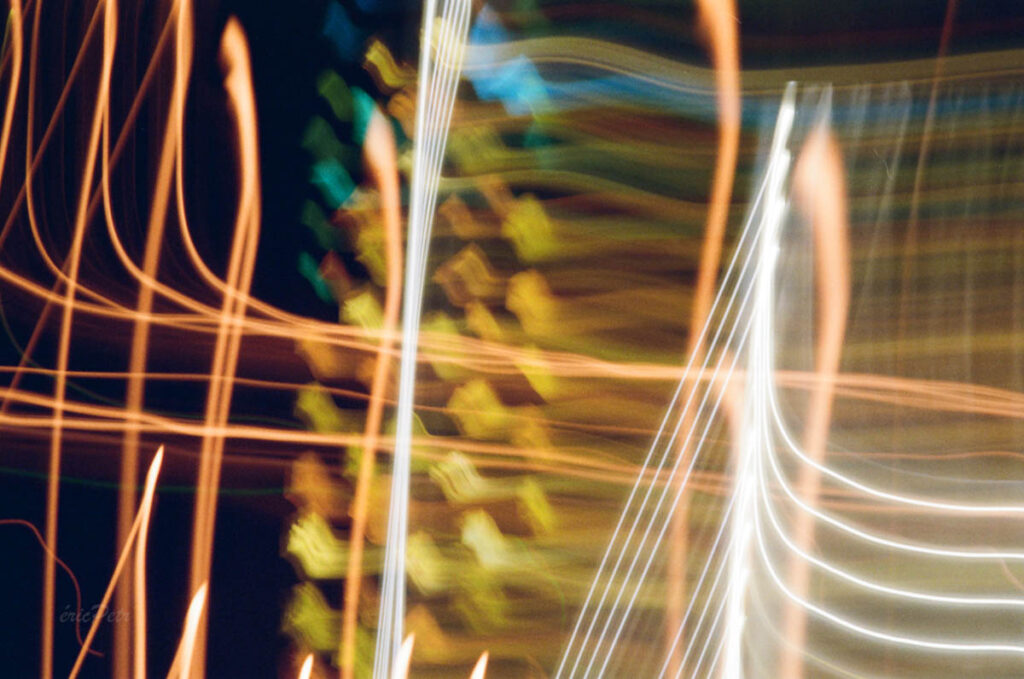
These film photographs were taken very recently using film as part of my research on in situ kinetic photography [In Situ Kinetic Photography]. You can explore the various posts on my blog that address this topic, but I’ll summarize here what this technique entails. It involves the photographic exploration of a location or scene, captured in a single exposure lasting several tens of seconds, or even a few short minutes. It’s a sort of mini-film recorded in a single frame.

I really like this Kodak Color Plus 200 film, which produces warm colors and has a slightly retro feel. It doesn’t have a striking dynamic range, but it has a soft, slightly old-fashioned quality with shimmering colors.

In any case, the reason I’m writing this article and presenting these four film photographs—which are part of a larger series—is that one of them depicts a phenomenon that is uncommon in photography, known as a “ghost image,” or “ghosting” in English.
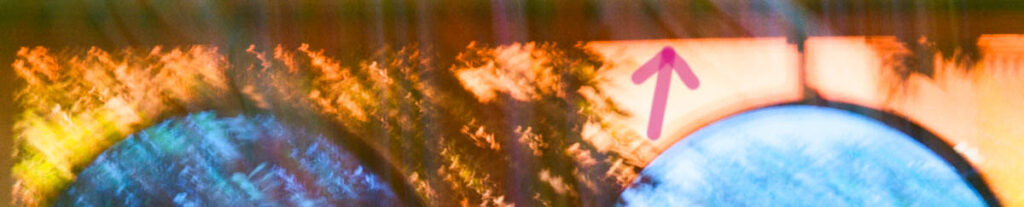
What you see here is not a scanning or image-processing artifact, but a phenomenon physically imprinted on the negative itself. In any case, this is an unusual phenomenon in my own practice of film photography, and one that I am encountering experimentally for the very first time.

As you will see, the perforated part of the 35 mm film is superimposed on the image and appears at a slight angle.

In order to conduct a proper analysis, I need to specify the shooting conditions and the type of equipment used.

  1. As for the equipment, it’s a Nikon F3T in excellent condition, which was mounted for the occasion with a five-element, non-AI Nippon Kogaku Nikkor-Q 135 mm f/2.8 lens from 1965.
  2. The back of the camera is completely waterproof, and its seals are practically brand-new. Its hinges are perfectly aligned and do not let in any light. Its waterproofing is regularly checked and is flawless.
  3. This is a roll of Kodak Color Plus 200 ISO film that I recently purchased and have been storing in a special container designed to preserve film until it is used.
  4. This photo was taken with an exposure time of about one minute—maybe just a tiny bit longer.
  5. I always put the viewfinder cap on when I’m taking pictures, which prevents any stray light from creating a halo effect while the shutter is open.
  6. The film rewound properly, and the cover was never accidentally opened while the film was in the camera. The film was immediately placed in its black box after being removed from the camera.
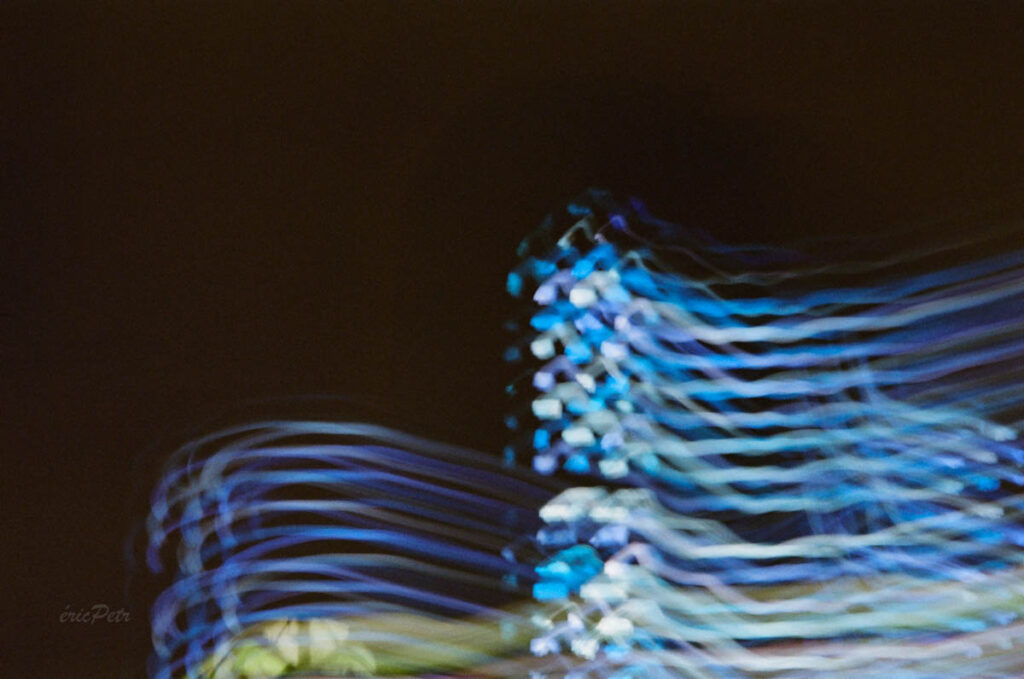
  7. Here you can see the photographs that come before or after the one in question. You will notice that none of them show any kind of light haze or artifact.

Given the context described above, the hypothesis that a possible light source is leaking through the rear film loading hatch is highly unlikely.

In fact, if light were to leak through the camera’s body, this stray light could have illuminated the film from behind and formed a severely degraded image of a structure located in the immediate vicinity of the film’s light-sensitive area, such as a bright edge, a window mask, a metal edge, or an adjacent perforated area.

And if that were the case, the perforations visible in the photograph in question could have indirectly contributed to the formation of thisghost image.
I am therefore inclined to believe that the film base itself (that is, not the light-sensitive emulsion, but its transparent plastic structure consisting of multiple thin layers) acts as a component of the optical and image-recording system.

As a reminder, a film consists of several layers, namely:

・The emulsion surface;
・The interfaces between layers;
・The transparent plastic substrate;
・The protective layers
・The anti-halo layer.

Of course, I can’t say for certain exactly which mechanism is responsible for this strange superposition, but two physical hypotheses come to mind.

First Hypothesis

The first hypothesis is thought to be related to a phenomenon known as “light piping.”

When an intense light source strikes the film at an oblique angle, the light could penetrate through the transparent edge of the film and then propagate through the film base.

The perforations in the film could, in fact, serve as an entry point for light to travel through the film’s structure to the emulsion layer, where it would partially reveal the geometry of the film’s edges.

We could think of the path that light travels in this way:

[scene] ~ [lens] ~ [film structure] ~ [film emulsion] ~ [image]

Second hypothesis

The second hypothesis—more speculative but particularly interesting—would be that of an internal reflection involving the film itself.

When exposed to an intense beam of light arriving at a certain angle, this non-sensitive, transparent portion of the film located near the perforations could have been illuminated from the side. A fraction of this light might then have been transmitted through the various layers of the film, reflected toward the surface of the rear lens element, and finally partially reflected back toward the light-sensitive surface of the film, thereby creating this superimposition with the photographed image.

It is also highly likely that this long exposure time allowed the light to travel all that way and be captured in the photograph.

The hypothetical route could then be illustrated as follows:

[scene] ~ [lens] ~ [film frame / film structure] ~ [rear optical surface] ~ [film emulsion] ~ [image]

Under this assumption, film would no longer be merely the passive medium onto which the image is recorded; rather, through its properties of transmission and reflection, it would itself contribute to the creation of the final photograph.

Of course, this is merely a hypothesis on my part that would need to be supported by specific experiments—given the complexity of the interactions between the various organs—in order to be able to state with certainty the exact mechanism behind this phantom image. 
So, for now, this image remains an optical mystery whose exact origin I cannot determine with certainty.

The extremely unusual conditions under which it was taken (namely, an exposure of about one minute, the presence of intense light sources, and the use of an old lens with an optical design different from contemporary ones), may have allowed a phenomenon that is usually imperceptible to gradually imprint itself on the emulsion.

The first hypothesis—that light propagates internally within the film base—could explain the presence of the perforated structure. 

The second, more speculative approach envisions a series of interactions between the film plane and the rear optical surfaces of the lens, momentarily transforming the photographic medium itself into an active element of the optical system.

What fascinates me about this experiment is precisely this possibility: that the medium intended to receive the image might, during the exposure time, have itself contributed to the composition of the image.

Photography would then no longer be simply a luminous trace of an outdoor scene; we already know this. But the camera, the lens, the type of film, and even the very materiality of the film would have unwittingly become participants in the image.

A photographic accident—that’s for sure! 

But it also reveals a transient phenomenon that highlights the idea that the medium of photography can photograph itself 😉

Food for thought…!
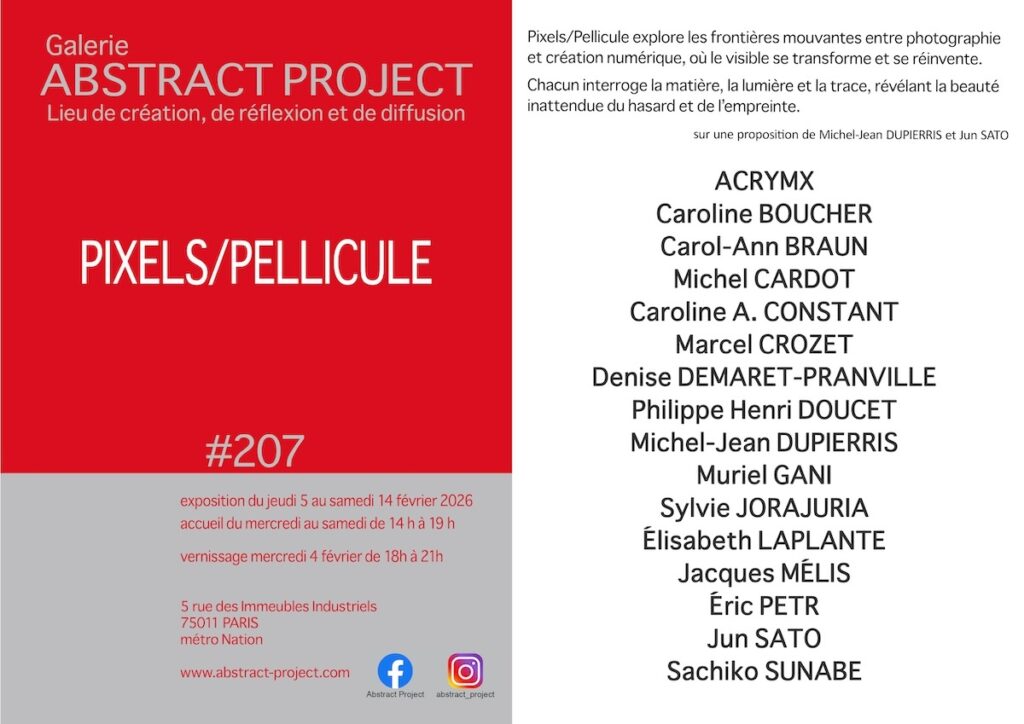
PIXELS/PELLICULE – PHOTOGRAPHY & DIGITAL CREATION at ABSTRACT PROJECT Gallery

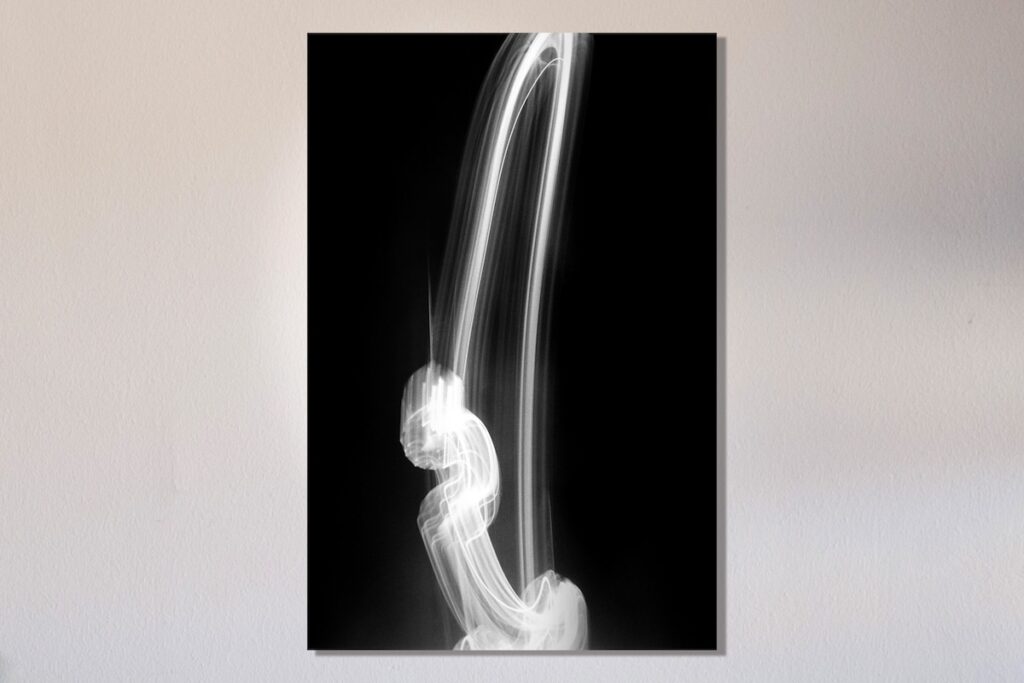
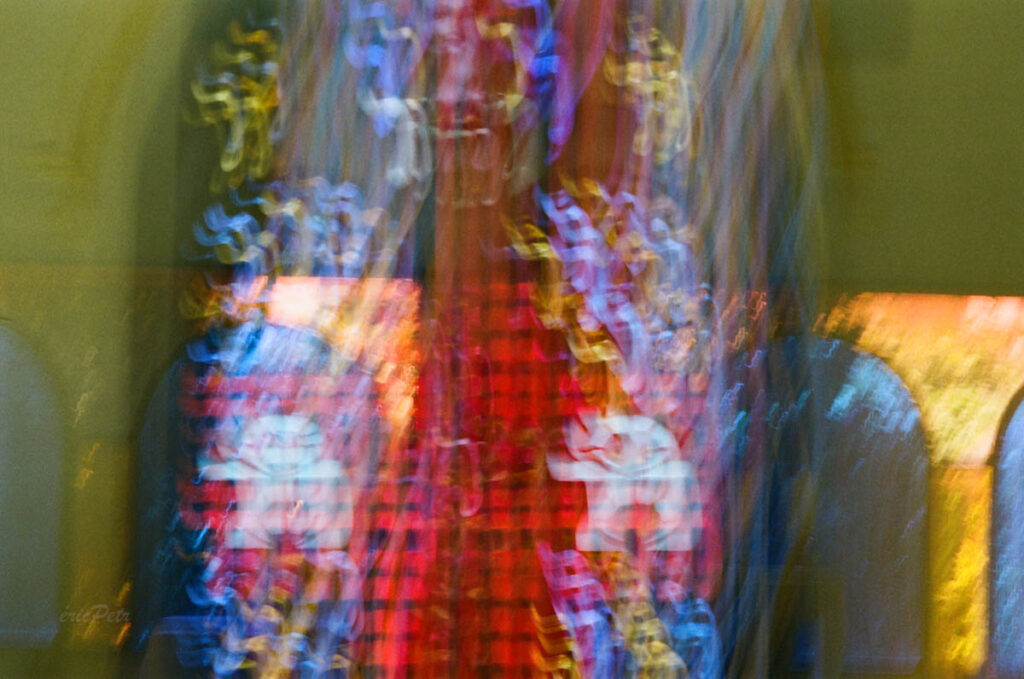
光 0xB9CD0582F Silver photograph 24x36cm [2025] presented at the exhibition Pixel/Pellicule Feb. 2026

Pixels/Pellicule explores the shifting boundaries between photography and digital creation, where the visible is transformed and reinvented.
Each artist questions matter, light, and trace, revealing the unexpected beauty of chance and imprint.

The ABSTRACT PROJECT Gallery exhibition, on view from 5.02 to 14.02.2026, proposes an original approach that questions photography in its experimental retrenchments, where the image ceases to be a simple recording of reality to become a veritable territory of experimentation.

At the crossroads of silver film and pixels, the visible is transformed, fragmented and recomposed. What seemed stable becomes uncertain, what was given is reinvented. The image is no longer simply a reflection of the world, but the site of a metamorphosis.

Each approach questions the very material of photography. Light, sometimes controlled, sometimes left to chance, reveals unexpected forms. Surfaces blur, contours shift, accidents become language. Traces, whether chemical or digital, are never neutral. It carries the memory of the gesture, the process, the time inscribed in the image.

In this hybrid space, “controlled” chance plays an essential role. It is not a flaw to be corrected, but a creative force capable of bringing out unexpected beauty. Errors, alterations and technical shifts open up new readings and shift our gaze. The image becomes an imprint, both fragile and persistent, oscillating between disappearance and revelation.

Pixels/Pellicule offers a reflection on our contemporary relationship with images. Between materiality and immateriality, between control and letting go, these works invite us to slow down, to observe differently, and to accept that photography is no longer a certainty, but an experience in perpetual transformation.

ABSTRACT PROJECT exhibition
5.02 ~ 14.02.2026

on a proposal by
Michel-Jean DUPIERRIS and Jun SATO

A place for creation, reflection and dissemination
5 rue des Immeubles Industriels – 75011 Paris
Métro Nation
Open Wednesday to Saturday from 14:00 to 19:00

A LONG-TERM CURRICULUM…

Le Lavandou 1980’s © Éric Petr | Nikon F3, film Kodak

These photographs, taken with a Nikon F3, mounted with a Nikkor 50mm f1.4 or 105mm f2.5 lens and Kodak film, bear witness to my highly creative period in the ’80s.
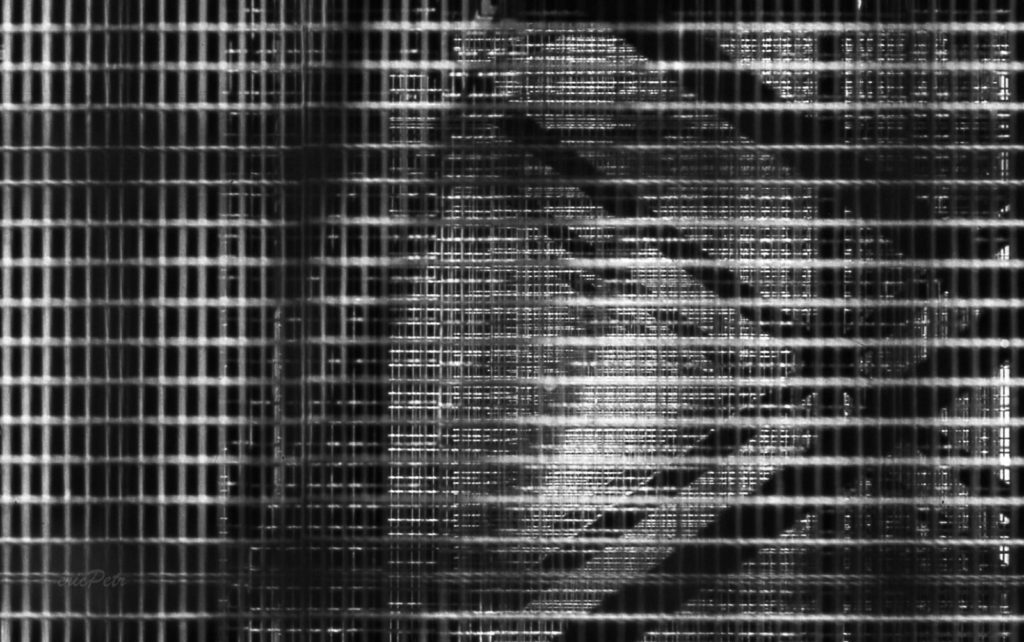
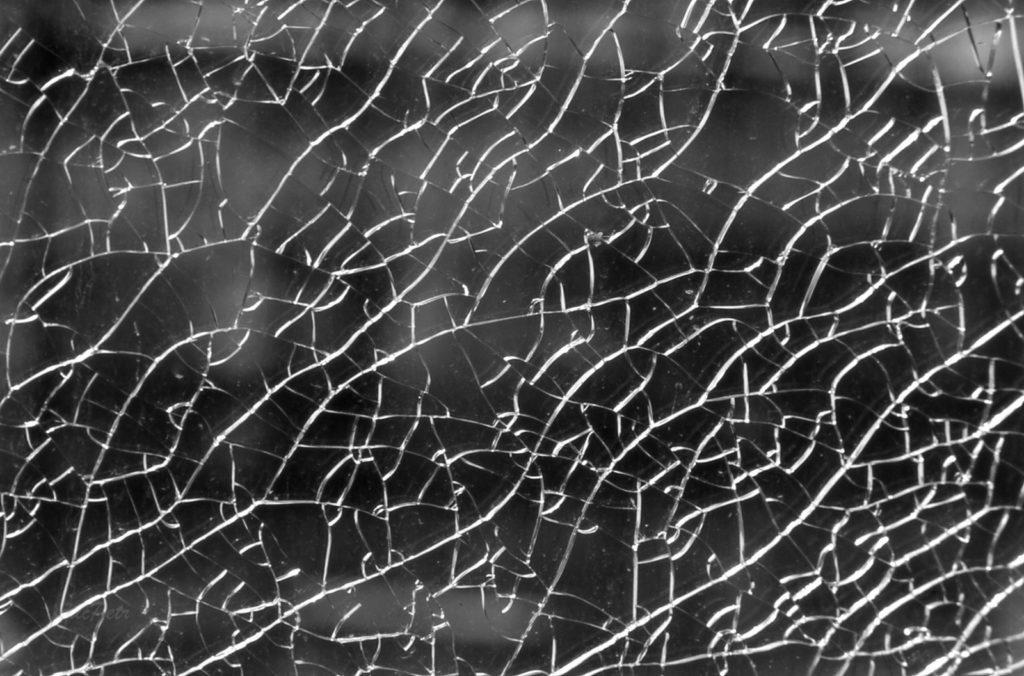
They show, in successive order: the beach at Le Lavandou, the outside fire escape at the Centre Georges Pompidou in Paris, and a broken window in the former wasteland of Les Halles de la Villette in Paris.

The first silver photograph was a precursor to the work I’m still doing today.
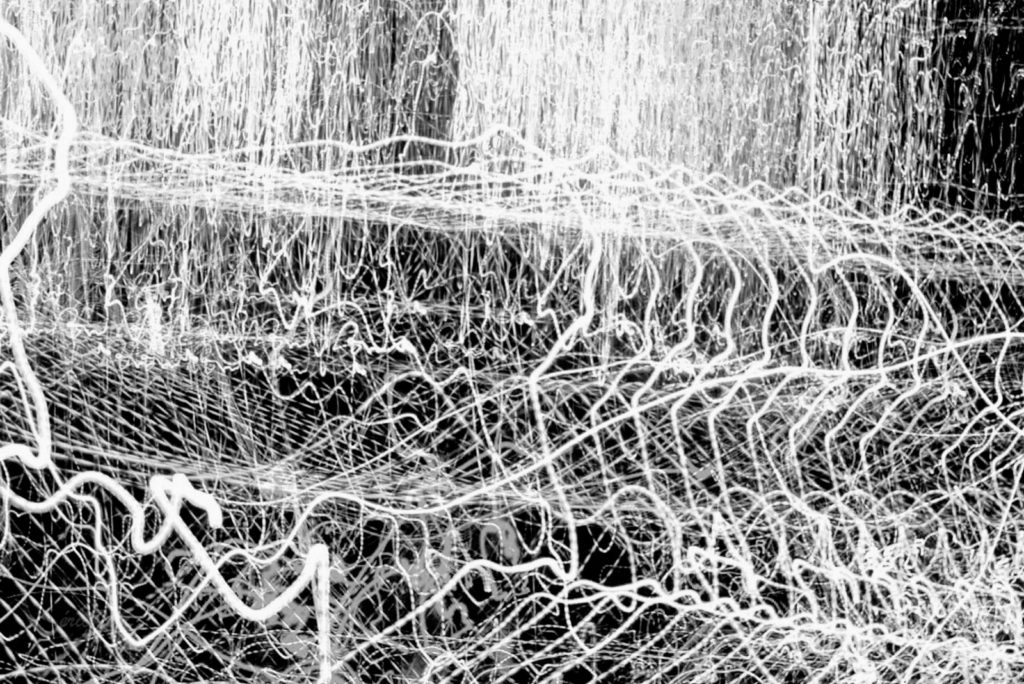
Taken at night, on the beach at Le Lavandou, with an exposure time of around 15 minutes, and shot at 720°, it recreates the electromagnetic atmosphere of a vacation and party spot, its beach, the black reflections of the sea and the rolling of the waves, the lights of boats, stars, the moon, coastal lighthouses and bars still barely lit.

A LONG-TERM COURSE… “who goes slowly, goes healthily”!

I took up photography in 1983, and spent ten passionate years with the idea of developing research and aesthetics based on “pure” light, and the impact it can have on our mind, our thoughts, or our perception of the universe.

The research I had begun on this subject was halted in 1993 by the upheaval caused by  the arrival of digital technology in the world of photography.

It wasn’t until 10 years later, in 2003, after giving a great deal of thought to the image, its role and its power, that I took up this reflection and work again, using two media: digital and film photography.

In 2013, I opted to set up a company to develop this work over the long term.

Today, I exhibit and show my work in Paris, Europe and abroad.

Are you interested in following my work, discovering my new creations, and receiving invitations to my openings?
You can register at this link: https: //www.ericpetr.net/contact/

Les Halles de la Villette Paris 1980’s © Éric Petr | Nikon F3, film Kodak

ARGENTIC PHOTOGRAPHY IN THE 21st CENTURY

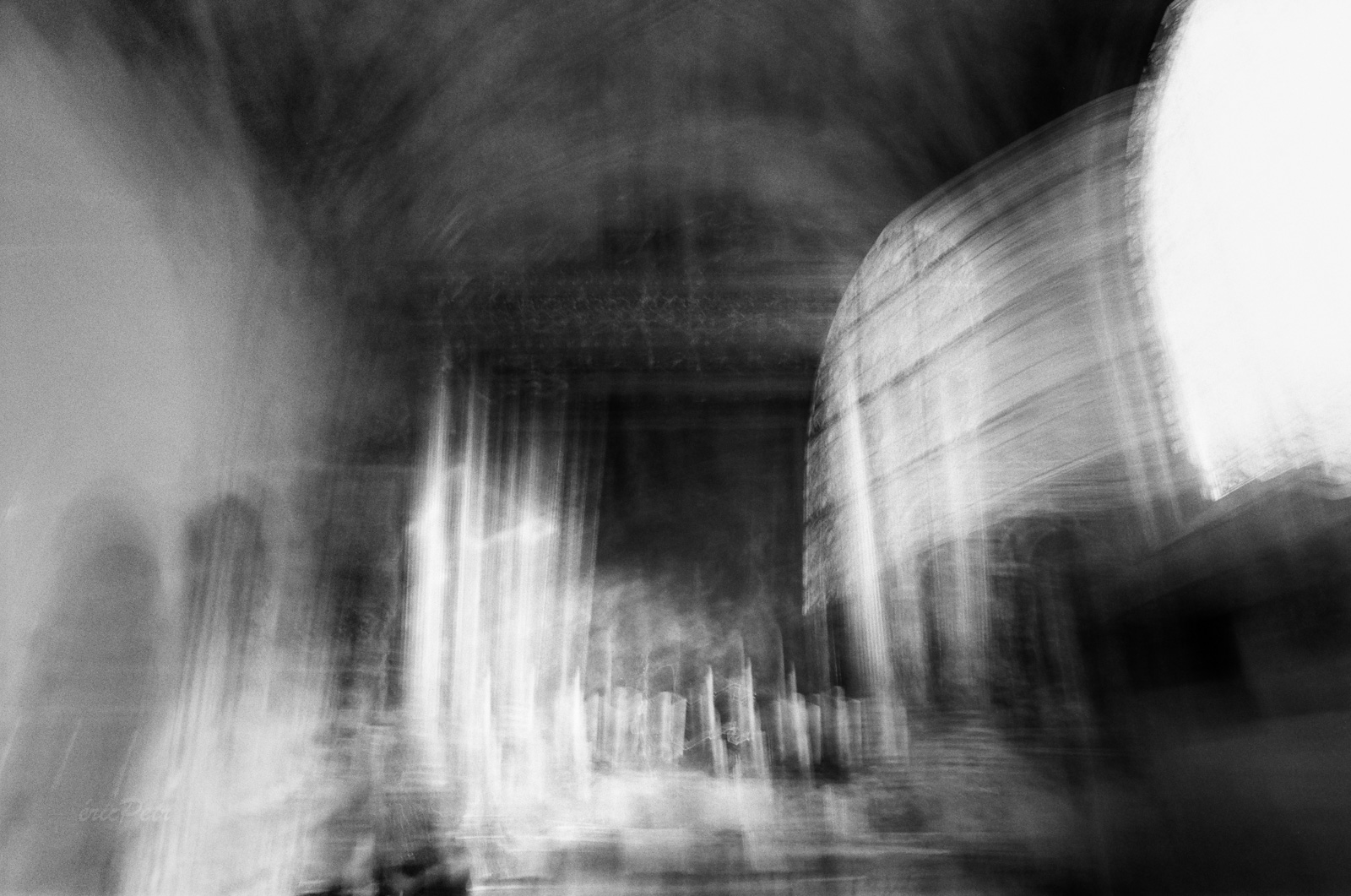
Église Saint Trophime, Arles – Éric Petr, 2024 | Nikon F3T, Nikkor H85 f1.8 & Ilford Delta 100

In the 90s, I stopped photography after ten years of passion.

In those years, digital photography arrived and supplanted film photography in just a few years.
A tidal wave that shook an entire industry. All photographers will have something to say about this era, often recounting a painful moment.

For my part, a great sadness seized me. I buried my equipment and my work as if to forget forever this passion for which I had devoted so much time and for which everything seemed to disappear forever.

Ten years later, I slowly returned to the image scene like an addict returning to his drug. 

It was with the Nikon Df, in 2013, that I rediscovered the lost pleasures of film photography.
This camera seemed to me to be the closest thing to silver-based practice, not in the process, but rather in the way it felt to take the shot. Nikon Df is the kind of substitute that photograhpy addicts can take to fool their bodies and minds. But of course, the feeling is deceptive and, despite everything, unsatisfactory.

It had to come to this, to close the loop and, to bring out the old gear from the 80s, recapture the divine sensations of silver halide and continue the journey with our first loves. 

Today, I no longer take pleasure in digital technology, and it is essential for me to continue my quest where my raft ran aground.

⚪️ Click on the images to see them in silver grain detail ⚪️

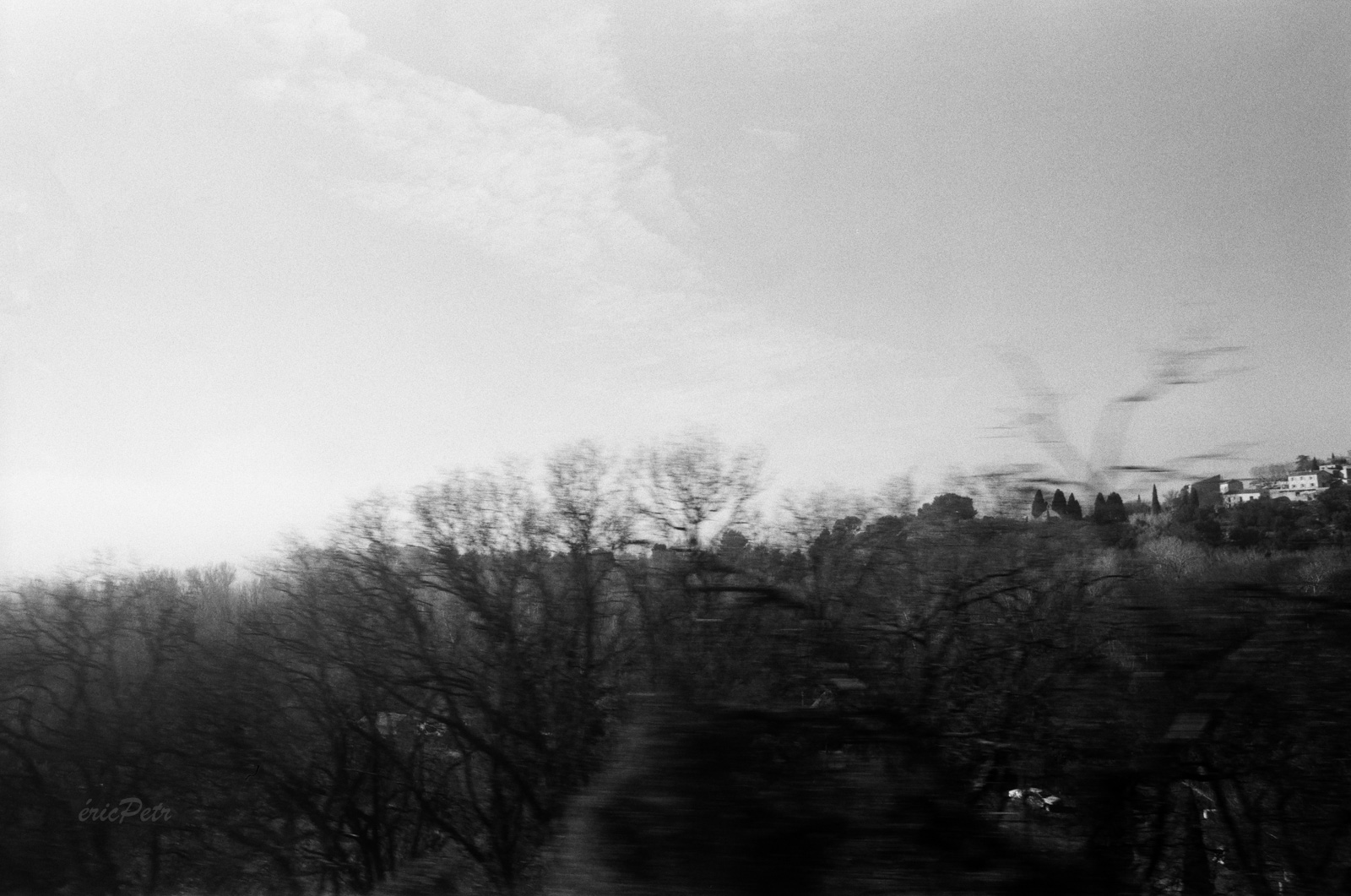
On the way to Arles – Éric Petr, 2024 | Nikon F3T, Nikkor NC24 f2.8 & Ilford Delta 100

It is probably difficult for many people to understand this relationship with film photography. But film photography is an extraordinary tool!

Once you’ve got the hang of it, you will feel like you have gone from a modern car to a vintage one, without any further assistance. 

You shoot and do not have to worry about checking whether your photo was actually taken. Your gesture and technique with film must be beyond reproach, otherwise all your images will be lost forever.
Silver halide is a technique with no net and no room for error.
Concentration is total and the choice to shoot takes on its full value and meaning.
Your choice of film will depend on the type of work you want to achieve, and the same goes for developing the film, with the different developers and exposure times that will bring a particular style to your image.

And then there is the grain of film! This magnificent grain is not the result of the digital recording of electromagnetic waves through a low-pass filter, but of the photochemical process of exposing light to an emulsion of silver halide crystals. 

The plastic result is so different! 

Approach, enter, zoom into a silver image and see these clouds of crystals in infinite colors or shades of gray, like the dots in an etching or the particles that make up stellar clusters. 

Feel the beauty of the silver image!

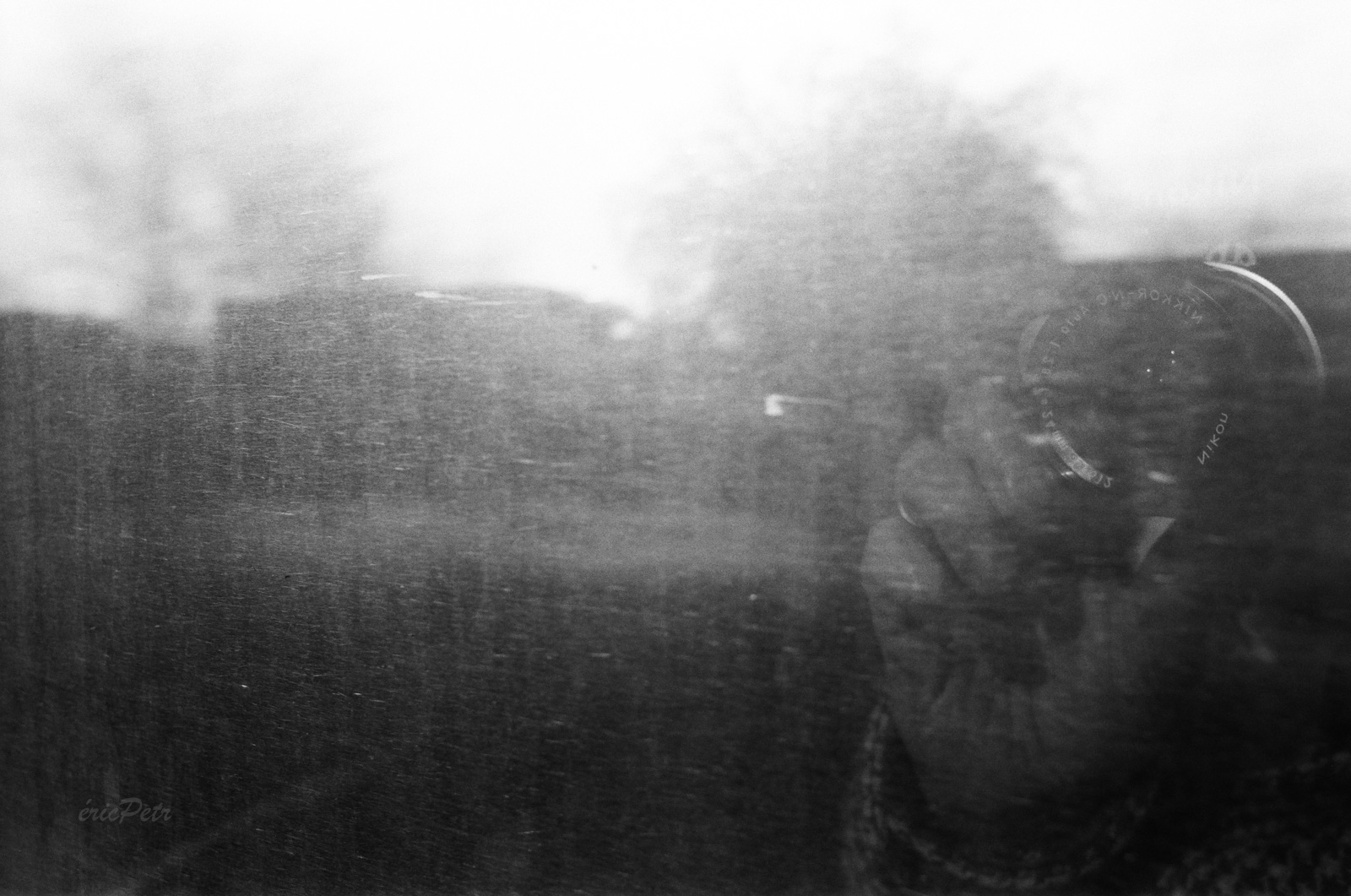
Self-portrait – Éric Petr, 2024 | Nikon F3T, Nikkor NC24 f2.8 & Ilford Delta 100

Over the last few years, I have been amazed and delighted to see that silver-based photography is gradually making a comeback, not as a mass-market application, but as an alternative creative practice.

Generally taken up by young people curious about the medium, traditional photography has risen from the ashes to occupy the artistic field, and many associated activities have developed in parallel, such as laboratories for developing film and prints on photosensitive paper, training courses in silver photography, small publishing houses dedicated to the authors of this old photography with a fresh eye, as well as numerous stores selling second-hand equipment and silver film of all types.

So, in the 21st century, silver or digital photography?

Beyond this choice, photography is a commitment, a way of seeing, feeling and describing the world around us.